

This op-ed has originally been published by Les Echos(fr).
The generative AI bubble is built on circular funding between sector players, valuations disconnected from economic realities, and an extreme concentration of resources on large language models (LLMs). What should be alarming is not so much the scale of these investments as their stark contrast with the disintegration of Western industrial capacities. The war in Ukraine exposed this structural flaw, revealing the inability to produce sufficient quantities of essential military equipment—the result of decades of deindustrialization and skewed capital allocation. Beyond its strategic dimension, this paradox calls into question how we measure economic power.
On the AI front itself, the success of more frugal players like Mistral or DeepSeek demonstrates that innovation does not depend solely on a relentless race to build ever-larger models. Billions continue to pour into colossal physical infrastructures—energy-hungry data centers, specialized chips, computing networks—without questioning the fundamental limits of LLMs. These massive investments stand in sharp contrast to the chronic underfunding of industry, and paradoxically, of automation.
Beyond the fantasy of a dematerialized digital world, data centers are infrastructures that consume vast material resources: energy, rare metals, electronic components. Their proliferation highlights the current paradox: we are exponentially increasing computing power, while the productive sectors that could benefit from these technologies lack funding and orders. Many of these sectors launch AI projects merely to tick a box and make announcements to attract investors. In the military domain, autonomous drones, intelligent combat systems, and predictive maintenance represent concrete applications where AI will make a difference—but only if integrated into a solid industrial base, rather than betting everything on unreliable models.
The production chains for ammunition, armored vehicles, and electronic components, weakened by years of underinvestment, struggle to meet demand. Factories have closed, skills have dwindled, and revival attempts are hampered by the absence of long-term strategic planning. The United States, despite its own contradictions, is trying to correct this imbalance by relocating some strategic production. Europe, however, remains on the sidelines, locked in extreme technological dependence that undermines its sovereignty.
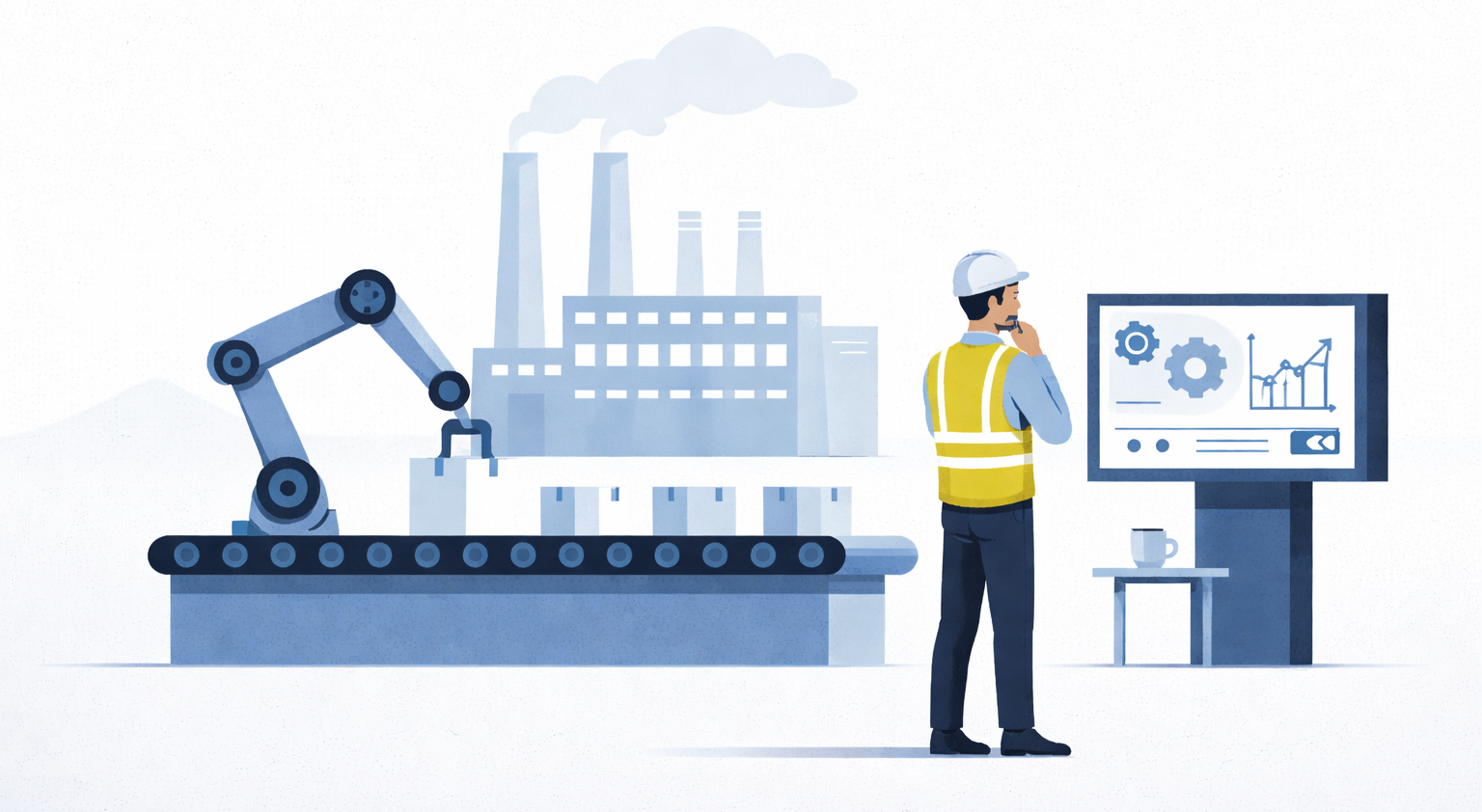
The core issue lies in this skewed allocation of resources. Capital and talent are concentrated on speculative technologies, while industrial applications of AI—advanced robotics, autonomous systems, production process optimization—remain underfunded. Above all, they lack commercial guarantees in the form of orders. This creates a vicious cycle: the more investments flow into LLMs and their infrastructure, the fewer resources remain to modernize the real productive apparatus.
Yet AI could be a major lever for reindustrialization if approached differently. A more balanced strategy would involve redirecting some investments toward industrial automation, developing practical applications embedded in production processes, and fostering hybrid skills that combine digital expertise with industrial know-how, rather than chasing publicity stunts.
Without this strategic shift, the gap will widen between an oversized digital sector and an industrial base unable to meet material challenges. The war in Ukraine served as a wake-up call. Power is not measured solely by the ability to develop sophisticated algorithms but also by the capacity to produce essential equipment. The challenge is not to reject AI but to reintegrate it into an industrial logic, where digital innovation finally serves material production rather than replacing it. Without this rebalancing, the West risks ending up with an economy where computing power soars, but factories continue to close.