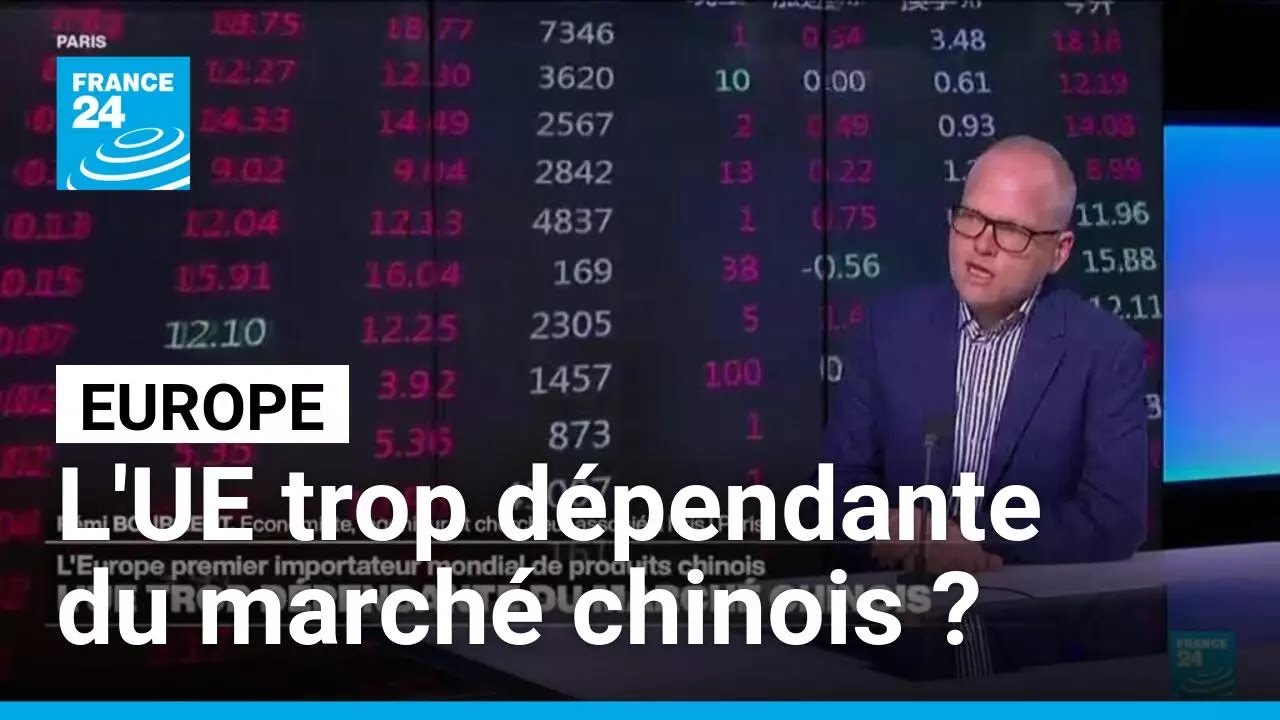

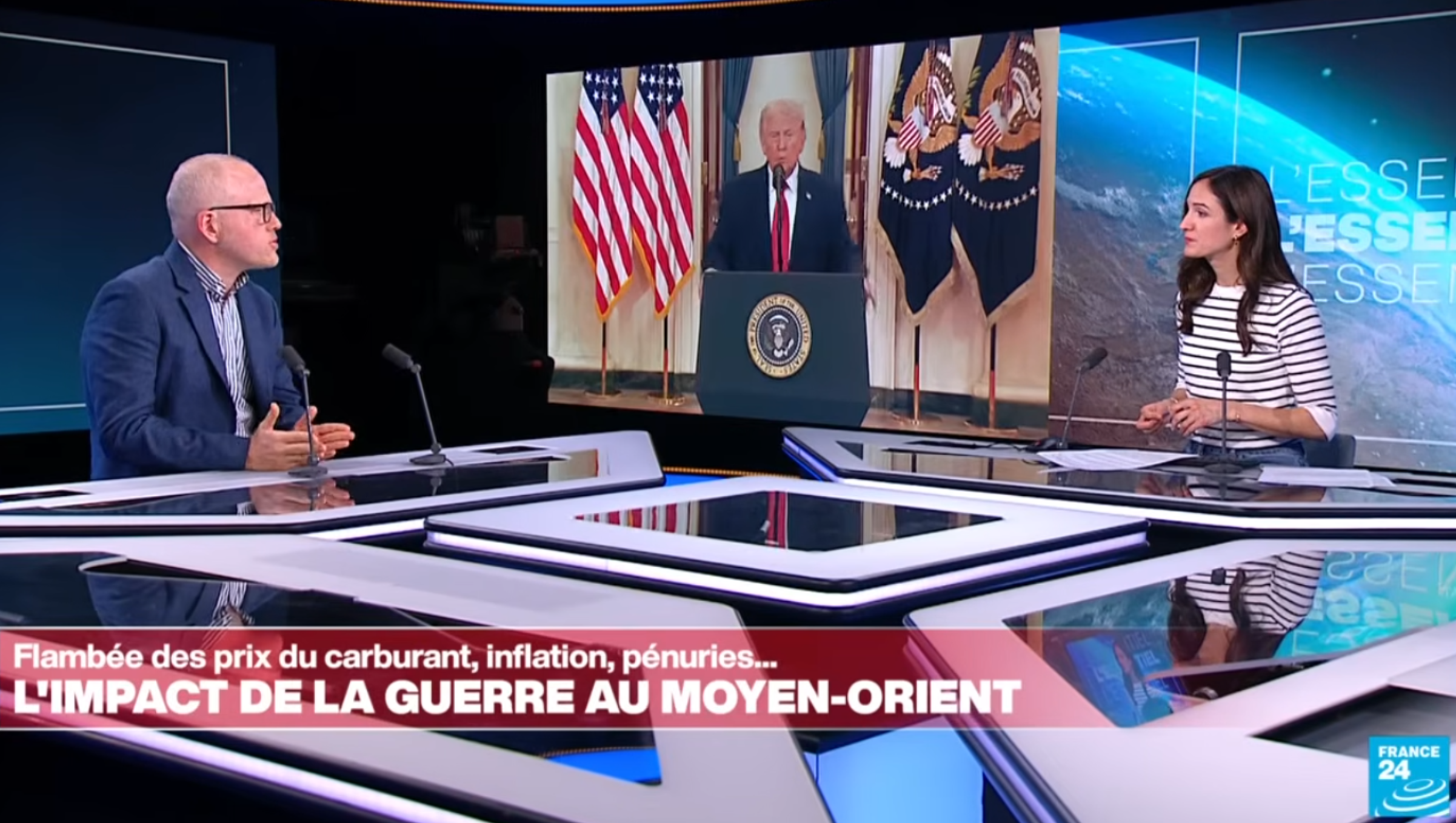
I was interviewed by France 24 about the energy crisis and the challenges of reopening the Strait of Hormuz amid the military stalemate. English transcript below the video.
Rémi Bourgeot, you’ve been following this crisis very closely. Is this only the beginning?
It obviously depends on how the military situation evolves. Donald Trump has been sending mixed signals, and markets have been swinging wildly in response.
What we are seeing, in any case, is a military quagmire. Some geopolitical experts believe this is only the beginning. There are also signs of panic on the part of the U.S. administration, particularly from Donald Trump, who actually dislikes war. In fact, he prefers theatrical operations, like the one in Venezuela a few weeks ago. This, however, is a genuine quagmire.
So he is sending signals suggesting he would like to stop, while striking as hard as possible. The Iranians, for their part, largely dominate the situation, but they are also sending signals through these exchanges, notably with Oman, to at least establish some kind of framework that could apply to a partial reopening.
But what we are heading toward is Iranian control over the Strait of Hormuz. It could be reopened in part, even quite broadly, but likely under Iranian control, given that the United States is not capable of reaching its objectives—assuming there ever were tangible ones.
This Iranian control over the Strait of Hormuz, over time, implies a different system, a different economic regime, notably involving tolls, of which we have already seen certain outlines, partially implemented. That does not mean this will be the final configuration, but costs will be raised and this transit system will be put in place in a way that serves Iran’s geopolitical interests.
There have also been behind-the-scenes signals of exchanges between Iran and certain Gulf states—especially Qatar—to avoid strikes. But the situation is extremely tense, particularly with the United Arab Emirates, which has called on the United States to “finish the job,” to escalate, implicitly suggesting the deployment of ground troops. One could imagine Iran penalizing the United Arab Emirates more than other Gulf states.
And in any case, this reopening cannot be achieved by force, only through negotiations?
There is no real negotiation. There may have been emails or very indirect contacts, but there are very serious doubts about the reality of Donald Trump’s statements when it comes to negotiations.
That said, the notion of de-escalation cannot be ruled out. This is not what we are seeing these days, but Trump is extremely uncomfortable with the situation and understands that he needs to withdraw. His political position is collapsing. There are very serious doubts about his personal condition and about the political system surrounding him. He is dismissing generals around him in order to hear what he wants to hear, to avoid bad news.
What we are seeing is a genuine regime crisis developing in the United States, with much deeper roots. There is also an industrial side to this crisis, as the manufacturing base is unable to sustain what would be a long war.
On the question of ground troops, this is perhaps the most revealing signal: there has been no such announcement. There has been no announcement either of an end to the war or of a withdrawal. Yet sending ground troops would mark the entry into a long war, with even more severe uncertainties—something that would be almost suicidal on Donald Trump’s part.
Today, we are in an in-between situation, with a desire to get out of this quagmire, but Trump wants to be able to claim some form of victory and avoid humiliation. That humiliation is there in any case.
To return to the very concrete consequences of this political and military deadlock, there has been much discussion in recent weeks about measures taken by countries to ration fuel, cut taxes, and provide subsidies. France, for the time being, is refusing to do any of this. Is that relevant?
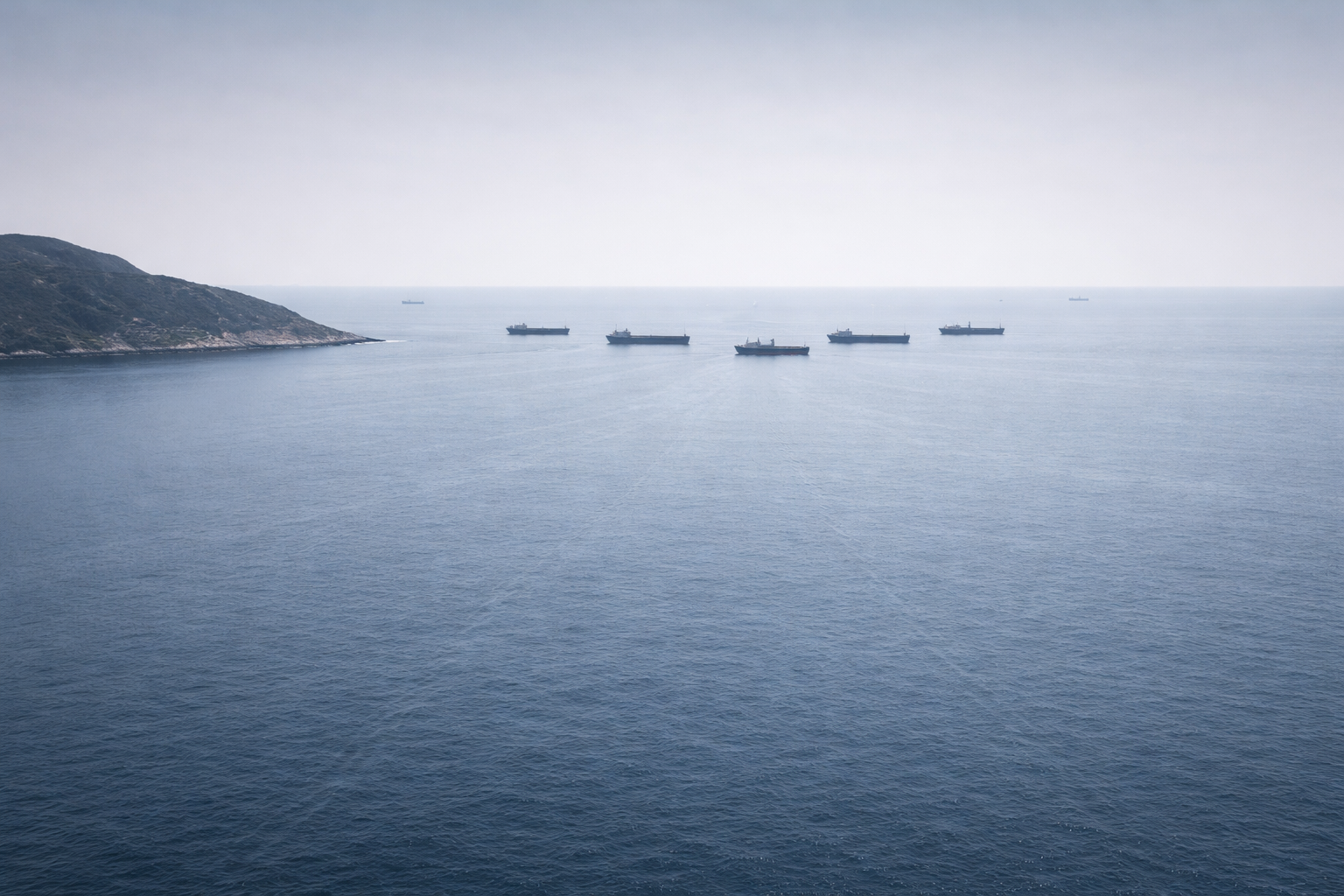
When it comes to acting on prices, taxes are often short-term measures. They can have positive effects. But the real situation we are facing is a form of shortage that is now emerging. This is about very concrete, material realities: ships that were supposed to arrive are not arriving. A shortage is taking hold, already very severe in Asia.
It is worth recalling that Europe is much less dependent on the Gulf for its energy supply than many Asian countries. The various sources of supply—Norway, North Africa, the United States for LNG, and partly the Gulf—show that this dependence exists but remains limited. Some countries have larger reserves; this is the case for China, which also has greater autonomy, while still being largely dependent on the Gulf.
The reality is therefore material: a shortage is taking shape. It is less pronounced in Europe, but it is already being felt. This is happening in the context of an economic crisis, particularly an industrial one, that was already acute before the start of this war. The issue of energy prices was already critical, with the effects of the war in Ukraine: loss of supply, attempts to reorient away from Russia, but at the cost of creating new dependencies—on the United States or on certain Gulf countries.
We are thus seeing a form of hyper-globalization of energy networks that is now proving extremely vulnerable.
On top of the crisis you’re describing, there is also inflation—the general rise in prices, including food prices to come. Should people in France prepare for this?
Yes, it has a strong inflationary effect. We are not in the same situation as with the war in Ukraine, which came after the pandemic and very expansionary fiscal policies. We are not seeing the same kind of surge, but inflation is clearly rising.
Above all, inflation is a composite index: behind it lies everyday life, constrained spending that affects certain activities and certain social groups more than others. That is what is particularly problematic, both socially and in terms of political instability.
For more on the energy crisis and the Strait of Hormuz, read Partial Normalization in Energy Markets After Iran War Deescalation.
This transcript has been slightly edited for clarity.