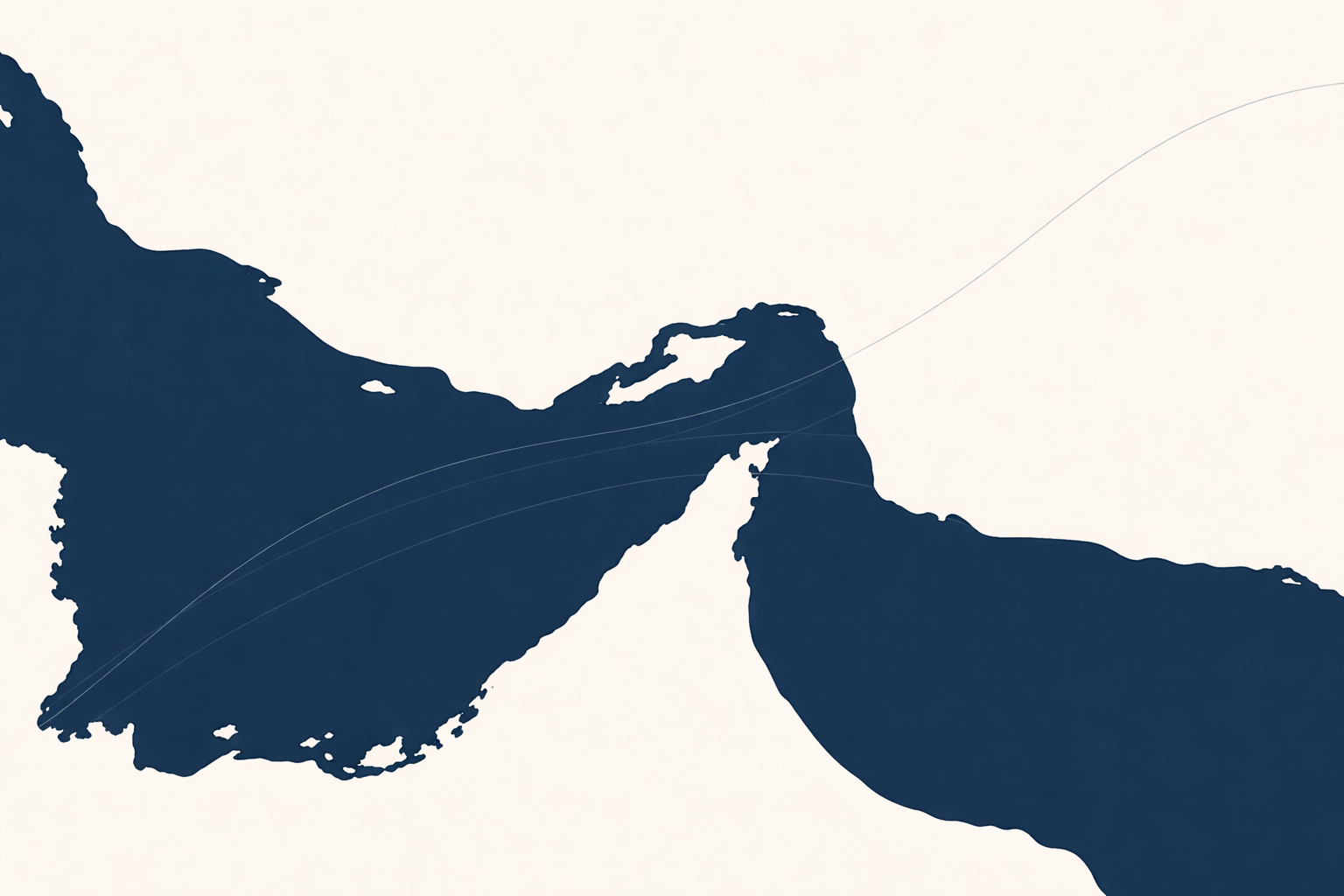
Iran’s control over the Strait of Hormuz is upending global energy markets. Prices remain under pressure, and geopolitical uncertainties are hindering a return to normalcy. Investors and governments must adapt to this new equilibrium, characterized by structurally higher costs and persistent tensions, according to economist Rémi Bourgeot.
Iran’s dominance over the Strait of Hormuz, coupled with the emergence of a new transit regime, is poised to have a lasting structural impact on global supply chains and price formation. This new reality is expected to have enduring effects on both markets and the real economy. There is little prospect of energy markets fully reverting to their pre-conflict state, even in the event of de-escalation.
The conflict has been marked by Donald Trump’s erratic shifts between negotiation overtures and escalation threats, with no viable strategy in sight, underscoring the pressing need for de-escalation. The current ceasefire is diplomatically unstable, with parties failing to agree even on essential aspects such as the halt of Israeli strikes on Lebanon or on the version of Iran’s proposed list of negotiating points. While the prospect of a genuine peace agreement remains distant, the U.S. withdrawal from the Iranian front is rooted in the necessity of extricating itself from a particularly damaging stalemate. It thus seems unlikely that the United States will seek to fully reopen this front.
Nevertheless, a U.S. disengagement without a concrete agreement paves the way for a new, ambiguous situation. The status of the Strait of Hormuz risks remaining undefined, based on the de facto control Iran exercises. It is therefore crucial to anticipate the dynamics that may prevail in energy markets amid this shifting landscape. Iran’s control over the Strait of Hormuz, coupled with the emergence of a new transit regime, is poised to exert a structural impact on global supply and price formation. This new reality is likely to have lasting effects on both markets and the real economy. There is little prospect of energy markets fully returning to their pre-war state, even in a de-escalation scenario.
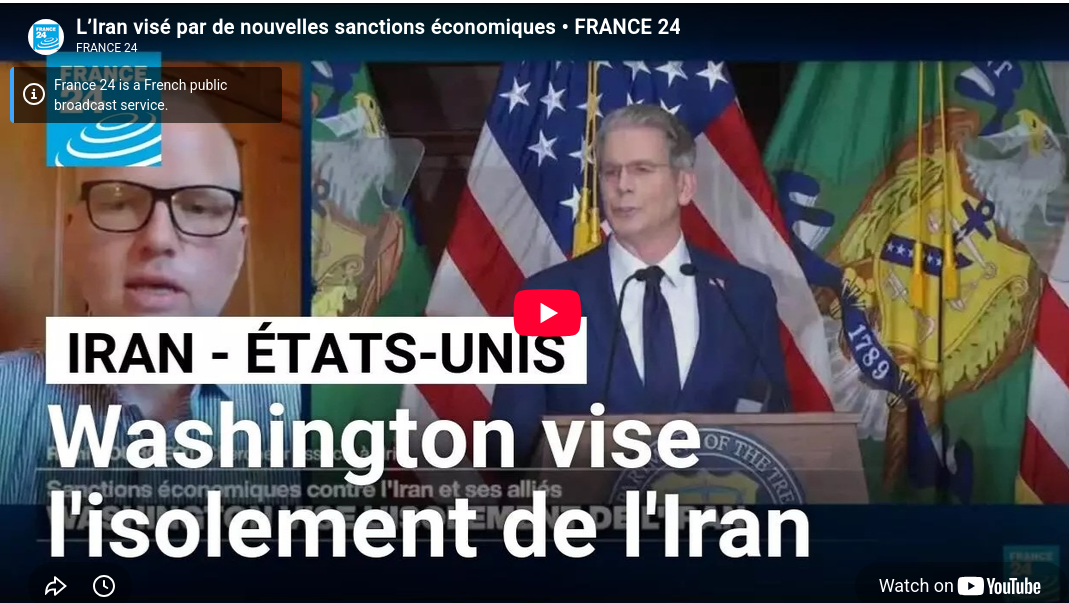
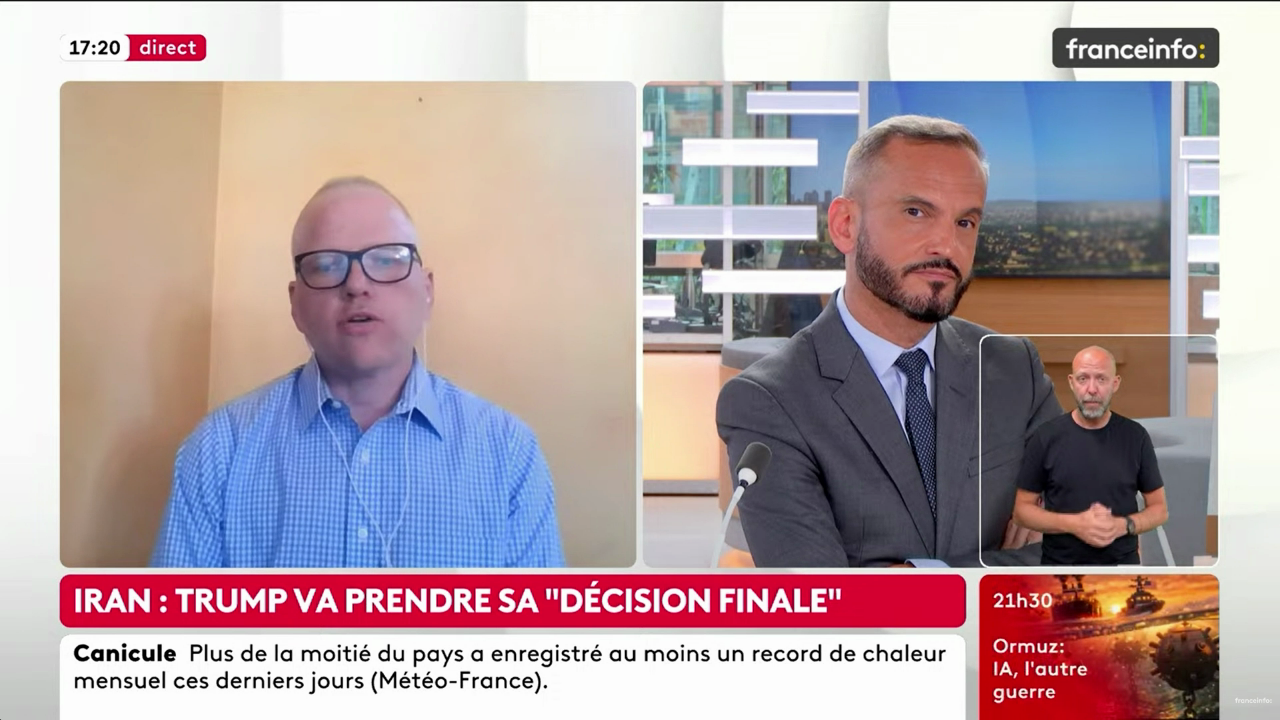
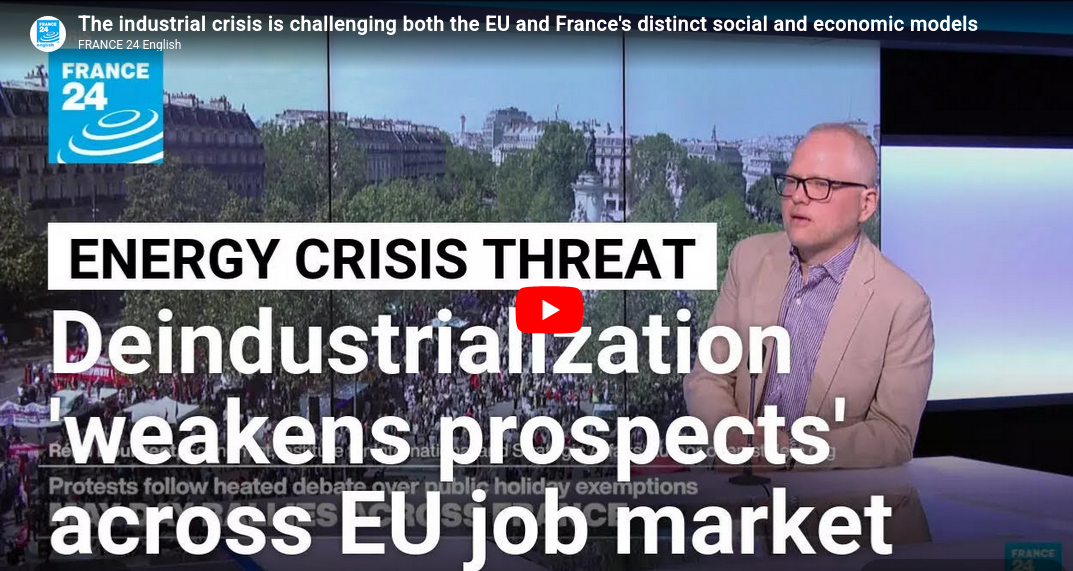
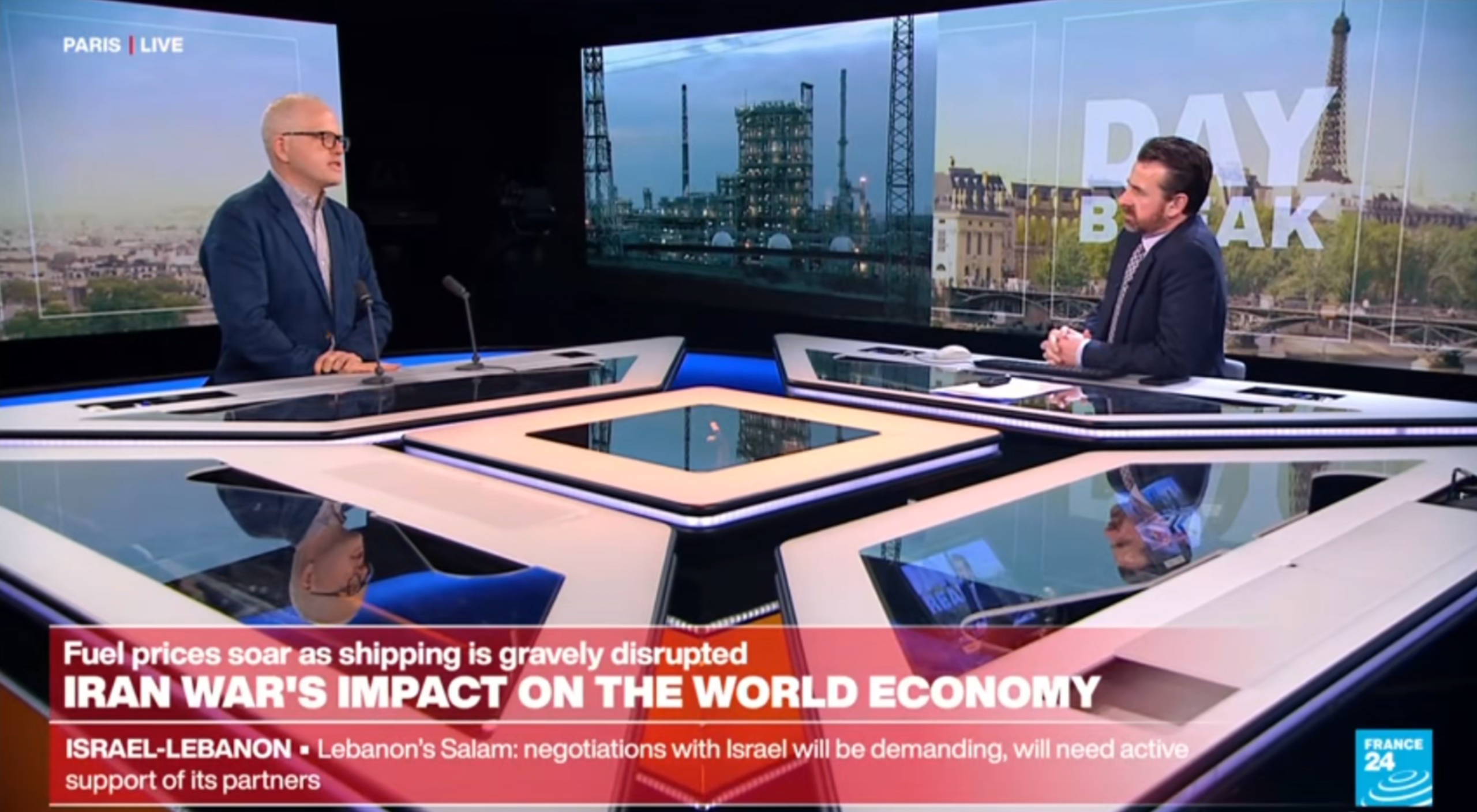
I was interviewed by France 24 about the energy crisis and the challenges of reopening the Strait of Hormuz amid the military stalemate.English transcript below the video.
Rémi Bourgeot, you’ve been following this crisis very closely. Is this only the beginning?
It obviously depends on how the military situation evolves. Donald Trump has been sending mixed signals, and markets have been swinging wildly in response.
What we are seeing, in any case, is a military quagmire. Some geopolitical experts believe this is only the beginning. There are also signs of panic on the part of the U.S. administration, particularly from Donald Trump, who actually dislikes war. In fact, he prefers theatrical operations, like the one in Venezuela a few weeks ago. This, however, is a genuine quagmire.
So he is sending signals suggesting he would like to stop, while striking as hard as possible. The Iranians, for their part, largely dominate the situation, but they are also sending signals through these exchanges, notably with Oman, to at least establish some kind of framework that could apply to a partial reopening.
But what we are heading toward is Iranian control over the Strait of Hormuz. It could be reopened in part, even quite broadly, but likely under Iranian control, given that the United States is not capable of reaching its objectives—assuming there ever were tangible ones.
This Iranian control over the Strait of Hormuz, over time, implies a different system, a different economic regime, notably involving tolls, of which we have already seen certain outlines, partially implemented. That does not mean this will be the final configuration, but costs will be raised and this transit system will be put in place in a way that serves Iran’s geopolitical interests.
There have also been behind-the-scenes signals of exchanges between Iran and certain Gulf states—especially Qatar—to avoid strikes. But the situation is extremely tense, particularly with the United Arab Emirates, which has called on the United States to “finish the job,” to escalate, implicitly suggesting the deployment of ground troops. One could imagine Iran penalizing the United Arab Emirates more than other Gulf states.
And in any case, this reopening cannot be achieved by force, only through negotiations?
There is no real negotiation. There may have been emails or very indirect contacts, but there are very serious doubts about the reality of Donald Trump’s statements when it comes to negotiations.
That said, the notion of de-escalation cannot be ruled out. This is not what we are seeing these days, but Trump is extremely uncomfortable with the situation and understands that he needs to withdraw. His political position is collapsing. There are very serious doubts about his personal condition and about the political system surrounding him. He is dismissing generals around him in order to hear what he wants to hear, to avoid bad news.
What we are seeing is a genuine regime crisis developing in the United States, with much deeper roots. There is also an industrial side to this crisis, as the manufacturing base is unable to sustain what would be a long war.
On the question of ground troops, this is perhaps the most revealing signal: there has been no such announcement. There has been no announcement either of an end to the war or of a withdrawal. Yet sending ground troops would mark the entry into a long war, with even more severe uncertainties—something that would be almost suicidal on Donald Trump’s part.
Today, we are in an in-between situation, with a desire to get out of this quagmire, but Trump wants to be able to claim some form of victory and avoid humiliation. That humiliation is there in any case.
To return to the very concrete consequences of this political and military deadlock, there has been much discussion in recent weeks about measures taken by countries to ration fuel, cut taxes, and provide subsidies. France, for the time being, is refusing to do any of this. Is that relevant?
When it comes to acting on prices, taxes are often short-term measures. They can have positive effects. But the real situation we are facing is a form of shortage that is now emerging. This is about very concrete, material realities: ships that were supposed to arrive are not arriving. A shortage is taking hold, already very severe in Asia.
It is worth recalling that Europe is much less dependent on the Gulf for its energy supply than many Asian countries. The various sources of supply—Norway, North Africa, the United States for LNG, and partly the Gulf—show that this dependence exists but remains limited. Some countries have larger reserves; this is the case for China, which also has greater autonomy, while still being largely dependent on the Gulf.
The reality is therefore material: a shortage is taking shape. It is less pronounced in Europe, but it is already being felt. This is happening in the context of an economic crisis, particularly an industrial one, that was already acute before the start of this war. The issue of energy prices was already critical, with the effects of the war in Ukraine: loss of supply, attempts to reorient away from Russia, but at the cost of creating new dependencies—on the United States or on certain Gulf countries.
We are thus seeing a form of hyper-globalization of energy networks that is now proving extremely vulnerable.
On top of the crisis you’re describing, there is also inflation—the general rise in prices, including food prices to come. Should people in France prepare for this?
Yes, it has a strong inflationary effect. We are not in the same situation as with the war in Ukraine, which came after the pandemic and very expansionary fiscal policies. We are not seeing the same kind of surge, but inflation is clearly rising.
Above all, inflation is a composite index: behind it lies everyday life, constrained spending that affects certain activities and certain social groups more than others. That is what is particularly problematic, both socially and in terms of political instability.
Donald Trump is looking for an off-ramp from the Iran war quagmire. While threatening major escalation that would make parts of the region uninhabitable, he claims that negotiations are taking place.Although real peace negotiations are now out of reach, given the unbridgeable gap in demands, a deescalation is possible.
Countries dependent on energy imports from the Gulf however brace for long term consequences even if the conflict halts. Production capacity is now damaged and Iran is likely to retain a high level of control over the strait.
Europe is less exposed to the supply crisis than Asia but the energy price surge severely aggravates its multiple crises, from manufacturing to debt management. The relegation of nuclear energy leaves the continent particularly exposed to this succession of geopolitical crises, with governments constantly shifting from one external dependency to the next as shocks erupt.
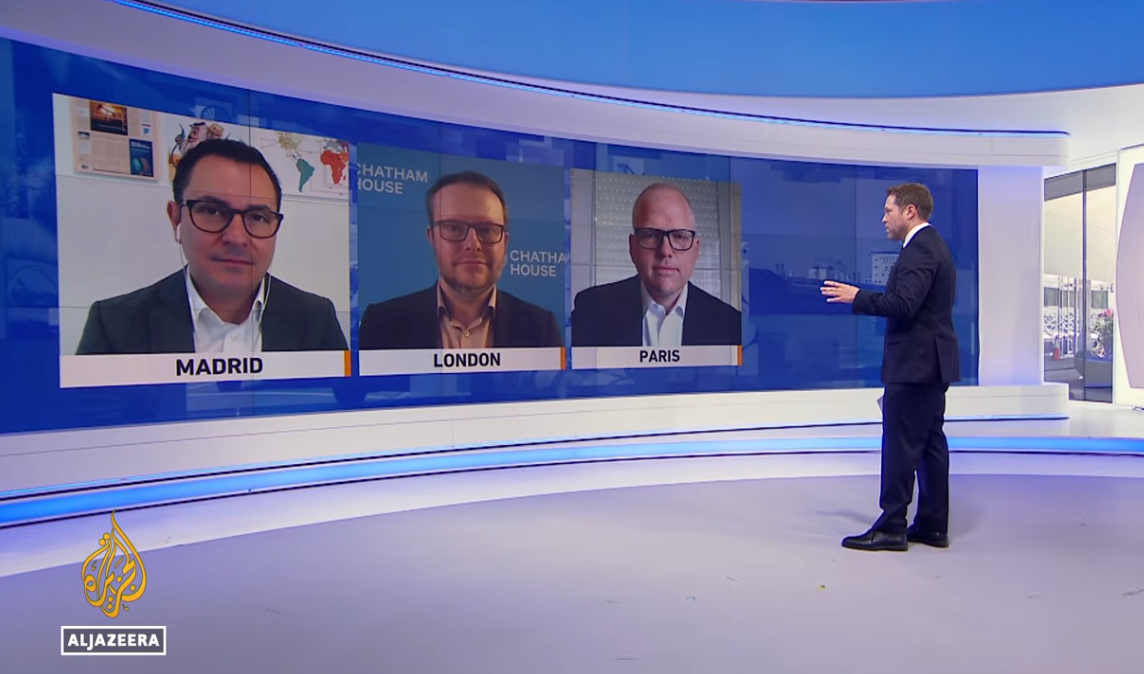
I took part in Al Jazeera’s Counting the Cost. Extracts of my interventions are available here.
Op-ed published by Les Echos on 24 March 2026. As Donald Trump seeks a way out of the Iranian quagmire—to suspend hostilities without any real prospect of peace—I invite you to consider a broader reflection on the strategic void that accompanies this situation:
The war with Iran reveals a structural failure within the American decision-making apparatus, marked by a difficulty in aligning immediate tactical actions with long-term political objectives. This misalignment extends beyond the military sphere. Defense, trade, finance, and technology policies interact in a chaotic manner. The conduct of the trade war has already illustrated this: the legitimate goal of reindustrialization has been overshadowed by geopolitical coercion.
In this very real war, the inability to anticipate the consequences of a failed regime change or the closure of the Strait of Hormuz further demonstrates a loss of overall vision. The military instrument is wielded without a political framework capable of setting a clear direction.
These strategic and material flaws, already evident in the war of attrition in Ukraine, suggest a system grappling with internal contradictions and a reliance on a form of virtual thinking. The strategic framework appears frozen in patterns inherited from the era of the Iraqi adventure, even as industrial and geopolitical realities have radically transformed, reshaping the balance of power. This latest crisis calls on Europe to undertake a difficult reorientation.
Retreat of Monetary Hegemony
Economic sanctions have become a central tool of diplomacy. Yet their use generates side effects that are beginning to reshape the global financial architecture. Initially designed to isolate specific actors without direct military engagement, these measures have accelerated the search for alternatives. Beyond the surge in gold, we are witnessing a proliferation of bilateral agreements in local currencies and the development of parallel clearing systems, which are undermining one of the pillars of American power.
The Iranian conflict acts as a catalyst here. The paralysis of the Strait of Hormuz underscores how power depends not only on dematerialized flows but even more on complex material systems: energy and industrial infrastructures. The West finds itself in a position where its instruments of pressure are losing effectiveness as regional powers adapt, coordinate outside traditional frameworks, and are prepared to escalate.
Industrial Wars of Attrition
Above all, the evolution of recent operational theaters, particularly in Ukraine, has forced a belated rediscovery of the importance of the industrial base. Technological superiority and the development of financial markets may have created the illusion that mass production capacity was secondary. The reality of a war of attrition has shown that economies with much more modest GDPs, but equipped with resilient production systems supported by China, can stand up to technological powers whose production chains are fragmented or optimized for peacetime.
This situation reveals a divide between nominal wealth, driven by services and intangible assets, and the actual ability to mobilize material resources in prolonged crises. Tensions over ammunition stocks and delays in reactivating defense industries illustrate this lack of industrial depth. Although deindustrialization is recognized as a risk to social cohesion and strategic autonomy, the response has remained superficial. Tariff policies are often employed erratically, serving more as diplomatic tools than as genuine levers for rebuilding an integrated productive fabric.
Misalignment of Capital and Educational Erosion
Meanwhile, financial markets continue to channel capital toward high-visibility sectors, to the detriment of fundamental infrastructure. The AI bubble absorbs a disproportionate share of investments, while heavy industry and industrial transformation struggle to attract the necessary funding. This imbalance creates a two-speed economy, where digital innovation advances without an industrial infrastructure capable of withstanding geopolitical shocks.
This crisis of strategic thinking is rooted in the weakening of educational structures, particularly in scientific culture and the classical humanities. The decline in science education reduces the ability to grasp the physical and technical constraints of the real world, fostering a virtual vision where it is believed that large language models can replace versatile engineers. At the same time, the retreat of the humanities deprives decision-makers of the historical intuition needed to understand the long term.
Europe particularly embodies this tension. The continent’s industrial catch-up is hampered by regulatory complexity, compounded by a shift in decision-making power from the technical to the administrative, reducing the capacity for long-term planning. The management of contemporary crises highlights the need for a transition toward a systemic approach, integrating energy security, industrial resilience, monetary stability, and technological innovation within a strategic framework. This transformation cannot occur without questioning decision-making and educational mechanisms. The reallocation of resources must be accompanied by a renewed emphasis on fundamental knowledge, capable of restoring a long-term vision.
This piece was originally published on Les Echos website in French.
I answered questions from journalist Nils Adler on gold’s steadiness despite the Iran quagmire. In addition to quotes on Al Jazeera’s website, here is my broader analysis.
A geo-economic shock such as the disruption of the Strait of Hormuz would traditionally be seen as driving gold demand higher. However, structural factors have tempered its safe-haven appeal.
Flight to Liquidity, Volatility, and Market Psychology
During major crises, financial markets often experience broad stress, with assets across the board under pressure as investors seek liquidity and safety, particularly in the U.S. dollar and Treasuries. Even gold, historically a safe haven, can remain flat or decline when markets favor cash or liquid assets. This pattern has been evident as the Iran war escalated. Gold has stayed relatively stable rather than rallying sharply, despite extreme tensions. Paradoxically, it is the potentially systemic nature of this crisis that limits demand for gold, as other financial mechanisms play out.
In addition, the Federal Reserve’s stance remains decisive. Rising energy costs and persistent inflation reinforce expectations that interest rates may stay elevated, strengthening the dollar and making interest-bearing assets more attractive than non-yielding gold. This interaction suppresses bullion’s immediate appeal, showing how monetary policy interacts with geopolitical and structural financial risks.
Also, the gold market is increasingly shaped by speculative trading and heightened volatility, which can spook risk-averse investors. Rapid swings and profit-taking discourage accumulation, undermining gold’s role as a safe-haven asset. Pre-existing multi-year highs amplify this effect, preventing a full-scale flight into bullion. Speculative volatility can defeat gold’s short-term function.
Meanwhile, apart from bouts of systemic financial risks which can trigger flights to dollar liquidity, the geo-economic landscape will remain shaped by massive fragmentation, which support diversification efforts, including into gold over the longer term.
Protracted Stalemate, Escalation Risk, and Energy Shocks
The U.S. is faced with a strategic fiasco, as Donald Trump did not anticipate Iran’s response on gulf states and the strait of Hormuz. While he threatens to keep going up the escalation ladder, even his closest allies refuse to participate in high-risk, potentially suicidal, missions to escort tankers in the strait. The economic and political consequences pressure him to look for an escape strategy,
However, even in case of deescalation, cessation of hostilities and reopening of the strait, a long-term negotiated peace between US/Israel and Iran is now out of reach for the foreseeable future. The central scenario is a protracted stalemate, which prolongs regional instability and durably threatens the Gulf’s export reliability. The conflict cannot be seen as a mere short-term and limited event. It will have significant consequences on the global economy and the block logic.
Sanctions and Financial Fragmentation
The expanding scope of sanctions and the increasing use of trade policy as a tool of geopolitical coercion have contributed to a fragmentation of the global financial system, encouraging state institutions, banks, and multinational corporations to explore alternatives to dollar‑based mechanisms. Where once the dollar served as a relatively uncontested anchor for international trade and reserve holdings, the growing risk of exclusion from dollar clearing and finance has led policymakers in several regions to reassess their reliance on U.S.‑centric systems. The war in Ukraine illustrated how quickly the reliance on traditional financial instruments can shift. The outbreak of hostilities and the flow of sanctions coincided with a sharp rise in the price of gold, as investors and central banks sought perceived safe havens.
More recently, escalating trade tensions and competitive tariff strategies have prompted renewed diversification, whether through other currencies, gold and other commodities, or the development of regional payment systems. These dynamics suggest a broader reassessment of long‑standing assumptions about dollar dominance and raise questions about how economic policies will evolve in an era of intensifying geopolitical rivalry.
The Essence of Gold
Gold’s trajectory depends on the consequences of the Iran conflict, central bank responses, and the structural fragility of global finance. The muted price response to the Iran war confirms that gold does not always skyrocket during crises. Its enduring value lies in being a real, physical store of wealth, reflecting interactions among liquidity, sanctions, dollar dominance, interest rates, speculative volatility, and strategic uncertainty, rather than acting solely as a short-term panic hedge. Even under strong sanctions and geopolitical risk, gold’s primary role is preservation of wealth, not reactive price spikes.
This piece is published for analytical purposes and does not constitute investment advice.
Click on the image to listen to the recording on LinkedIn, in French
Full transcript of my interview with France Info public radio on 18 January 2026.
France Info: Hello, Rémi Bourgeot, thank you for joining us on France Info. In just 24 hours, do you think we have crossed all the thresholds that lead to a trade war, an economic war with the United States?
Yes, in fact, we’ve been in this situation for quite some time. You’ll recall that last year, headlines were dominated by Donald Trump’s threats—threats of escalating tariffs—which ultimately led to a so-called “agreement” that was really just a series of demands accepted by the European Commission, including blanket tariffs of 15%, and, on top of that, Europe’s acceptance of very strict constraints, particularly to avoid over-regulating or challenging Californian tech giants. So that’s where we’re coming from. Things had quieted down a bit in recent months.
So, yes, the end of this agreement was extremely unfavorable to the European Union, not only because of the tariffs but also because of the constraints that came with it, and Europe simply accepted the American demands?
Absolutely. This agreement was extremely unfavorable to the European Union, not just because of the tariffs but also because of the constraints that accompanied them. Europe simply accepted the American demands. There wasn’t really any negotiation on the part of Ursula von der Leyen, who was later criticized by several European countries. We thought that was the end of it, but in reality, we’re seeing a much broader deterioration in relations between Europe and the United States—a genuine explosion within the Western bloc.
This is particularly tied to the issue of Ukraine. We can see that the trade measures are targeting countries within the so-called “coalition of the willing.” So this is a much broader escalation. It seems that Trump actually wants to blow up NATO. This is a very aggressive show of force, which today goes far beyond trade—now a secondary issue. We’re in a frankly absurd situation with this Greenland issue. If there were a genuine strategic interest—and perhaps there is for the United States—they could achieve the same benefits through cooperation with Denmark, a country that is extremely close to the United States. Here, we’re seeing broader patterns in Donald Trump’s approach. It’s a much deeper, more long-term deterioration.
The fracturing of the Western block—isn’t that exactly what Donald Trump wants? How can we respond?By activating the anti-coercion mechanism, for one. Emmanuel Macron and his team have indicated that he will call for this instrument to be activated among his European partners. Concretely, Rémi Bourgeot, this is being called an economic “bazooka.” What would it actually look like if this mechanism were triggered?
Well, first of all, we should have threatened and entered into this showdown with Donald Trump from the very beginning, during the negotiations this summer, to avoid being crushed. We needed to understand that this was just the beginning. Today, we’re facing a much broader and more serious aggravation, so we can’t just defend ourselves on the trade front. We have to respond. These measures are part of a fairly broad framework. People talk about a “bazooka,” but it was originally designed to be used against other countries, particularly China. It requires a very large majority in Europe to implement, so it’s not a done deal. But at the very least, we must consider a response. Trump’s counter-response will be escalation, with the threat of economically crushing the Europeans, because his logic is one of humiliation. He has no respect for European leaders, and there are deep disagreements on burning geopolitical issues like Ukraine.
Rémi Bourgeot, you’re describing a catastrophic scenario. How can Europe resist such escalation?
The catastrophic scenario is war, which is unthinkable between Europe and the United States. But what we’re going to see now is escalation. This current escalation, with threats of additional 10% tariffs on the countries involved, was triggered because Europe sent a few soldiers—almost symbolically—to Greenland. On the surface, it’s almost nothing, but Trump tolerates no opposition, even to demands as extraordinary and absurd as acquiring Greenland. The relationship is in a dynamic of fracture. We’re going to see all kinds of escalations. But Trump does tend to back down when faced with firm resistance. China, for example, threatened further escalation and deployed its own “bazooka”—restricting the export of rare earth minerals—which created massive industrial problems for the United States. India, threatened with secondary sanctions to limit its trade with Russia, also reacted strongly. So Trump is sensitive to pushback.
We need to understand this context of deteriorating relations with Europeans over the central issue of Ukraine, which is at the heart of this escalation.
Thank you very much, Rémi Bourgeot, for your analysis as an economist and associate researcher at IRIS. This trade war has existed in reality since Trump’s return, but it seems to be taking a more concrete form in the last 24 hours, with these new tariffs announced by the American president and Europe’s announcement that it intends to retaliate.
This op-ed has originally been published by Les Echos(fr).
The generative AI bubble is built on circular funding between sector players, valuations disconnected from economic realities, and an extreme concentration of resources on large language models (LLMs). What should be alarming is not so much the scale of these investments as their stark contrast with the disintegration of Western industrial capacities. The war in Ukraine exposed this structural flaw, revealing the inability to produce sufficient quantities of essential military equipment—the result of decades of deindustrialization and skewed capital allocation. Beyond its strategic dimension, this paradox calls into question how we measure economic power.
On the AI front itself, the success of more frugal players like Mistral or DeepSeek demonstrates that innovation does not depend solely on a relentless race to build ever-larger models. Billions continue to pour into colossal physical infrastructures—energy-hungry data centers, specialized chips, computing networks—without questioning the fundamental limits of LLMs. These massive investments stand in sharp contrast to the chronic underfunding of industry, and paradoxically, of automation.
Beyond the fantasy of a dematerialized digital world, data centers are infrastructures that consume vast material resources: energy, rare metals, electronic components. Their proliferation highlights the current paradox: we are exponentially increasing computing power, while the productive sectors that could benefit from these technologies lack funding and orders. Many of these sectors launch AI projects merely to tick a box and make announcements to attract investors. In the military domain, autonomous drones, intelligent combat systems, and predictive maintenance represent concrete applications where AI will make a difference—but only if integrated into a solid industrial base, rather than betting everything on unreliable models.
The production chains for ammunition, armored vehicles, and electronic components, weakened by years of underinvestment, struggle to meet demand. Factories have closed, skills have dwindled, and revival attempts are hampered by the absence of long-term strategic planning. The United States, despite its own contradictions, is trying to correct this imbalance by relocating some strategic production. Europe, however, remains on the sidelines, locked in extreme technological dependence that undermines its sovereignty.
The core issue lies in this skewed allocation of resources. Capital and talent are concentrated on speculative technologies, while industrial applications of AI—advanced robotics, autonomous systems, production process optimization—remain underfunded. Above all, they lack commercial guarantees in the form of orders. This creates a vicious cycle: the more investments flow into LLMs and their infrastructure, the fewer resources remain to modernize the real productive apparatus.
Yet AI could be a major lever for reindustrialization if approached differently. A more balanced strategy would involve redirecting some investments toward industrial automation, developing practical applications embedded in production processes, and fostering hybrid skills that combine digital expertise with industrial know-how, rather than chasing publicity stunts.
Without this strategic shift, the gap will widen between an oversized digital sector and an industrial base unable to meet material challenges. The war in Ukraine served as a wake-up call. Power is not measured solely by the ability to develop sophisticated algorithms but also by the capacity to produce essential equipment. The challenge is not to reject AI but to reintegrate it into an industrial logic, where digital innovation finally serves material production rather than replacing it. Without this rebalancing, the West risks ending up with an economy where computing power soars, but factories continue to close.
A growing divide between those advocating for production, resilience and know-how, and a bureaucracy still mired in the limbo of the 1990s.
The EU is rushing to finalize a trade deal with the Mercosur while simultaneously preparing protective measures against Chinese products that can no longer find a market in the United States.
I took part in Al Jazeera’s Inside Story discussion with Andy Mok and Ben Aris. Ailing European economies need to rebalance their trade relations with China and break out of their self-inflicted technological doom loop.
On Donald Trump’s orders, in exchange for unilateral tariffs of ‘just 15%’, the EU suddenly revises its digital regulations to open its market even wider to American Big Tech. But it’s all in the name of competitiveness…