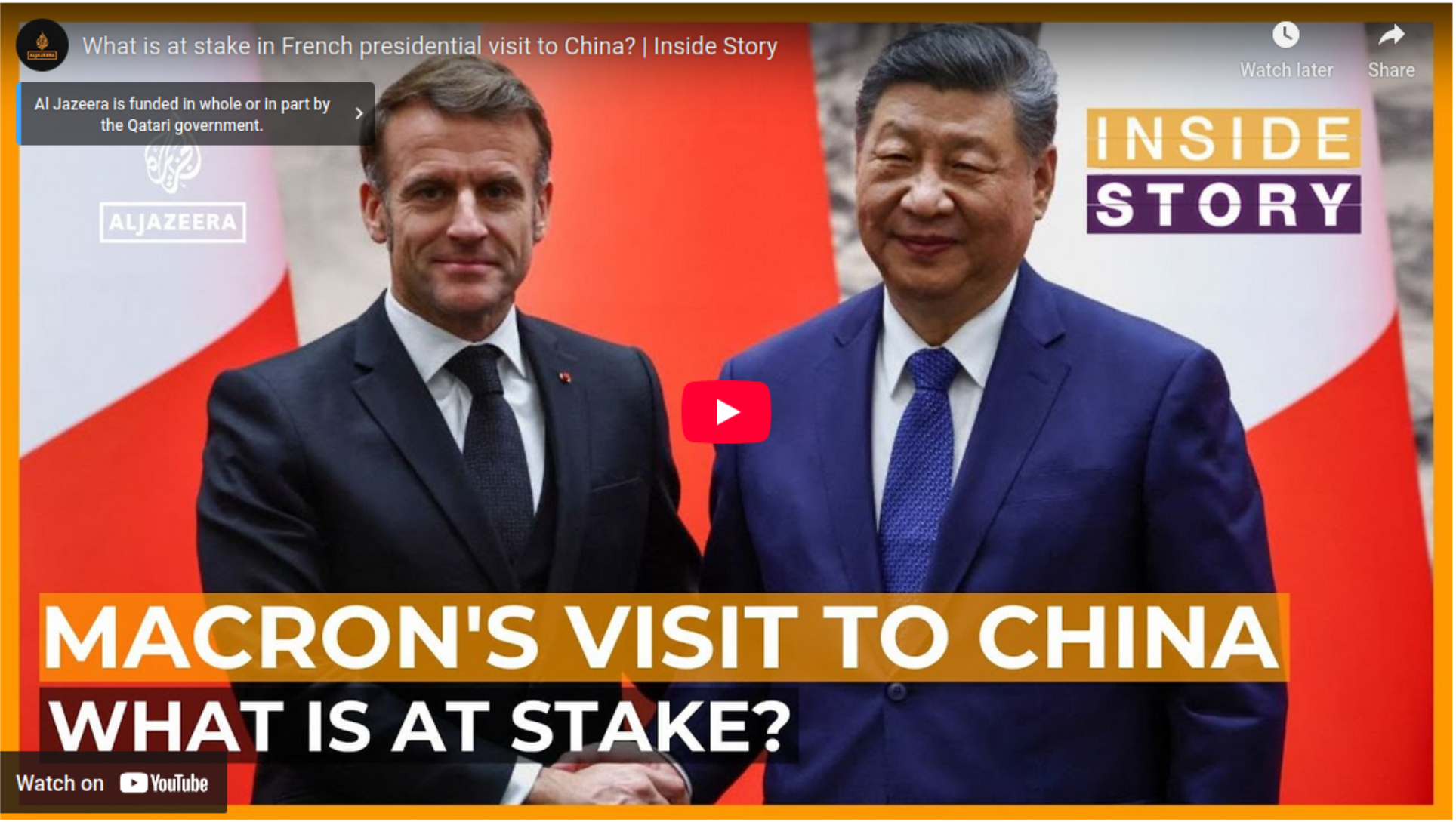
Donald Trump said after a summit in South Korea with his Chinese counterpart Xi Jinping that he had agreed to reduce tariffs on Chinese products to 47% in exchange for Beijing guaranteeing a supply of rare earths and buying American soybeans
Category: Industry
-

Europe is selling out its future to Trump

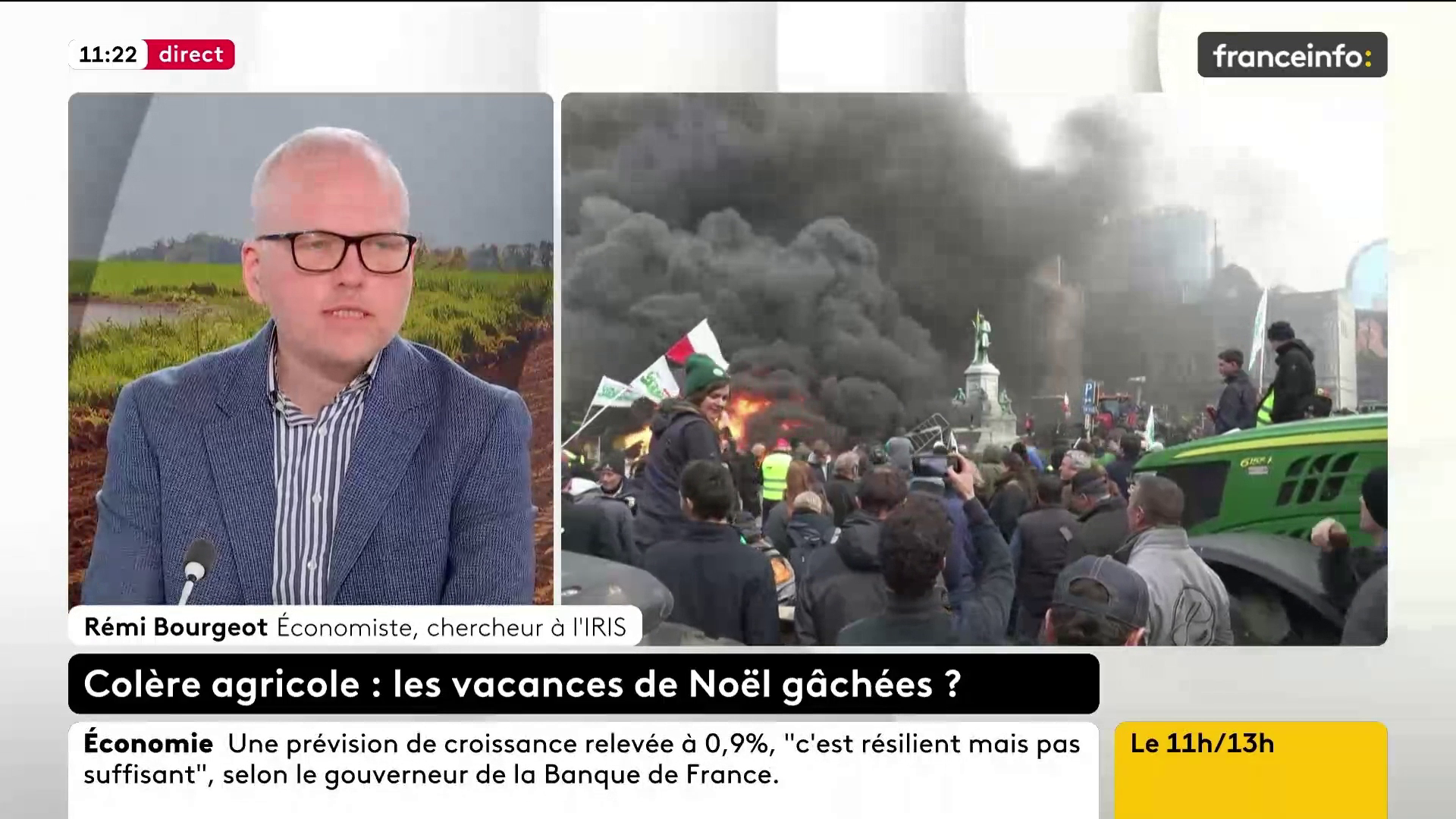
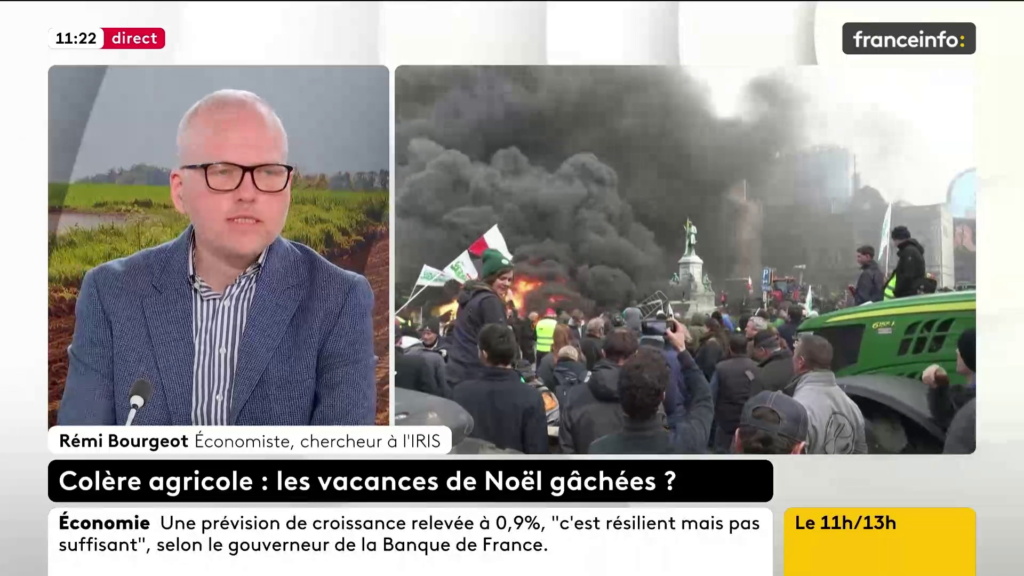
“I was on France Info TV yesterday discussing how, behind the threat of chaos, Trump is successfully pushing a new paradigm of unilateral tariff protection. While these tariffs are relatively modest, they come with a long list of demands aimed at deepening his partners’ dependencies in digital, military, and energy sectors. Meanwhile, Europe is sacrificing its technological future to prop up its legacy industries.
Click the image to access the video (in French).
-

Semiconductors Are the Achilles’ Heel of the AI Giants
The ultra-concentration in the design and production of semiconductors for AI, centred around Nvidia and TSMC, is fuelling the interest of digital giants, which are highly dependent in this regard. However, catching up looks to be a difficult task, despite the mobilisation of state actors.
The explosion of artificial intelligence rests on two pillars of a different nature: on the one hand, the development of large language models such as GPT, and on the other, spectacular computing power with dedicated processors. These are designed in particular by the omnipresent giant Nvidia, and manufactured by a tight handful of actors, especially the Taiwanese company TSMC. AI models and semiconductors both require gigantic investments and cutting-edge expertise. However, these are two worlds that, although they cooperate closely, respond to very different requirements.
In terms of model development, American digital giants such as Microsoft, Meta and Google have all the technological, economic and political resources to dominate the sector, both internally and through acquisitions/partnerships. This latter aspect even enables them to domesticate the diversification seen with the explosion of open source, i.e., models that are freely distributed and reusable by anyone. Although open source allows an entire AI ecosystem to exist, it cannot exactly be seen as David’s weapon against Goliath, as the giants themselves are deeply invested in it. Meta’s LLaMa language models are, for example, open source. Moreover, the financial weight and grip of Big Tech are such that we are seeing independent actors being drawn into their orbit one after the other. The French gem Mistral recently announced it was joining Microsoft’s fold, entrusting it with the distribution of its most advanced model, which will therefore be closed. The giants thus have ample means to maintain control over model development.
Nevertheless, behind the domination of these behemoths, the importance of the processors that enable the training of these AI models should not be underestimated. It is in fact the crux of today’s technological warfare and lies in the hands of industrial giants of a different kind. The entire AI scene remains highly dependent on a semiconductor design and production chain that is incredibly concentrated, revolving around Nvidia and TSMC.
A boom in demand for semiconductors dedicated to AI, and very few suppliers
For digital giants, autonomy in terms of semiconductors remains a challenge in which it is difficult to position oneself. After years of investment, Nvidia holds a near-monopoly position in the design of semiconductors dedicated to AI. The American company designed 80% of this type of semiconductor worldwide last year.
Once the design is completed, Nvidia outsources their manufacturing to Taiwan’s TSMC, one of only ten companies in the world capable of producing them. Nvidia is said to be “fabless”. In this industry, manufacturing a semiconductor requires a production line with specific characteristics (manufacturing equipment, testing and packaging). These new production lines are extremely costly. A brand-new factory (or foundry in the sector’s terminology) requires between 15 and 20 billion dollars and a minimum of two years of construction. Very few economic players can invest such colossal sums and overcome the entry barriers to the foundry market (“Fabs”).
States are seizing the issue in the name of technological sovereignty
Despite the enormity of the investments, some actors are entering or returning to this market, such as the American Intel or the Japanese Rapidus. Manufacturers already in the race, like TSMC or South Korea’s Samsung, are continuing to invest in an attempt to maintain their market shares. After the Covid-19 crisis and the subsequent semiconductor shortage, several states decided to relaunch their financial support for the sector. “Chip Acts” have multiplied to increase national semiconductor manufacturing capacity, bolster economic security and guarantee supplies for military use even in times of crisis. Among these countries are the United States in 2022 with the Chips and Science Act ($39 billion), the European Union with the Chip Act (€43 billion in 2023), Japan with the creation of the Rapidus conglomerate and a support plan ($100 billion for Rapidus and new TSMC factories over 2023–2027), China with the launch in 2023 of phase 3 of the Chinese government’s semiconductor fund ($46 billion for 2023–2027), and South Korea with a government plan of $7.3 billion. In the United States, the leverage effect of public subsidies in the sector is noteworthy. The $39 billion of the Chips and Science Act encouraged a wave of private investments amounting to $200 billion, spent by American and foreign companies on American soil.
New entrants and a new scale of financing
Until new factories produce more chips, supply will not be able to meet global demand for AI-dedicated chips. Hence a significant rise in prices. A Nvidia GPU (H100) can cost up to $40,000 per unit. Its availability is limited, because even with increased production volumes, the company still cannot meet market demand. Some users and buyers of Nvidia chips are concerned about being dependent on a single supplier. This is the case for Sam Altman, CEO of OpenAI, because the lack of AI chips risks hindering the development of his own company. Why not try to create one’s own industrial tool to restore this supply-demand imbalance? This is the logic of every new entrant in a booming sector. Sam Altman has been holding numerous meetings with manufacturers and investment funds over the past few months. In his initial estimates, he mentioned a (staggering) investment goal of $7 trillion to build a new segment of the semiconductor industry. The project is still ongoing. And Altman is not alone. Initiatives are springing up. Apple is working with TSMC to manufacture AI chips. The head of the Japanese group SoftBank, Masayoshi Son, wants to turn his group into an AI powerhouse. His latest project is to enable its subsidiary ARM to create a new AI chip division. A prototype will be tested in spring 2025, and mass production should begin in autumn 2025. For its part, Nvidia is maintaining its technological lead in a rapidly growing market. According to the Canadian research centre Precedence Research, the global market is expected to reach $100 billion by 2029 and $200 billion by 2032.
This new type of shortage is prompting digital giants to position themselves in the segment, each in their own way. Faced with these ambitions, Nvidia continues tirelessly to position itself to do even better, notably better than what the giants will probably be able to achieve in designing AI-dedicated processors. The digital giants find themselves caught in an industrial vice that will be difficult to overcome. The prospect of balanced global competition in which all major regions manage to position themselves remains distant and uncertain. Beyond their own interests, the ultra-concentration of AI-dedicated semiconductors highlights a very real risk to industrial resilience across the entire chain, down to end users. In this regard, diversification is a major political issue.
This piece was originally published by the French Institute for International and Strategic Affairs – IRIS.
-

Mistral Under Microsoft: Europe’s AI Catch-Up Challenge Remains Unresolved
Mistral AI’s move into Microsoft’s sphere has sparked political criticism in Europe. As a champion of open source, the company had recently advocated for a more flexible AI Act before announcing its shift to a closed model. Nevertheless, its technical success in developing foundational models with limited resources demonstrates Europe’s—and other global players’—potential to catch up. However, achieving true autonomy would still require overcoming a difficult economic equation that pushes the most promising startups into the arms of Big Tech.
Mistral’s Success Highlights Europe’s Technical Potential in the AI Race
Many observers had assumed Europe was destined to remain merely a user of American AI models for developing various applications. Technically, Mistral’s success confirms the opportunity for a relatively resource-efficient AI compared to Big Tech’s massive data usage and financial and human resources.
In just a few months, Mistral managed to develop AI models that rival OpenAI, Google, and Meta in performance, with significant but far more limited resources than those of the American giants. This is particularly striking in terms of workforce, with its team of around thirty employees. This achievement not only showcases the team’s prowess but also sheds light on the nature of the technology driving the generative AI boom.
Beyond new neural network architectures (like transformers), the spectacular progress in AI over the past decade has largely been due to the use of enormous amounts of data and computing power. While riding this wave of quantitative explosion, Mistral has also carved out a path for more refined AI engineering, allowing it to establish itself on the global stage in record time.
Even amid an educational crisis and severe deindustrialization, it remains possible to mobilize skills from top-tier training programs to compete with global tech giants. Beyond the issue of European autonomy, this technical reality offers valuable lessons about the global AI race. Catching up and competing in AI is possible, provided there is sustained funding and market opportunities.
Mistral’s Move into Microsoft’s Sphere Illustrates the Economic Challenge of Independent and Open AI
After positioning themselves as champions of open, reusable models, Mistral’s leaders decided that their new, most advanced model would be closed—distributed through an agreement with Microsoft, which is also taking a stake in the company. The open-source approach had boosted Mistral’s appeal among developers, alongside other open models like Meta’s LLaMA, in contrast to the now radically closed model of the misnamed OpenAI.
In fact, it was precisely this shift that led Elon Musk, who had been involved in OpenAI’s launch, to recently announce legal action against Sam Altman’s company. Beyond the irony of the billionaire’s outbursts, it is true that OpenAI, with its labyrinthine structure, reflects a gap between its original open-source and research-focused mission and its current purely commercial purpose. The issue of Big Tech’s grip on AI is particularly sensitive for Europe but is also relevant in the United States.
Like OpenAI, Mistral’s agreement with Microsoft confirms its technical success and popularity. The French company is also launching a chatbot called “Le Chat,” modeled after ChatGPT. However, this partnership, for now, buries the dream of an independent, open-source European AI.
Beyond the recent virulent attacks on the company’s leadership, we must question the European economic environment. The core issue remains the prospects for development, funding, and commercial opportunities needed to maintain a leading position in the digital sector. These challenges and the financial power of tech giants inevitably draw successful startups into their orbit. It is this economic aspect that has turned Mistral’s technical feat, which could have marked a turning point toward autonomy, into a strategic setback for Europe.
Beyond Distrust of Lobbying, a Flexible Approach to AI Regulation Remains Essential
The AI Act addresses an obvious need for regulation and risk management in AI. However, its complicated development has resulted in particularly convoluted agreement terms. Its creators had missed the generative AI revolution and embarked on a titanic adaptation effort last year.
The idea of positioning Europe as the world’s digital regulator, with too little concern for the continent’s technological offerings, poses an existential risk to the European economy and its competitive autonomy. Moreover, with its difficult application to future technical developments, the AI Act risks serving the interests of Big Tech, which has the means to navigate these regulatory labyrinths. Mistral’s move into Microsoft’s orbit seems to confirm this.
Mistral had strongly advocated at the end of last year for a loosening of the AI Act, particularly regarding open-source foundational models of generative AI. It is natural to think that the company had already considered its shift to a closed model in partnership with Microsoft. Nevertheless, the concessions made in response to objections from the French and German governments, defending their national companies like Mistral and Aleph Alpha, mainly concerned open source, which will thus benefit from greater flexibility. While Mistral’s reversal may be regrettable, its lobbying primarily resulted in a loosening of the AI Act that could, under certain economic conditions, encourage the emergence of future open-source competitors.
This piece has initially been published by the French Institute for International and Strategic Affairs – IRIS.
-
The Industrial Revolution Will Outlive the Liquidity Bubble
The Nasdaq has increased tenfold between the beginning of 2009 and the end of 2021, the S&P 500 a little more than five-fold. It was difficult to imagine, when the Fed started its ultra monetary stimulus (followed more or less belatedly by its various counterparts in the developed economies) that the world would go from one crisis management policy to another for more than a decade. The method of massive monetary stimulus has become, over the years, monolithic, inflating huge bubbles. (more…)