
Category: Industry

  • AI Financial Exuberance as a Shield Against Reality

    AI Financial Exuberance as a Shield Against Reality

    Op-Ed for Les Echos, Friday, June 5, 2026. The text below is a more detailed version of the article published in the print edition of the newspaper.

    The general rebound led by AI and semiconductor stocks, since the onset of de-escalation in the Middle East, is not enough to dispel concerns about the current investment cycle. On the contrary, this exuberance raises questions about its sustainability, against the backdrop of a race among LLM providers to go public.

    The already massive and growing weight of the sector in stock indices fuels a self-reinforcing dynamic, driven by passive investments: the more the sector grows, the more it attracts waves of capital, which in turn drive further growth—until a shock finally disrupts this mechanism.

    From this perspective, markets have quickly dismissed material risks—such as energy shortages or supply chain pressures for essential semiconductor inputs—as temporary. This reaction is not merely diplomatic optimism. For three years, the financing model has relied on the stratospheric expansion of LLMs, while downplaying questions about their business models, the consequences of pricing adjustments in the era of agentic AI, or the intrinsic limitations of these models in terms of reliability.

    The strong performance of cloud and semiconductor companies, combined with abundant liquidity and the dominance of a handful of firms, has reinforced the notion that demand for generative AI infrastructure will remain indefinitely robust.

    Circular Capital Flows and Technological Concentration

    This dynamic stems in part from the increasingly circular structure of financing. In 2026, projections for investments by Nvidia, Alphabet, Apple, Microsoft, and Amazon in “hyperscale” infrastructure range between $600 and $725 billion. The interconnections within this ecosystem are particularly tight. Nvidia occupies a central position as both the dominant supplier of GPUs and a key investor, reinforcing a loop in which investments, demand for computing capacity, and production capabilities are mutually dependent.

    Microsoft has invested $13 billion in OpenAI, whose computing costs rely heavily on Azure—further boosting Microsoft’s cloud revenue and its ability to sustain its investments. Google has poured several billion dollars into Anthropic, which has simultaneously committed to massive cloud infrastructure contracts, split between Google and Amazon. Amazon itself has invested around $8 billion in Anthropic, which then developed subsidized access for developers through the cloud infrastructure of these same companies.

    However, usage-based pricing models (per token) introduce uncertainty about whether this growth can translate into sustainable revenue, particularly if mechanisms of “subsidization” or indirect support were to wane. These mechanisms sustain growth expectations but blur the line between independent demand and self-perpetuating capital flows. A significant portion of the sector’s apparent strength rests on a small number of companies that simultaneously finance the infrastructure, provide the computing power, and support the applications consuming that power.

    The rise of passive investing further amplifies this phenomenon. As major AI-related companies see their valuations climb, their weight in major indices automatically increases, attracting more financial inflows and intensifying market concentration. The “Magnificent Seven” now account for between 30% and 45% of the S&P 500’s market capitalization, depending on the period, while Nvidia’s market cap has surpassed $5 trillion.

    Material Constraints and Financial Fragility

    At the same time, the material foundations of this expansion are becoming increasingly critical. Cutting-edge AI depends on massive growth in electricity consumption, semiconductor manufacturing capacity, cooling systems, and data centers. Semiconductor production itself relies on complex industrial supply chains involving LNG, helium, specialty gases, copper, and stable electrical power.

    Helium exemplifies this dependency. Qatar is one of the world’s leading exporters, and any disruption to maritime routes in the Gulf could quickly impact semiconductor manufacturers in East Asia. In Taiwan, several industrial groups have already expressed concerns about the security of LNG and helium supplies.

    Moreover, the island sits at the heart of the U.S.-China diplomatic chessboard, with Trump’s approach amounting to a refusal to engage on the issue. Meanwhile, China has embraced the U.S. strategy of restricting semiconductor exports and is betting on building its own autonomy—centered around Huawei—which, in the long run, could challenge the dominance of American giants and their financial constructs.

    Additionally, the rapid obsolescence of infrastructure adds another layer of fragility. Data centers built around current GPUs could lose a significant portion of their competitiveness for advanced computing workloads in as little as 18 to 36 months, even if they remain usable for inference or secondary applications. Yet, accounting depreciation periods typically span three to five years, potentially obscuring underutilized infrastructure and delaying visibility into long-term financial obligations.

    This is not about questioning the AI revolution itself, but how financial markets treat LLMs’ growth as limitless—underestimating physical, financial, industrial, and geopolitical constraints… as well as the opportunities of alternative models. Large language models fit naturally into the current financial architecture because they deploy efficiently through cloud infrastructure and (partial) subscription-based business models. In contrast, physical AI—particularly in robotics—operates under a different logic. It depends more on real-world deployment and longer development cycles, which align less neatly with current financing mechanisms.

    This dynamic echoes Minsky’s financial instability hypothesis, which posits that long periods of stability gradually encourage increasing risk-taking. The limits of financial and industrial resilience may soon force a rude awakening, perhaps triggered by profit-taking after a wave of IPOs.

  • France Might Become Europe’s Data Center Hub, but Where Does It Stand in the AI Race?

    France Might Become Europe’s Data Center Hub, but Where Does It Stand in the AI Race?

    Interview with Atlantico on France’s AI Infrastructure investments, following the 2026 Choose France Summit announcements (Excerpts).

    Are the Choose France announcements a sign that France is winning the AI race—or just the data center race? Behind the €93 billion figure, how much actually goes toward developing AI technologies, models, and intellectual property compared to infrastructure?

    These investments do not mark a decisive victory for France in the AI race, but they do position the country at the heart of Europe’s AI infrastructure. While they bring industrial benefits, the creation of intellectual property largely remains in the hands of international players. The challenge now is to leverage this attractiveness to develop a national AI industry.

    Amid an energy crisis, France—with its largely decarbonized electricity and stable grid—has become a European hub for AI infrastructure, drawing in players like SoftBank, Brookfield, and Ardian. These firms are investing in data centers and sparking industrial partnerships. Schneider Electric, for instance, is mobilizing its expertise in energy efficiency, cooling, and automation. These projects help develop high-performance data center management skills.

    However, the development of key technologies and models remains limited. Despite initiatives like the Bull/Foxconn project on motherboards, the focus is more on infrastructure than R&D labs or GPU production—the latter being where much of the sector’s real value lies. Europe still lags far behind in semiconductors, despite some promising efforts.

    We must also consider the financial exuberance surrounding AI, particularly in infrastructure financing. A national strategy cannot be built on speculative promises alone. As seen in global initiatives, France should develop local funding sources and protect the integrity of its tech companies, both in terms of intellectual property and capital resilience.

    We often distinguish between inference data centers (which execute queries) and training data centers (where large AI models are developed). Is France hosting the most strategic parts of the value chain, or mainly data centers that benefit from our energy advantage?

    Overall, the projects cover both types, though the distinction isn’t always clearly defined. The Ardian/Verne “AI Gigafactory”—combining high-performance computing and research activities—appears to be the most training-focused. Training centers are more strategically valuable from a geopolitical and industrial standpoint, as they require massive resources (energy, cooling, GPUs) and are difficult to relocate.

    Inference data centers, on the other hand, are less strategic since they rely on pre-trained models and optimized chips. Yet they complement France’s offering by enabling large-scale AI service deployment with reduced latency for European users. Their value lies in proximity to end markets.

    The key challenge is avoiding the role of a mere host. France must capitalize on these infrastructures to develop technological partnerships, attract R&D centers (by conditioning support on technology transfer commitments), build ties with local industry (for sector-specific models), and ensure it doesn’t remain just a provider of electricity and land.

    Arthur Mensch, Mistral AI’s CEO, told the National Assembly that AI is first and foremost a heavy energy industry. Does France truly understand that the AI battle won’t be won on talent or software alone, but on the ability to produce and deliver electricity? Can France meet the electrification challenge posed by AI’s demands?

    Mensch rightly reminded policymakers that AI isn’t just about models—it’s about physical and energy infrastructure. Behind every model lie data centers, semiconductors, cooling systems, and power grids. Beyond leveraging France’s tradition of mathematical creativity and its versatile engineers and researchers, the country must also exploit its abundant, stable, and competitive electricity supply. Here, nuclear power remains a key advantage, even if the sector has been weakened by strategic indecision and hindered by a flawed European pricing framework.

    Why does France face a two-year window of opportunity in AI? Are we witnessing an industrial revolution where today’s decisions will shape global power dynamics for decades?

    We’re entering a phase of consolidation. The early years of generative AI were experimental—models were developed, pricing was fluid. Now, the players controlling compute, data, talent, and energy are locking in their positions. The parallel with industrial revolutions is clear: those who dominate foundational infrastructure set the technological, financial, and geopolitical standards that follow.

    Yet we must resist the dominant narrative. We’re in an era of excessive valuations, with circular financing mechanisms between semiconductor companies, hyperscalers, and model providers. Many use cases remain unproven, while markets anticipate massive future revenues—even as some models continue to operate at a loss.

    Europe shouldn’t blindly copy the U.S. hypergrowth model, fueled by deep capital markets and a high tolerance for deficits. We lack the financial firepower and the same risk appetite. Instead, we must pursue more selective, industrial, and efficient pathways.

    Open source is a strategic lever: it enables cost-sharing, broader access, reduced dependence on American platforms, and the development of specialized models without requiring tens of billions in capital. As Yann LeCun has noted, much of Meta’s early Llama development happened in Paris. The real challenge is turning conceptual strength into industrial power.

    According to estimates, AI could require up to 40 additional gigawatts of power in France. Should nuclear be seen as the absolute condition for digital sovereignty, or is a more pragmatic mix—nuclear, solar, renewables, and grids—now unavoidable?

    Nuclear is essential if France wants to maintain a controllable, decarbonized, and competitive electricity supply at scale. Industrialized AI cannot rely excessively on intermittent energy sources. But the challenge extends beyond nuclear: it’s about the entire energy system—grids, storage, hydropower, energy efficiency, and cooling capacity.

    Meanwhile, China is taking a more pragmatic approach: lower-cost infrastructure, more compute-efficient models, and aggressive hardware optimization. Beijing is also working to replicate Nvidia’s capabilities in the face of U.S. export restrictions.

    The global AI race is now moving at a pace incompatible with France’s bureaucratic inertia—not just in energy, but across the board. We need to recreate industrial and technological free zones: streamlined regulations and tailored tax incentives for innovation and critical infrastructure. The French paradox is that we once had one of the world’s most competitive energy and scientific systems, only to then systematically deindustrialize ourselves.

    Is France missing the AI value chain upgrade, left providing only energy, infrastructure, and expatriated talent while the U.S. captures the real value?

    The risk is real: France could end up confined to the lower rungs of the value chain—supplying power, hosting data centers, and exporting talent—while the U.S. monopolizes the high-value segments. But to reposition ourselves, we must first understand the sector’s current state, with its flaws and emerging opportunities.

    Beyond the inherent limitations of LLMs, much of the AI sector today is driven by highly speculative financial expectations. Many use cases remain difficult to monetize, even as compute and capital demands skyrocket in the age of agentic AI. The next wave may well come from AI deeply integrated into real industrial systems: robotics, automation, maintenance, defense, logistics, industrial simulation, and healthcare. The goal isn’t just to imitate OpenAI but to drive productivity gains through integration with physical production chains.

    With OpenAI’s rumored IPO at $850 billion, Anthropic at $900 billion, and SpaceX at $2 trillion, American giants will have the capital to lock in compute capacity and energy resources at a scale Europe can’t match. Is there still a realistic path for France and Europe to close the AI gap with the U.S. and China in the next two years? Could robotics be part of the solution?

    These valuations underscore America’s financial dominance. These companies can raise sums that secure semiconductors, data centers, and energy contracts on a scale beyond Europe’s reach.

    Europe has also trapped itself in a regulatory labyrinth, particularly with the AI Act. Multiple European states and companies have pleaded for adjustments to preserve industrial competitiveness—only to see their concerns overlooked. Meanwhile, Donald Trump merely had to demand that Ursula von der Leyen fall in line with U.S. interests—and she complied.

    France and Europe can still build strong positions in areas where we have industrial, scientific, or even energy advantages. Robotics is a prime example: it combines software, sensors, mechanics, power electronics, and industry—even if we don’t cover every link in the chain.

    Physical AI offers an alternative to consumer-focused, chatbot-driven applications. Advanced industrial robotics delivers direct gains in competitiveness, productivity, and reindustrialization. This is likely where we have the best chance to create synergies with our industrial base.

    Read the full interview on Atlantico.

  • AI Financial Mechanics under Real-World Constraints

    AI Financial Mechanics under Real-World Constraints

    This piece is based on my research, The Global AI Race amid Asset Bubble Dynamics, which I will present on Friday, 15 May 2026, at King’s College London. .

    Deescalation in the Iran war has unleashed a market rebound led by AI and semiconductor stocks. Its strength in the face of major challenges actually raises questions about the sustainability of the broader boom. Physical disruptions persist, from energy shortages to critical materials, and the de-escalation remains fragile, with Donald Trump unwilling to resume hostilities yet unable to consolidate a lasting and realistic agreement. Long periods of strong performance, abundant liquidity and dominance by a few large firms have trained markets to treat disruptions as temporary and manageable.

    Despite AI’s many promises, circular funding and loss-making business models underpin the financial dynamic. The rise of passive investing supports this mechanism. Large tech firms receive a major share of these investments and in turn keep fueling circular financing within the sector, helping maintain their own earnings. This echoes various theoretical frameworks on asset bubbles.

    The global bet on the scalability of LLMs to reach human-level intelligence fits perfectly within this financial logic. Meanwhile, essential developments in physical AI, particularly for robotics, suggest a different technological path and financial structure.

    The Financial Mechanic and Its Technological Impact

    The rally in AI-related stocks reflects a market downplaying industrial effects from disruptions in the Gulf. Markets quickly returned to the dominant narrative of rising AI investment, continued infrastructure expansion and strong demand for advanced semiconductors. Nvidia, its suppliers, memory manufacturers and cloud infrastructure firms led the rebound. So far, there have been no major visible disruptions to semiconductor production, reinforcing investor positioning in the sector despite geopolitical uncertainty. Investors largely treated the situation as a temporary geopolitical disturbance rather than systemic stress.

    Semiconductor stocks are led by AI infrastructure growth expectations. Strong earnings guidance reinforces the belief that compute demand remains effectively unconstrained. As long as digital giants maintain investment plans and financing conditions remain supportive, markets tend to interpret geopolitical shocks as disturbance rather than turning points. The current rally reflects confidence in AI-driven earnings growth, continued hyperscaler investment and passive flows reinforcing index concentration in a small group of large technology firms. The so-called Magnificent Seven now represent 30–45% of S&P 500 capitalization and Nvidia’s market cap has exceeded $5 trillion.

    Part of this strength reflects the increasingly interconnected structure of AI-related investment. Amazon, Microsoft, Alphabet and Meta are projected to spend well over $600 billion on AI infrastructure in 2026, with some estimates approaching or exceeding $700 billion. Microsoft has invested approximately $13 billion in OpenAI, whose workloads reinforce Azure demand and revenue. Alphabet has invested heavily in Anthropic, with reported financing commitments potentially reaching $40 billion. Anthropic has reportedly agreed to spend roughly $200 billion on Google Cloud infrastructure over five years. Amazon has also expanded its investment in Anthropic beyond the original $8 billion commitment, alongside reported long-term AWS procurement agreements exceeding $100 billion over a decade.

    The prospect of usage-based pricing models (per token) introduce uncertainty over whether the observed expansion in usage will translate into durable willingness to pay once investors “subsidies”, credits, or strategic cross-subsidisation are reduced. This creates a gap between measured demand growth and underlying monetisation capacity.

    Obsolescence add to the risk. Semiconductor progress is rapid enough that data centers built on current GPUs may become less efficient within 1.5–3 years, while remaining useful for inference and secondary applications. Depreciation schedules of 3–5 years stretch asset lifetimes beyond their peak economic usefulness, potentially masking underutilized infrastructure. Off-balance-sheet leasing structures can further delay visibility of long-term obligations.

    Furthermore capital concentration shapes technological choice. Large language models fit the current financial structure well. They scale on GPU infrastructure and align with subscription-based revenue models. Physical AI, particularly robotics, operates differently. It depends on physical systems, long development cycles and data that cannot be easily replicated in cloud environments.

    Theoretical frameworks explain these dynamics. The notion of reflexivity highlights how rising valuations attract further capital. Minsky’s instability hypothesis describes how stability encourages risk-taking. Shiller’s irrational exuberance emphasizes the role of narratives in driving capital flows. The unabated rise of passive investing reinforces these effects through index-linked momentum.

    The US–China chip competition adds complexity. US export controls on H100 and H200 GPUs force China to rely on domestic alternatives, though performance gaps vary by workload as local accelerators improve in certain use cases. State-backed funding reduces political constraints but does not remove inefficiencies. Chinese firms such as Alibaba and Tencent have significantly increased AI and cloud-related spending, while hardware constraints force higher spending for equivalent compute output. The result is a more fragmented semiconductor ecosystem, with duplicated investment.

    Physical Supply Chains and Semiconductor Production

    Financial markets and physical supply systems are not fully aligned. The Strait of Hormuz remains a critical energy and logistics corridor. It also affects flows of industrial inputs that are difficult to substitute quickly. Semiconductor production depends on LNG, helium, specialty gases, copper, cooling systems and stable electricity supply. Several of these inputs remain exposed to maritime risk in the Gulf region, though current data suggest limited constraint at this point.

    Helium illustrates this dependence clearly. Qatar is one of the world’s largest helium exporters and any disruption to transport routes can quickly affect semiconductor manufacturers in East Asia. Industry groups in Taiwan have raised concerns about LNG and helium security. The issue is the gradual reduction of redundancy in already tight supply systems.

    Market pricing assumes that conditions will normalize before supply constraints affect production or expansion. This assumption may prove correct. The semiconductor industry has repeatedly adapted to logistics shocks through inventory management, supplier diversification and government coordination. Markets are not ignoring geopolitical risk entirely. Oil prices, shipping costs and insurance premiums have all reacted. But equity investors—especially in AI-linked sectors—are still assigning relatively low probability to prolonged industrial disruption compared with current earnings momentum and investment trends.

    Physical Constraints, Valuation and Fragility

    The AI investment cycle has created a tight link between financial expectations and physical infrastructure. Unlike earlier software cycles, frontier AI requires continuous expansion in electricity use, data center capacity, semiconductor fabrication and cooling systems. This exposes the sector to physical constraints as well as financial conditions. Transformer shortages, copper constraints and grid delays are already emerging in several regions. Hyperscale expansion increasingly competes with broader industrial and public electricity demand.

    These constraints are only partially reflected in market pricing, which remains focused on growth narratives and future monetization potential. Index composition also plays a structural role. Semiconductor and hyperscaler firms now account for a large share of global equity indices. As their valuations rise, passive investment flows reinforce their dominance, strengthening momentum regardless of changes in underlying risk conditions. Capital concentration therefore becomes self-reinforcing during periods of uncertainty.

    Financial resilience and industrial resilience are no longer moving in lockstep. This does not imply current valuations are irrational or that a correction is imminent. The AI buildout is producing real revenue growth, infrastructure expansion and rising demand for compute. The issue is that markets increasingly extrapolate this trajectory as sustainable or unlimited, while assuming geopolitical and industrial disruptions remain temporary.

    Historically, strong technological cycles often produce similar assumptions. During periods of rapid capital concentration, markets tend to prioritize scale and dominance Fragility tends to appear only when constraints persist longer than expected or when financing tightens alongside operational stress. The current environment contains elements of both outcomes. Semiconductor demand remains strong, but its supporting infrastructure is increasingly exposed to geopolitical concentration. Taiwan remains central to advanced manufacturing. Gulf shipping routes remain important for energy and industrial inputs. Electricity systems are under pressure from AI-driven demand growth. Much of this expansion still depends on sustained capital expenditure and favorable financial conditions.

    The recent market rally may reflect less a resolution of geopolitical risk than the growing dominance of the AI investment framework in global markets. Investors still appear to assume that the importance of AI infrastructure will continue to justify large-scale capital deployment despite visible physical constraints and the lack of a viable business model.

  • War Deepens the Industrial and Social Crisis

    War Deepens the Industrial and Social Crisis

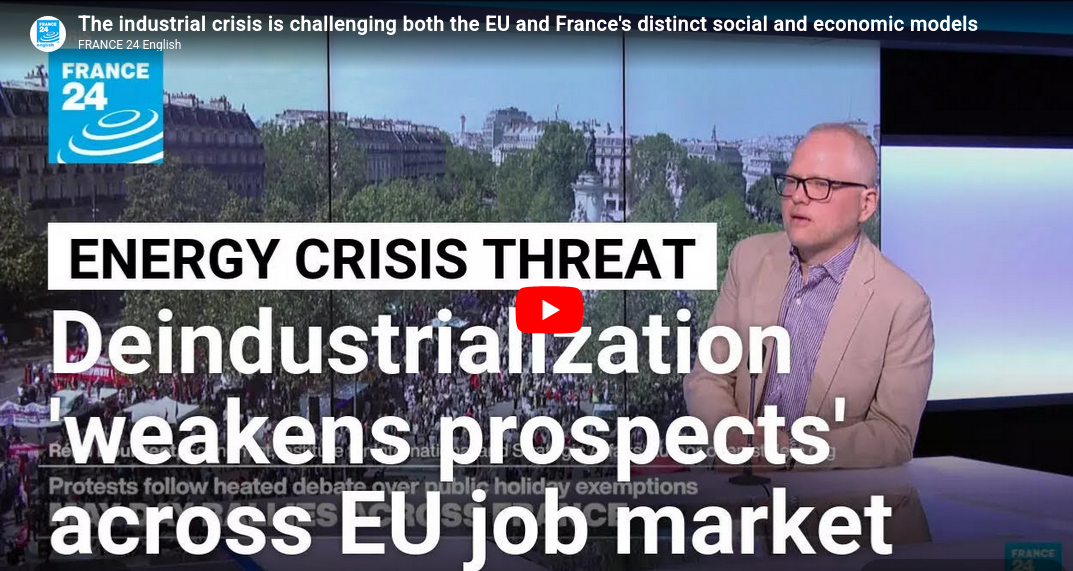
    Interview on France 24 in French with journalist and novelist Aude Lechrist and in English with William Hildebrandt on how the Middle East war derails the West’s economic, industrial and social model further. Translation of the French interview below the English video.

    Aude Lechrist: In France, as elsewhere in the world, the closure of the Strait of Hormuz is making itself felt. Trade unions are pushing for wage increases, particularly as inflation makes a comeback. To help us understand how workers are being affected by today’s upheavals — the geopolitical situation, climate pressures, and the dizzying pace of advances in artificial intelligence — we are joined by Rémi Bourgeot. Thank you for being here. First, are workers facing the same pressures the world over?

    Rémi Bourgeot: Extreme globalization has taken hold, creating significant transmission belts running through industrial models — but alongside that, vastly different policies have been pursued on either side of the divide. The fast-developing countries of Asia have pushed industrial policies, import substitution strategies, and drives toward productive self-sufficiency. The West, by contrast, has undergone rapid deindustrialization over the past few decades.

    And yet Asia is heavily affected today on the energy front, even though China in particular had put anticipatory policies in place. This crisis feeds directly through to workers, to job opportunities, and to cost pressures stemming from globalized supply chains — though that globalization is now somewhat in retreat, as countries seek greater autonomy and resilience.

    So workers are immediately more exposed — that much is clear from the geopolitical context. What knock-on effects are you observing?

    The economic consequences are immediate and concrete — the energy crisis, for instance, has brought production lines to a standstill. Economists point to fractions of a percentage point being shaved off overall GDP, but the real issue is a crisis of the real economy, the physical economy, of supply chains. For many countries around the world, that is precisely what drives economic and industrial development.

    And just about everywhere, questions of industrial development, genuine development, educational development are back at the centre of the debate — because these are the factors that determine long-term growth prospects and the opportunities open to workers.

    A major fault line has opened up between countries that believed growth could rest indefinitely on services — particularly financial services — and others that have followed a more traditional development path, reminiscent of postwar Europe: industrial development, educational development — which opens up more opportunities for workers, even if working conditions are sometimes very tough.

    But right now, an inflection point has clearly been reached: developed countries no longer have a functioning growth model.

    Artificial intelligence, which you mentioned at the outset, is also reshuffling the deck — particularly through its applications in robotics, which will increasingly affect manual workers, in addition to office jobs. And again, that fault line is visible, with the development model unraveling across much of the Western world.

    The United States has managed to stay ahead on the digital front and now in AI. How do you read that, especially against the backdrop of the Strait of Hormuz crisis — given that the key investors are the Gulf states?

    The development model has genuinely unraveled right across the Western world. The United States holds the high ground technologically, but on the premise that it can keep pushing indefinitely down a path heavily dependent on financial flows and foreign capital — particularly from the Gulf.

    The announcements from Sam Altman and OpenAI have been staggering — trillions supposedly raised in the Gulf to fund data center infrastructure in the United States and beyond. And the financial structures taking shape among players in this sector have all the hallmarks of a bubble — customers being financed by their own suppliers like Nvidia, investments completely untethered from economic and industrial reality.

    And yet genuine innovations do exist, and there is extraordinary talent out there, even from a purely technological standpoint. AI researchers like Yann LeCun argue that generative AI and LLMs are running into a dead end because of their intrinsic errors — something anyone who uses these tools day to day can see for themselves. Other technologies need to be developed, and that is already happening, particularly for robotic applications in the real world.

    But the moment an innovation appears, vast financial edifices get built up around it that have little to do with actual economic, industrial, or human development.

    And then there is the fear among workers — Americans in particular — who see an economic crisis on the horizon. Trade unions are clearly gearing up for major action. Labor Day in the United States is separate from International Workers’ Day, but significant mobilization is expected today all the same. Donald Trump has clearly done very little to address the concerns of American workers.

    Yes, and that is the great paradox. All the wavering, the U-turns, the chaos surrounding Donald Trump tell the story — he was supposed to upend the system in favor of reindustrialization from his very first term. Efforts were made in that direction, but the personal competence simply was not there, nor were the right people around him, to deliver a genuine industrial policy — not even on the tariff front, when it came to applying duties where they were actually needed, where domestic production could realistically be substituted or rebuilt at an acceptable cost.

    And yet that question did get put on the table — one that recurs throughout American economic history, as it does in the history of any country pursuing industrial development.

    When the Democrats returned to power, they largely continued in the same vein of industrial realism, of attempted reindustrialization — more through subsidies than tariffs, but still within a broadly protectionist logic.

    And now, with this new Trump term, the result is a bizarre and catastrophic world of blunt-instrument measures that get walked back almost immediately, with no strategic underpinning and utterly chaotic trade negotiations. The negotiators — on trade, but also on geopolitical, diplomatic, even military matters — have no idea what they are doing. Some of them can barely find the countries in question on a map.

    The chaos that has ensued points to a very deep systemic crisis — a crisis of American society and of Western society more broadly — an inability to bring about political renewal, or even basic reform, that would reconcile human and industrial development with the realities of globalization. That can only deepen the anxiety of workers who already see a vast gulf between the uncertainty generated by outside forces — conflicts, tensions, climate risks, artificial intelligence — and their governments’ capacity to respond, compounded by the interdependence between all these countries.

    That is genuinely alarming — because beyond all the political divides, the different countries and currents of opinion, there actually is a broad shared diagnosis: reindustrialization is needed. And yet nothing happens. Promises are made and forgotten.

    You said as much about the United States, but Europe is no different — if anything it is worse, having missed every significant technology wave over the past twenty or thirty years. The engineering expertise is still there for now, but it is eroding. And has the appetite for innovation gone with it? Is it no longer what drives students who dream of building a better world? Do you share that concern?

    What keeps me from losing hope entirely is that talking to young people — students in engineering schools, in other fields, in the humanities — one still finds that curiosity, that intellectual energy. Despite the decline of the education system, a wealth of tools exists online, countless ways of accessing knowledge — with their strengths and their limitations — that still allow people to learn, to catch up, to make discoveries. The curiosity is very much alive.

    The problem lies in the economic, political, and industrial system as it stands, which crushes that creativity. Entrepreneurship is a case in point — starting a business is an uphill struggle in Europe and in France especially. And at the level of larger companies and public bodies, reindustrialization is talked about endlessly but always in the vaguest of terms.

    Looking back, what has been the real impact of Emmanuel Macron’s two terms on workers in France?

    There has been a genuine slippage. A commitment to entrepreneurship was at least proclaimed, but it was mostly rhetorical from the outset. The occasional junior minister had a genuine grounding in the real economy, but overall, a headlong rush toward deindustrialization has unfolded, dressed up in rhetoric pointing in the opposite direction — toward rebuilding France’s industrial fabric. The means simply have not been there: the human resources, the investment decisions at the national level, the European coordination.

    Then there is the energy pricing system, which is extremely damaging for the French economy. France should enjoy a competitive advantage thanks to nuclear power, but that advantage is largely neutralized by the European pricing mechanism — a trap the country remains locked in.

    On top of that, the strategy of kicking the can down the road goes back to the introduction of the euro. The trade balance has been deteriorating and in the red since the start of the eurozone. This ongoing decline has been masked by the illusion of monetary stability — but with debt soaring and interest rates rising, that cannot go on indefinitely.

    What is really lacking is a technological, industrial, economic, and human understanding — including in terms of skills — to get an industrial development agenda back on track. That is exactly what other countries are doing, not that their models should be copied wholesale — China being the obvious example. A genuine boom in industrial development and technological expertise is underway in China today, comparable to Japan’s spectacular catch-up across every technological front forty or fifty years ago.

    France has extremely strong expertise — pockets of world-class engineers, outstanding skills, including in mathematics — and none of it is being properly put to use.

    Rémi Bourgeot, thank you very much for joining us — a fascinating conversation. Thank you.

  • Industrial Disruptions and Geopolitical Shift

    Industrial Disruptions and Geopolitical Shift

    Click on the image to view the video on LinkedIn – Full transcript below the summary on this page

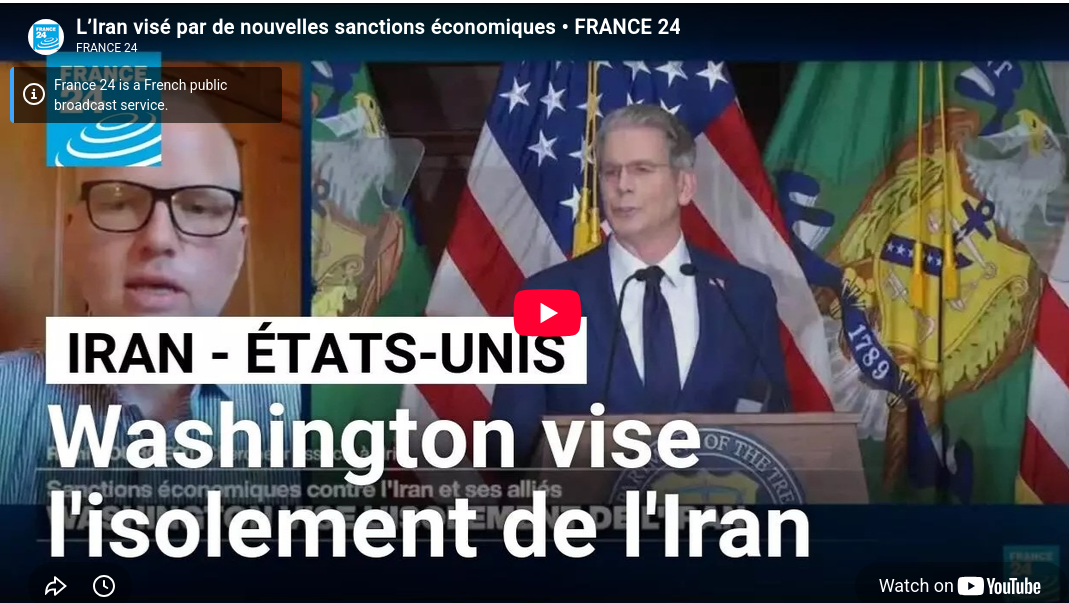
    On France 24, I discussed the deep industrial impact of the Iran war and the shift in political bargaining:
    – Economic forecasts tend to account poorly for shocks in the physical world, focusing on market price variations and assuming substitution. The main economic damage lies in material shortages and supply chain disruptions, from energy to fertilizers to helium for chips manufacturing…
    – Geopolitically, Trump’s grand bargain on uranium enrichment has stalled. With a peace deal a distant prospect, sanctions relief for Iran is off the table as well. More focused steps should now center on the strait: the level of Iranian control, the lifting of the US blockade, and some international coordination.

    Full transcript of the interview:

    Good morning, Rémi, and thank you very much for being with us. Can I start by asking you what the immediate effects of the Iran war have been economically, beyond the fuel crunch, which of course everyone is very familiar with?

    This situation in energy markets isn’t just a story about rising oil and gas prices—it’s really disrupting supply chains all over the world in critical aspects. It’s about energy imports for many countries, especially in Asia, and also in Europe, but to a lesser extent. But it’s affecting some industries very, very heavily through price surges and shortages.

    There was little awareness in the beginning that critical components like helium would disrupt supply chains in production, such as semiconductors and chips generally. So it’s really a global crisis sparked by these shortages and by the way production is being disrupted.

    It’s not just about economic statistics or making assumptions about how GDP might be affected over a three-month horizon. It’s a much deeper crisis, really affecting supply chains. And that goes beyond the scope of just short-term economic monitoring and forecasting. It’s a real industrial crisis with so many ramifications—also for food production, in terms of fertilizer imports for so many countries.

    The Gulf has become so critical, not just beyond energy. Energy is obviously key, but we see all these ramifications, and this is affecting countries and industries across the world in very different ways. For some countries and social groups, this is having really dramatic effects—it can create situations of famine. You can go to such extreme levels.

    You mentioned helium there. Qatar exports 40% of the world’s supply, and it’s used in the production of semiconductors and pretty much across tech in general and other sectors. What might the societal repercussions of shortages in this sense mean for the world?

    It was somehow reminiscent of what happened during the COVID pandemic. Supply chains were heavily disrupted, and then there was also a boom in demand with fiscal support. So this is really running very deep into supply chains. You see disruptions everywhere.

    Some countries have stocks, so the effect is not immediate. It’s just like in energy markets—some countries have had this policy, this strategy of storing a lot of oil. That’s the case with China, which is supposed to be very dependent on the Gulf but is less affected in the short term thanks to this storage policy. So it applies to many countries and industries. But over time, after a few weeks and especially after a few months, you start to see much more concrete effects with these shortages.

    It means it’s really affecting production. It’s not just the rise in prices. There’s really a gap in production at the moment. This directly translates into decreased production. It’s not just about price signals or higher costs—it’s really outside the scope of usual everyday economic reasoning. It’s a crisis affecting the material world, not just economic models.

    Now, how critical is this for a lasting peace to be reached in this war? We’ve got an extension, an indefinite extension of the ceasefire, but that does not mean the war is over. Is there a big difference between the war continuing for another three to four weeks or the war continuing beyond that? Or is there already sufficient damage that will be felt for months to come?

    Well, it’s a critical distinction indeed. The prospect of a lasting peace or a lasting peace agreement, in my view, is still very distant. There’s been so much confusion in the negotiations—or in the talks, I should say—between Iran and the US, with this focus on the American part on the nuclear issue, even attributing statements to the Iranians which were completely unthinkable in their view. So negotiations have really not taken a good path in that respect.

    In the end, you have this prolongation of the ceasefire, and it’s indefinite. That’s really what matters in terms of relieving the pressure somehow. I think the talks are going to focus on the Strait of Hormuz and finding some kind of compromise—acknowledging Iran’s control of the Strait with some toll booth model.

    China, for example, has been pressuring Iran to take a moderate approach on the issue of fees. But the key focus right now is finding some kind of limited compromise rather than achieving a peace deal. The US doesn’t even have the proper negotiators to achieve any such aim. There’s been so much confusion on the part of the US to impose this kind of counter-blockade of Iranian ports and ships. It’s trying to have leverage on this specific issue of the reopening of the Strait of Hormuz to find some way with Iran.

    But the prospect of incorporating all the possible aspects of a deal, including nuclear energy and uranium enrichment, is really very ambitious and a very distant prospect.

    Now the UK and France are spearheading talks to open the Strait of Hormuz or to keep it open once the war comes to an end. We’ve often spoken of de-risking with regards to China from the perspective of Western countries, but is this an instance of European countries perhaps de-risking in the face of Washington’s current unpredictability?

    Well, I think when it comes to managing the Strait of Hormuz, it’s not so much a strategy towards the US. There will need to be some kind of international arrangement, even if Iran retains control over the Strait and charges fees. That’s why the Iranians were willing to make some arrangements with Oman to have this international dimension to the management of the Strait.

    Europe clearly can be part of it. There needs to be some agreement, some arrangement to reopen the Strait, to make traffic happen smoothly, to reassure insurers, and to return to some kind of business as usual. It won’t be like before—it will be a new situation, clearly—but it has to be a predictable one. That’s really the key issue here.

    That’s why the Europeans are all playing this part, trying to show this willingness to take part in an international system of cooperation guaranteeing passage—not free passage literally, but to create a kind of new normalcy for passage through the Strait. That’s really what’s essential. It’s not just Iran stopping its threats to ships and the US lifting their counter-blockade. You need to have a real kind of international arrangement for things to resume in some normal way.

  • Iran Quagmire: Tackling the Long-Term Costs

    Iran Quagmire: Tackling the Long-Term Costs

    Click on the image to access the video

    Donald Trump is looking for an off-ramp from the Iran war quagmire. While threatening major escalation that would make parts of the region uninhabitable, he claims that negotiations are taking place.Although real peace negotiations are now out of reach, given the unbridgeable gap in demands, a deescalation is possible.

    Countries dependent on energy imports from the Gulf however brace for long term consequences even if the conflict halts. Production capacity is now damaged and Iran is likely to retain a high level of control over the strait.

    Europe is less exposed to the supply crisis than Asia but the energy price surge severely aggravates its multiple crises, from manufacturing to debt management. The relegation of nuclear energy leaves the continent particularly exposed to this succession of geopolitical crises, with governments constantly shifting from one external dependency to the next as shocks erupt.

    I took part in Al Jazeera’s Counting the Cost. Extracts of my interventions are available here.

  • Beyond the Iran Fiasco, an Abysmal Strategic Vacuum

    Beyond the Iran Fiasco, an Abysmal Strategic Vacuum

    Op-ed published by Les Echos on 24 March 2026. As Donald Trump seeks a way out of the Iranian quagmire—to suspend hostilities without any real prospect of peace—I invite you to consider a broader reflection on the strategic void that accompanies this situation:

    The war with Iran reveals a structural failure within the American decision-making apparatus, marked by a difficulty in aligning immediate tactical actions with long-term political objectives. This misalignment extends beyond the military sphere. Defense, trade, finance, and technology policies interact in a chaotic manner. The conduct of the trade war has already illustrated this: the legitimate goal of reindustrialization has been overshadowed by geopolitical coercion.

    In this very real war, the inability to anticipate the consequences of a failed regime change or the closure of the Strait of Hormuz further demonstrates a loss of overall vision. The military instrument is wielded without a political framework capable of setting a clear direction.

    These strategic and material flaws, already evident in the war of attrition in Ukraine, suggest a system grappling with internal contradictions and a reliance on a form of virtual thinking. The strategic framework appears frozen in patterns inherited from the era of the Iraqi adventure, even as industrial and geopolitical realities have radically transformed, reshaping the balance of power. This latest crisis calls on Europe to undertake a difficult reorientation.

    Retreat of Monetary Hegemony

    Economic sanctions have become a central tool of diplomacy. Yet their use generates side effects that are beginning to reshape the global financial architecture. Initially designed to isolate specific actors without direct military engagement, these measures have accelerated the search for alternatives. Beyond the surge in gold, we are witnessing a proliferation of bilateral agreements in local currencies and the development of parallel clearing systems, which are undermining one of the pillars of American power.

    The Iranian conflict acts as a catalyst here. The paralysis of the Strait of Hormuz underscores how power depends not only on dematerialized flows but even more on complex material systems: energy and industrial infrastructures. The West finds itself in a position where its instruments of pressure are losing effectiveness as regional powers adapt, coordinate outside traditional frameworks, and are prepared to escalate.

    Industrial Wars of Attrition

    Above all, the evolution of recent operational theaters, particularly in Ukraine, has forced a belated rediscovery of the importance of the industrial base. Technological superiority and the development of financial markets may have created the illusion that mass production capacity was secondary. The reality of a war of attrition has shown that economies with much more modest GDPs, but equipped with resilient production systems supported by China, can stand up to technological powers whose production chains are fragmented or optimized for peacetime.

    This situation reveals a divide between nominal wealth, driven by services and intangible assets, and the actual ability to mobilize material resources in prolonged crises. Tensions over ammunition stocks and delays in reactivating defense industries illustrate this lack of industrial depth. Although deindustrialization is recognized as a risk to social cohesion and strategic autonomy, the response has remained superficial. Tariff policies are often employed erratically, serving more as diplomatic tools than as genuine levers for rebuilding an integrated productive fabric.

    Misalignment of Capital and Educational Erosion

    Meanwhile, financial markets continue to channel capital toward high-visibility sectors, to the detriment of fundamental infrastructure. The AI bubble absorbs a disproportionate share of investments, while heavy industry and industrial transformation struggle to attract the necessary funding. This imbalance creates a two-speed economy, where digital innovation advances without an industrial infrastructure capable of withstanding geopolitical shocks.

    This crisis of strategic thinking is rooted in the weakening of educational structures, particularly in scientific culture and the classical humanities. The decline in science education reduces the ability to grasp the physical and technical constraints of the real world, fostering a virtual vision where it is believed that large language models can replace versatile engineers. At the same time, the retreat of the humanities deprives decision-makers of the historical intuition needed to understand the long term.

    Europe particularly embodies this tension. The continent’s industrial catch-up is hampered by regulatory complexity, compounded by a shift in decision-making power from the technical to the administrative, reducing the capacity for long-term planning. The management of contemporary crises highlights the need for a transition toward a systemic approach, integrating energy security, industrial resilience, monetary stability, and technological innovation within a strategic framework. This transformation cannot occur without questioning decision-making and educational mechanisms. The reallocation of resources must be accompanied by a renewed emphasis on fundamental knowledge, capable of restoring a long-term vision.

    This piece was originally published on Les Echos website in French.

  • The West’s Gorbachev

    The West’s Gorbachev

    This piece is published in partnership with the French Institute for International and Strategic Affairs (IRIS).

    The Iran war points to a strategic vacuum extending well beyond military affairs. It reflects a broader failure to align actions with long-term objectives—a pattern also visible across trade, finance, and technology policy, from erratic tariff decisions to the AI bubble.

    Donald Trump had the intuition that social dislocation demanded reindustrialization, in the wake of the global financial crisis. However, his chaotic inconsistencies reveal a broader cultural and institutional malaise, evident since the Bush years, and mirrored across Europe. This systemic paralysis runs deeper than any single leader and obstructs substantial reorientation.

    Amid the educational crisis, the capacity for strategic planning informed by science and humanities has receded, giving way to geopolitical agitation, economics driven by inflated assets, and generalized improvisation.

    Tactical Successes, Strategic Vacuum

    The Iraq war was supposed to serve as a textbook example that the pursuit of regime change without a viable alternative can plunge a whole region into chaos. Yet, the same logic persists, without a coherent plan either to mitigate the immediate consequences of the war or to manage its aftermath. Excluding a ground offensive was supposed to put aside the specter of the Iraq fiasco in the eyes of the American public. However the current narrative rather points to the lasting legacy of the Bush era, despite Trump’s inconsistent efforts to strike a balance between neoconservative circles and the public’s rejection of long wars.

    This instability erodes rational calculation across the international system, as negotiations led by real-estate moguls prove episodic and unreliable. Meanwhile, the weaponization of finance accelerates defensive reactions among emerging powers. Alternative payment arrangements and bilateral trade mechanisms are expanding. What was designed as leverage undermines the monetary architecture that long sustained US trade deficits.

    The Lost Intuition About Manufacturing and the Social Fabric

    War also exposes material limits. The experience of Ukraine has demonstrated that Western industrial capacity struggles to sustain prolonged conflicts and especially a war of attrition, as production lags behind operational requirements. Europe, in particular, remains strategically dependent, lacking cohesion and sufficient manufacturing depth.

    Donald Trump centered his discourse on the impasse facing his country and the need for systemic change. His intuition was that social fragmentation stems from deindustrialisation. The difficulty lies in execution. Tariffs, without serious industrial analysis, aggravate the very instability they seek to cure, especially when they turn into sanction weapons wielded erratically.

    Trade wars were launched in the name of reshoring, yet without a coherent long-term framework linking workforce development and manufacturing technology. Constant shifts leave firms unable to plan capital-intensive investments. When the rules change continuously, for geopolitical reasons or as a result of legal rulings like that of the Supreme Court, reindustrialization efforts become rhetorical.

    The AI Bubble and Financial Distortion

    Simultaneously, vast liquidity flows into artificial intelligence without weighing the limits of existing architectures and relegating promising research. The scale of the speculative enthusiasm surrounding AI reflects a financial structure shaped by the printing press. Asset inflation has distorted price signals, encouraging capital to chase scalable digital opportunities while physical production systems often remain undercapitalized.

    Circular funding models and passive investment flows sustain high valuations often disconnected from business models. While artillery shortages reveal supply-chain fragility, capital concentrates in data centers, based on today’s state of technology, rather than reflecting on future advances in efficiency. The imbalance resides in the absence of coordination between financial allocation and strategic necessity. Over the long term, investment and credit waves sustain unproductive firms and delay adjustment. Resources are misallocated while machine tooling and applied engineering struggle to attract patient capital.

    Europe in Strategic Limbo

    The problem is particularly acute in Europe, where overregulation constrains entrepreneurial planning. Military rearmament is discussed with insufficient supply-chain strategies. Fiscal pressures narrow policy space. The continent risks combining strategic posturing with declining productive autonomy. More troubling is the human capital dimension. With the technological retreat, engineers and scientists have been relegated by social hierarchies dominated by bureaucracies and managerial symbols. The attempt to substitute skilled labor with AI-driven systems often reflects short-term cost minimization rather than industrial realism.

    Geopolitically, a push for autonomy had started to gain some momentum since Ursula von der Leyen’s full alignment last summer in trade negotiations—and, above all, since Donald Trump’s fanciful claims on Greenland, barely concealing his desire to blow up NATO. Yet beneath the rhetoric of strategic and technological independence, much of Europe appears to be waiting for signals of renewed transatlantic oversight, contingent on electoral shifts and military adventures. This, too, reflects a systemic transformation spanning two generations, shaped by bureaucratization and questionable organizations providing conferences. Industrial leadership and the opposition to the Iraq War now seem a distant echo.

    The Iran war serves as a stress test of a broader Western model. Military action, trade wars, and technological speculation unfold without anticipation. Despite the demonization of tarif policies, Trump’s assessment that social stability depends on industrial strength was correct. The failure lies in transforming that intuition into disciplined, long-term strategy at the state level. Like Gorbachev, his intuitions for reform have stalled in the face of deep-seated interests, institutional paralysis, and erratic execution. Without a renewed spirit of humanism in foreign policy, industry, finance and education, activism will fail to mask a profound cultural crisis.

  • From Greenland to Ukraine, the Fracturing of the West

    From Greenland to Ukraine, the Fracturing of the West

    Click on the image to listen to the recording on LinkedIn, in French

    Full transcript of my interview with France Info public radio on 18 January 2026.

    France Info: Hello, Rémi Bourgeot, thank you for joining us on France Info. In just 24 hours, do you think we have crossed all the thresholds that lead to a trade war, an economic war with the United States?

    Yes, in fact, we’ve been in this situation for quite some time. You’ll recall that last year, headlines were dominated by Donald Trump’s threats—threats of escalating tariffs—which ultimately led to a so-called “agreement” that was really just a series of demands accepted by the European Commission, including blanket tariffs of 15%, and, on top of that, Europe’s acceptance of very strict constraints, particularly to avoid over-regulating or challenging Californian tech giants. So that’s where we’re coming from. Things had quieted down a bit in recent months.

    So, yes, the end of this agreement was extremely unfavorable to the European Union, not only because of the tariffs but also because of the constraints that came with it, and Europe simply accepted the American demands?

    Absolutely. This agreement was extremely unfavorable to the European Union, not just because of the tariffs but also because of the constraints that accompanied them. Europe simply accepted the American demands. There wasn’t really any negotiation on the part of Ursula von der Leyen, who was later criticized by several European countries. We thought that was the end of it, but in reality, we’re seeing a much broader deterioration in relations between Europe and the United States—a genuine explosion within the Western bloc.

    This is particularly tied to the issue of Ukraine. We can see that the trade measures are targeting countries within the so-called “coalition of the willing.” So this is a much broader escalation. It seems that Trump actually wants to blow up NATO. This is a very aggressive show of force, which today goes far beyond trade—now a secondary issue. We’re in a frankly absurd situation with this Greenland issue. If there were a genuine strategic interest—and perhaps there is for the United States—they could achieve the same benefits through cooperation with Denmark, a country that is extremely close to the United States. Here, we’re seeing broader patterns in Donald Trump’s approach. It’s a much deeper, more long-term deterioration.

    The fracturing of the Western block—isn’t that exactly what Donald Trump wants? How can we respond? By activating the anti-coercion mechanism, for one. Emmanuel Macron and his team have indicated that he will call for this instrument to be activated among his European partners. Concretely, Rémi Bourgeot, this is being called an economic “bazooka.” What would it actually look like if this mechanism were triggered?

    Well, first of all, we should have threatened and entered into this showdown with Donald Trump from the very beginning, during the negotiations this summer, to avoid being crushed. We needed to understand that this was just the beginning. Today, we’re facing a much broader and more serious aggravation, so we can’t just defend ourselves on the trade front. We have to respond. These measures are part of a fairly broad framework. People talk about a “bazooka,” but it was originally designed to be used against other countries, particularly China. It requires a very large majority in Europe to implement, so it’s not a done deal. But at the very least, we must consider a response. Trump’s counter-response will be escalation, with the threat of economically crushing the Europeans, because his logic is one of humiliation. He has no respect for European leaders, and there are deep disagreements on burning geopolitical issues like Ukraine.

    Rémi Bourgeot, you’re describing a catastrophic scenario. How can Europe resist such escalation?

    The catastrophic scenario is war, which is unthinkable between Europe and the United States. But what we’re going to see now is escalation. This current escalation, with threats of additional 10% tariffs on the countries involved, was triggered because Europe sent a few soldiers—almost symbolically—to Greenland. On the surface, it’s almost nothing, but Trump tolerates no opposition, even to demands as extraordinary and absurd as acquiring Greenland. The relationship is in a dynamic of fracture. We’re going to see all kinds of escalations. But Trump does tend to back down when faced with firm resistance. China, for example, threatened further escalation and deployed its own “bazooka”—restricting the export of rare earth minerals—which created massive industrial problems for the United States. India, threatened with secondary sanctions to limit its trade with Russia, also reacted strongly. So Trump is sensitive to pushback.

    We need to understand this context of deteriorating relations with Europeans over the central issue of Ukraine, which is at the heart of this escalation.

    Thank you very much, Rémi Bourgeot, for your analysis as an economist and associate researcher at IRIS. This trade war has existed in reality since Trump’s return, but it seems to be taking a more concrete form in the last 24 hours, with these new tariffs announced by the American president and Europe’s announcement that it intends to retaliate.

  • Agricultural Crisis and EU-Mercosur Deal

    Agricultural Crisis and EU-Mercosur Deal

    A growing divide between those advocating for production, resilience and know-how, and a bureaucracy still mired in the limbo of the 1990s.

    The EU is rushing to finalize a trade deal with the Mercosur while simultaneously preparing protective measures against Chinese products that can no longer find a market in the United States.