
Category: Articles-en

  • Partial Normalization in Energy Markets After Iran War Deescalation

    Partial Normalization in Energy Markets After Iran War Deescalation

    Energy markets are unlikely to fully return to prewar standards once a deescalation process starts. The conflict has introduced lasting costs. In particular, Iran’s role in the Strait of Hormuz has become structural to global supply risk and pricing, as a new transit regime can be expected to apply. This new normal should have a lasting effect on financial markets and the real economy.

    This piece is published in partnership with the French Institute for International and Strategic Affairs (IRIS).

    Donald Trump’s statements about the terms of negotiations with Iran have astonished many as they did not seem grounded in real diplomatic channels. Meanwhile, his threats of massive escalation and ground offensives hardly pointed to a realistic strategy, given the enormous political and economic cost, as even the European governments most aligned with the U.S. started to distance themselves. Although confusing, this agitation finally reveals the urgency to find an exit from the quagmire. In practice, deescalation can occur even without full negotiations. It is important to understand what dynamics will be at play in energy markets in light of this trend.

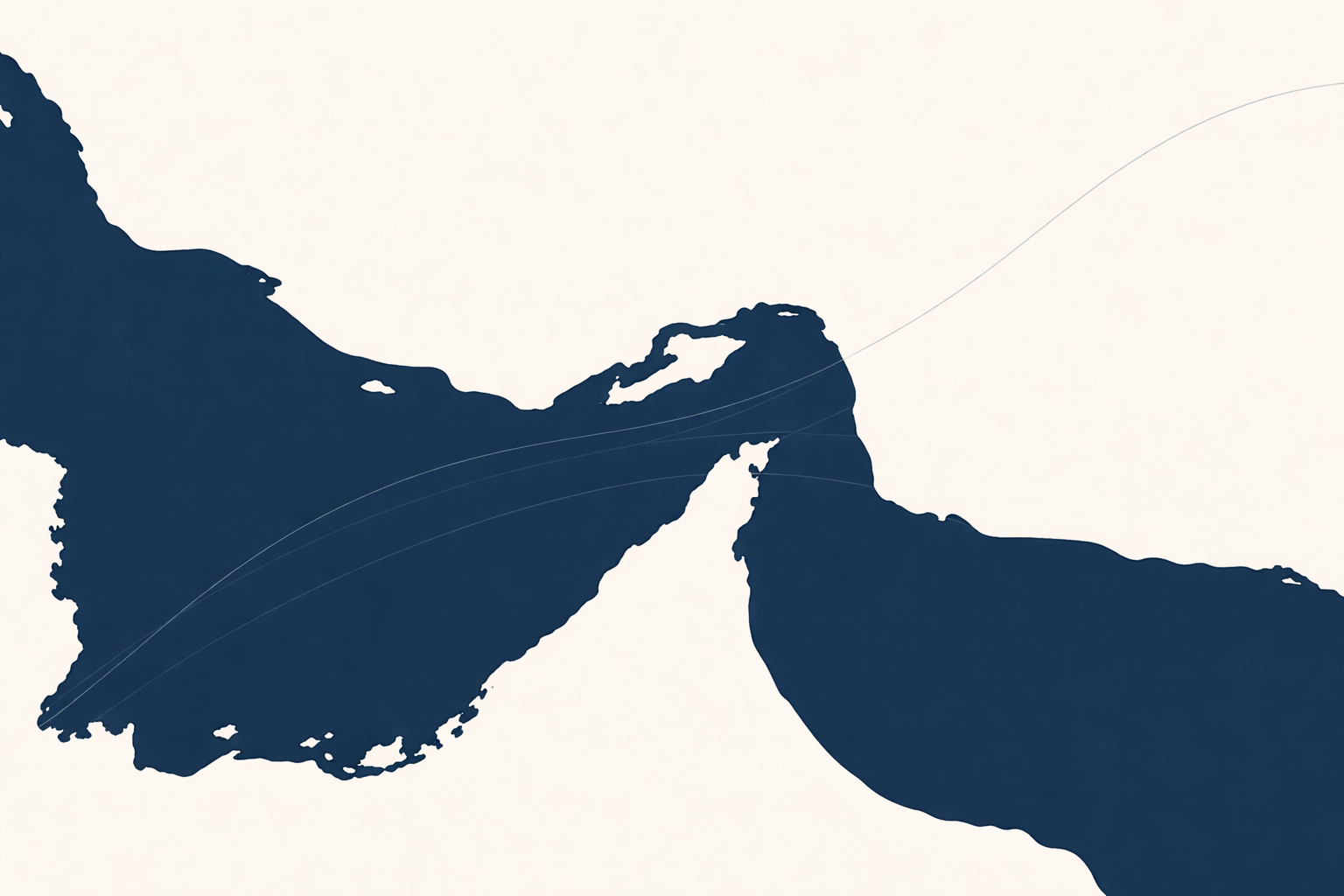
    Tehran has been exerting control over shipping through Hormuz during the conflict, by dramatically restricting or threatening access but also applying charges on commercial ships for transit. Sustained control over the strait would translate into direct economic influence and pricing effects on global energy markets. This can take the form of negotiated transit fees, enhanced monitoring requirements, and arrangements that reflect Tehran’s geopolitical interests.

    Such explicit or implicit arrangements would sustain a structural premium on energy prices. Transit fees could act like reparations, providing revenue to rebuild infrastructure and support the regime, while structurally sustaining a premium on global energy prices. Simultaneously, some sanctions have been effectively relaxed in the sense that Iranian crude continues to flow through the Strait of Hormuz, reflecting U.S. reluctance to further tighten supply and worsen global price shocks.

    Market Price Dynamics and Short‑Term Reactions

    A cessation of hostilities would reduce active risk to tankers allowed passage by Tehran and reassure insurers, lowering the current premium embedded in energy prices. It would quickly see at least a partial reversal of the price spikes, which translated into an overall 60 percent surge. Global equity indices rose and energy futures already fell on various reports of deescalation prospects.

    However, a deescalation process alone does not guarantee an immediate restoration of normal flows or of confidence in the security of transit routes. Reconstruction of damaged infrastructure, clarification of maritime security arrangements, and the re‑establishment of reliable insurance coverage are all prerequisites to a fully functioning transport environment. These processes take time and some degree of international coordination. Risk premia and cost structures in energy markets can therefore be expected to persist above prewar levels.

    The overall disruption to oil markets is unprecedented and price behavior cannot be read solely through short‑term trading patterns, in one way or another. Oil and gas futures curves frequently reflect this complexity. For example, short‑term contracts have exhibited backwardation — where near‑term prices are higher than further delivery dates, indicating that markets expect supply constraints to ease over time even if the near‑term remains tight. However, persistent risk premiums and structural changes in supply can maintain a higher baseline.

    A Lasting Economic Impact

    Meanwhile, prolonged increases in energy prices feed through into inflation. Energy‑related price pressure will persist beyond short‑run market repricing. Persistent inflationary pressure complicates macroeconomic trends, reinforcing second‑round effects such as wage demands and broader price adjustments beyond energy components. In turn, higher inflation expectations and elevated energy costs feed directly into bond yields on government debt, affecting sustainability.

    For energy importers, the implications extend beyond immediate price levels. Disruptions affect contract structures, investment decisions in alternative supply lines and household cost burdens. Europe, while less directly reliant on Gulf than Asia for crude oil and LNG, faces its own challenges in terms of supply and pricing dynamics. With the relegation of nuclear energy production Europe’s strategy has tended to become a process of shifting from one external dependency to another as crises erupt.

    Deescalation reduces acute risk, but structural factors such as Iran’s control over the Strait of Hormuz and the time needed to rebuild confidence and infrastructure mean the market may settle at a new normal contrasting with prewar levels. The interplay between security, infrastructure, inflation dynamics and fiscal stress will shape financial and macroeconomic conditions in ways that a simple cessation of hostilities does not entirely resolve.

    This piece only serves analytical purposes and does not constitute investment advice.

  • The West’s Gorbachev

    The West’s Gorbachev

    This piece is published in partnership with the French Institute for International and Strategic Affairs (IRIS).

    The Iran war points to a strategic vacuum extending well beyond military affairs. It reflects a broader failure to align actions with long-term objectives—a pattern also visible across trade, finance, and technology policy, from erratic tariff decisions to the AI bubble.

    Donald Trump had the intuition that social dislocation demanded reindustrialization, in the wake of the global financial crisis. However, his chaotic inconsistencies reveal a broader cultural and institutional malaise, evident since the Bush years, and mirrored across Europe. This systemic paralysis runs deeper than any single leader and obstructs substantial reorientation.

    Amid the educational crisis, the capacity for strategic planning informed by science and humanities has receded, giving way to geopolitical agitation, economics driven by inflated assets, and generalized improvisation.

    Tactical Successes, Strategic Vacuum

    The Iraq war was supposed to serve as a textbook example that the pursuit of regime change without a viable alternative can plunge a whole region into chaos. Yet, the same logic persists, without a coherent plan either to mitigate the immediate consequences of the war or to manage its aftermath. Excluding a ground offensive was supposed to put aside the specter of the Iraq fiasco in the eyes of the American public. However the current narrative rather points to the lasting legacy of the Bush era, despite Trump’s inconsistent efforts to strike a balance between neoconservative circles and the public’s rejection of long wars.

    This instability erodes rational calculation across the international system, as negotiations led by real-estate moguls prove episodic and unreliable. Meanwhile, the weaponization of finance accelerates defensive reactions among emerging powers. Alternative payment arrangements and bilateral trade mechanisms are expanding. What was designed as leverage undermines the monetary architecture that long sustained US trade deficits.

    The Lost Intuition About Manufacturing and the Social Fabric

    War also exposes material limits. The experience of Ukraine has demonstrated that Western industrial capacity struggles to sustain prolonged conflicts and especially a war of attrition, as production lags behind operational requirements. Europe, in particular, remains strategically dependent, lacking cohesion and sufficient manufacturing depth.

    Donald Trump centered his discourse on the impasse facing his country and the need for systemic change. His intuition was that social fragmentation stems from deindustrialisation. The difficulty lies in execution. Tariffs, without serious industrial analysis, aggravate the very instability they seek to cure, especially when they turn into sanction weapons wielded erratically.

    Trade wars were launched in the name of reshoring, yet without a coherent long-term framework linking workforce development and manufacturing technology. Constant shifts leave firms unable to plan capital-intensive investments. When the rules change continuously, for geopolitical reasons or as a result of legal rulings like that of the Supreme Court, reindustrialization efforts become rhetorical.

    The AI Bubble and Financial Distortion

    Simultaneously, vast liquidity flows into artificial intelligence without weighing the limits of existing architectures and relegating promising research. The scale of the speculative enthusiasm surrounding AI reflects a financial structure shaped by the printing press. Asset inflation has distorted price signals, encouraging capital to chase scalable digital opportunities while physical production systems often remain undercapitalized.

    Circular funding models and passive investment flows sustain high valuations often disconnected from business models. While artillery shortages reveal supply-chain fragility, capital concentrates in data centers, based on today’s state of technology, rather than reflecting on future advances in efficiency. The imbalance resides in the absence of coordination between financial allocation and strategic necessity. Over the long term, investment and credit waves sustain unproductive firms and delay adjustment. Resources are misallocated while machine tooling and applied engineering struggle to attract patient capital.

    Europe in Strategic Limbo

    The problem is particularly acute in Europe, where overregulation constrains entrepreneurial planning. Military rearmament is discussed with insufficient supply-chain strategies. Fiscal pressures narrow policy space. The continent risks combining strategic posturing with declining productive autonomy. More troubling is the human capital dimension. With the technological retreat, engineers and scientists have been relegated by social hierarchies dominated by bureaucracies and managerial symbols. The attempt to substitute skilled labor with AI-driven systems often reflects short-term cost minimization rather than industrial realism.

    Geopolitically, a push for autonomy had started to gain some momentum since Ursula von der Leyen’s full alignment last summer in trade negotiations—and, above all, since Donald Trump’s fanciful claims on Greenland, barely concealing his desire to blow up NATO. Yet beneath the rhetoric of strategic and technological independence, much of Europe appears to be waiting for signals of renewed transatlantic oversight, contingent on electoral shifts and military adventures. This, too, reflects a systemic transformation spanning two generations, shaped by bureaucratization and questionable organizations providing conferences. Industrial leadership and the opposition to the Iraq War now seem a distant echo.

    The Iran war serves as a stress test of a broader Western model. Military action, trade wars, and technological speculation unfold without anticipation. Despite the demonization of tarif policies, Trump’s assessment that social stability depends on industrial strength was correct. The failure lies in transforming that intuition into disciplined, long-term strategy at the state level. Like Gorbachev, his intuitions for reform have stalled in the face of deep-seated interests, institutional paralysis, and erratic execution. Without a renewed spirit of humanism in foreign policy, industry, finance and education, activism will fail to mask a profound cultural crisis.

  • EU Breakup Risk and Productive Resilience

    EU Breakup Risk and Productive Resilience

    This piece is published in partnership with the French Institute for International and Strategic Affairs (IRIS).

    The U.S. administration criticizes the European Union for failings that often have real basis. However, the EU’s economic subordination to the United States and the embrace of its cultural crisis play a key role in Europe’s falling behind. In light of this paradox, these attacks are all the more destabilizing since the Trump administration’s economic demands – acquiesced to by Ursula von der Leyen – simultaneously hinder any possibility of Europe re-entering the technology race. Beyond transatlantic invective, this historical impasse makes the prospect of the EU’s breakup tangible. We must anticipate its potential effects through productive and intellectual resilience.

    The trade terms dictated by Washington first illustrate the technological impasse amid the transatlantic chaos. In exchange for unilateral tariffs of only 15%, the von der Leyen Commission has implemented a policy of accommodation towards the U.S. tech sector on most issues, with the exception of those related to social media content. The fact that these concessions are subsequently presented as a competitiveness policy unfortunately does not mitigate their long-term effects.

    The abandonment of technological autonomy follows a series of ill-conceived strategic choices. More than the lack of discussion, these bets have revealed a gap in scientific and industrial competencies. Examples include: the excessive gamble on hydrogen, the generalized transition to electric vehicles without competitive impact studies, later forcing a retreat, the semiconductor failure (with the costly reliance on technology transfers from Intel, now losing momentum). One could add the export of Germany’s energy transition shock, amplified by the abandonment over the past decade of gas import diversification projects, in favor of Nord Stream I & II. Concrete skills have been supplanted by bureaucracy, high-level events, and regulatory prose.

    We have imitated the excesses of U.S. governance, but omitted the scale of its research system, funding for technological programs, and the emergence of Big Tech within this framework. The aspect that inspires Europeans is more centered on the type of managerial hypertrophy that led to the decline of a company like Boeing.

    The crisis in European industry illustrates the exhaustion of a logic of extreme logistical optimization, at the expense of innovation and new industries. This has allowed us to benefit from very low costs in Asia and Central Europe while capitalizing on the prestige of legacy brands. The energy crisis and China’s technological leap – long presented as a promised land for European exports – have derailed this model.

    The fact that the United States seeks to anchor its reindustrialisation effort in the subordination of its vassals adds to these difficulties. Shortages of military equipment on the Ukrainian front have not only revealed the extent of industrial attrition in the EU and the US, behind the enthusiasm generated by the AI bubble at the same time. They have also accelerated the fracture within the Western bloc, leading Europeans to start redeveloping their military capabilities. However, this period of political turmoil seems ill-suited to long-term strategic planning and to averting nuclear risk, which motivated previous generations. Moreover, remilitarisation is largely benefiting US defence companies as evidenced by high-profile orders of F-35s.

    In reality, the level of deindustrialisation calls into question our very interpretation of GDP, given the activities that are now at the heart of developed economies, sustained by bubbles until they burst. At a time when many countries are developing, training engineers in large numbers, and deploying them for industrial expansion, we must soberly assess the value of our deindustrialised economies in the era of PowerPoint and circular funding.

    The euro crisis did not lead to genuine reconsideration. On the contrary, it was followed by a policy of monetary bubbles and, around 2017, the belief in an imminent leap forward for federal structures. A reindustrialization dynamic was even announced, although a more cautious analysis could only indicate the opposite trend. It is in this context that France’s situation has continually deteriorated on the financial and industrial front. The maxim that each crisis is an opportunity to complete a stage in the EU’s edification has accompanied the fading prospect of a stable, creative, and prosperous society.

    A fresh start for the European Union is hindered by the very nature of its falling behind, rooted in deep cultural trends, of which the bureaucratic drift and the educational crisis are central elements. Instead of remedies, we see numerous parties and movements of all kinds positioning themselves in a cultural war, the terms and theatrics of which are directly imported from the U.S. The Commission’s current concessions would, in a best-case scenario, delay a productive recovery by several years.

    Beyond Donald Trump’s invective, the long-term persistence of the EU can no longer be the sole working hypothesis in the face of looming financial shocks, productive and educational decline, and the outcome of the Russo-Ukrainian war. States and economic stakeholders must prepare for the possibility of a disruption in the European system within a decade.

    The focus, at this stage, should not be on making prophecies about the triggering factor, among various options: from the election of the Alternative für Deutschland (AfD) to the exit of certain Central European countries, potentially losing their status as net beneficiaries of the EU budget due to Ukraine’s integration – which might explain why Moscow does not oppose it.

    Rather, the task at hand is to undertake preparatory work to avoid a disorderly breakup. Such an event would have dire consequences for countries that, at that moment, would lack both a productive base and necessary resources. In a scenario combining breakup and lack of preparation, the trend illustrated by the EU-Mercosur agreement could, by that time, even lead to food supply difficulties. A resilience strategy must address these tangible risks.

    Anticipating the possible return of responsibilities to the national level, within a framework closer to an integrated customs union and a monetary coordination mechanism, could provide some impetus towards a productive strategy and an educational revival. As the level of mutual ignorance among Europeans has reached an alarming level, such an effort could even bring us together around more concrete objectives of good relations and stability.

  • AI Bubble and Military Bottleneck: A Systemic Crisis

    AI Bubble and Military Bottleneck: A Systemic Crisis

    The financial bets on the revolutionary promises of generative AI have soared to dizzying heights. Circular funding among industry giants is proliferating, while structural limitations are emerging regarding the reliability and economic value of large language models (LLMs). From one bubble to another, this new frenzy points to the deeper disorganisation affecting Western economies in the deployment of capital and skills. In this respect, the simultaneous weakness in industrial capacity among Ukraine’s backers reflects a systemic crisis.

    An opinion piece by Rémi Bourgeot, economist and engineer, Associate Fellow at IRIS.

    While the world was waking up to the concrete potential of artificial intelligence with ChatGPT, the collapse of Silicon Valley Bank in early 2023 triggered the onset of a financial crisis. Technology stocks were hit hard. Venture capital funds were blamed for their risky financial schemes, particularly in the cryptocurrency space, which was hit by a series of scandals.

    These reservations were soon swept aside by a new wave of financial euphoria, this time centred on AI, but following similar patterns. Nvidia emerged as the big winner, with its graphics cards tailored to the requirements of giant neural network calculations. It effectively locked up the market with its proprietary platform, Cuda. The very notion of valuation ratios was overshadowed by the prospect of a radical transformation of human activity.

    It comes as no surprise that the intrinsic limitations of LLMs were overlooked during the initial phase of euphoria. Beneath the sweeping reactions of both AI apologists and staunch detractors, a more nuanced perspective emerged from discreet commentators, combining a technical grasp of neural networks with a philological intuition about the strengths and the limits of the syntactic logic captured by LLMs.

    OpenAI began by developing open, non-profit models, and its status remained hybrid for years. The prevailing idea was that LLMs would reach a qualitative tipping point, thanks to an explosion in size and compute resources. The confusing notion of AGI (artificial general intelligence) then served as a horizon for the most extravagant funding schemes.

    However, by 2024, the technical achievements of companies like Mistral in France and DeepSeek in China, with incomparably more limited resources, began to cast doubt on the idea that model deployment required the trillions of dollars mentioned by Sam Altman at OpenAI.

    The companies developing core AI models do not currently exhibit a real business model, beyond using investor funds to cover their expenses, particularly for the purchase of chips. On top of the issue of financial stability, the allocation of such resources to a particular technology must also be questioned. AI Pioneer Yann Le Cun has repeatedly emphasised the limitations of LLMs and called for efforts to be made on other types of models, which have been ignored by the bulk of investors. Instead, the bubble took on a new dimension, with massive funding from semiconductor companies like Nvidia to their own customers, like OpenAI.

    This latest bubble raises questions not only about this very industry, but more generally about the way the economy is funded. It seems increasingly difficult for developed countries to sustain industrial momentum beyond waves of financial and institutional frenzy that suggest magical thinking, or sometimes even mass hysteria.

    Meanwhile, the Ukraine war highlights the limitations facing Western industry in producing equipment. Production capacities for ammunition, armoured vehicles and electronic components have proven chronically inadequate to meet sustained and prolonged demand. Many factories capable of manufacturing critical components have been closed in recent decades. Supply chains are limited, often dependent on rare or offshore suppliers.

    This situation reveals a systemic failure centred on insufficient production, which goes beyond the defence industry. It results from a lack of strategic planning, particularly in terms of financing, energy supply and skills deployment. Reviving production requires restoring complex industrial chains and long-term profitability models. Otherwise, even massive investments will have no effect.

    Industrial strength does not come from stock market bubbles fuelled by the ecstasy of a post-physical digital nirvana. It requires careful interaction between businesses, research institutions and government agencies, based on long-term strategies and human skills. Behind the cutting-edge intellectual resources poured into LLMs, the bubble lays bare the erosion of industrial development strategies, exacerbated by failing educational systems and the relegation of scientific skills.

    Nevertheless, in light of the manufacturing rout epitomised by Boeing, the US policy focused on redeploying manufacturing and controlling energy costs is showing tentative signs of improvement. This is the case even in semiconductors, with TSMC establishing operations. Although financial shocks hamper in-depth reindustrialisation, the country is ultimately managing to assert its dominance in the digital field.

    The European Union, meanwhile, finds itself in a more precarious situation due to its technological retreat and the energy chaos stemming from Germany’s phase-out of nuclear power. By positioning itself as a faithful user of US technologies, it is undermining its industrial potential. In the dot com bubble of the late 1990s, Europe typically lagged behind during the upswing, endured the full brunt of the market crash, and ultimately failed to catch up on the technical front. In this respect, Ursula von der Leyen’s determination to cement the EU’s role as a digital and military vassal of the US for decades to come foreshadows a decline in living standards and political dislocation.

  • Confronting Europe’s Vassalization: Resistance or Rhetoric 

    Confronting Europe’s Vassalization: Resistance or Rhetoric 

    The level of subordination revealed by the agreement between Ursula von der Leyen and Donald Trump has sparked awareness of the European Union’s economic, technological, and political impasse vis-à-vis the United States. This latest transgression by the European Commission President spells an existential crisis for the EU.  

    The unilateral imposition of US tariffs on European production has caught the public’s attention. In reality, their relatively moderate overall level of 15% is the result of much more substantial concessions made by the European Commission. The EU is committing itself to further increasing its dependence on a range of issues. In order to save the precarious industrial status quo of ultra-exporting industries, particularly in Germany, it is compromising its technological future. Europe is relinquishing any ambition for autonomy in the digital, defense, and energy sectors, in line with the latest NATO summit. Amid the threat of trade chaos, Donald Trump is thus succeeding in imposing not only a new paradigm of unilateral tariffs, but also a much broader logic of economic—and geopolitical—domination over the most aligned countries. 

    Many EU politicians are expressing their embarrassment at the revelation to the general public of the stalemate in which the EU finds itself. Calls for countermeasures against the US digital sector overlook the stage and real extent of Europe’s capitulation. In exchange for tariffs that are half the threatened 30%, the Commission has effectively given Donald Trump assurances that it will abandon any meaningful policy of technological competition.  

    Given Germany’s trade surplus with the US, a genuine policy of rebalancing through tariffs or investment would have been legitimate. European leaders should have accepted the principle and technical means of such trade rebalancing, while refusing to compromise on the idea of widespread servitude that would bind future generations. A level-headed approach would have resulted in low tariffs without any additional concessions on technological, military, and energy autonomy. By focusing exclusively on the immediate interests of ultra-exporting industries and on the United States’ most excessive demands, the unrealistic prospect of 30% tariffs in the long term has led Ursula von der Leyen to undermine the EU’s technological potential.  

    The European Union’s current state of paralysis is deeper than this humiliating trade agreement would suggest. It concerns its governance, extreme bureaucratization, submission to interest groups, and the regurgitation of generic ideologies imported from American culture war by all political factions, from the far right to the far left to the center. The United States is gradually recovering from its industrial meltdown, despite its educational and cultural crisis, by mobilizing its historical strengths. This ability to bounce back relies in particular on the financial resources offered to creative and scientific minds. Conversely, Europe is falling into the habit of copying the most detrimental aspects of US governance and mass culture, without the qualities of a system that gives itself the scientific means to achieve strength. 

    Faced with industrial decline, the United States is beginning to reindustrialize, thanks in particular to low energy costs. Conversely, the Commission is exporting the chaos of German energy policy to countries that could still benefit from a rational energy infrastructure, and is now promising massive imports of American LNG at prohibitive prices. 

    While the weakness of the European position had been blatant for many months, representatives of US organizations in Brussels, such as the website Politico Europe, defended the Commission’s position with surprising tenacity, even praising its strength and unity. These sham negotiations have in effect served to seal Europe’s defeat in the face of US corporate interests. Looking beyond Donald Trump’s peculiar style and manner, US international policy tends to be largely bipartisan. The Biden administration’s Inflation Reduction Act was already a sweeping protectionist policy aimed at reindustrializing the US. The European governments’ lack of familiarity with European and global realities paved the way for the von der Leyen Commission’s vacuum, combining submission on the international stage with authoritarianism at home. 

    More than just a tool for trade rebalancing, Trump sees trade barriers as a form of sanction. It was in light of the escalation in recent months with China, which stood up to him, that he focused on the countries most closely aligned with the US, in a disastrous geopolitical context. This has been particularly apparent in relation to Gaza, where the EU has refused to exert any influence, taking US intimidation to the letter. The limits of economic measures have been demonstrated in the case of a country as large and resource-rich as Russia. Conversely, in the case of Israel, the EU had obvious and immediate levers to put an end to a policy of annihilation in its neighborhood, if it possessed any desire for autonomy and historical awareness. Much more than a simple question of strategy in international negotiations, Europe’s political meltdown points to a crisis of civilization. 

    This piece was originally published by the French Institute for International and Strategic Affairs (IRIS).

  • Behind DeepSeek: France’s Path to AI Excellence

    Behind DeepSeek: France’s Path to AI Excellence

    By leveraging its mathematical expertise and open-source innovation, Europe can compete with the United States and China—not just through massive investments, but above all by keeping scientific culture at the heart of its strategic vision.

    As China’s DeepSeek reshuffles the global AI competition, France is also seeking to highlight its cutting-edge capabilities, announcing major investment projects in digital infrastructure at the Paris Global Summit. The rapid success of Mistral AI has demonstrated France’s potential, with its researchers and engineers defying the educational crisis through their mathematical talent. Yet a gap persists between this scientific excellence and public action, as seen in recent missteps—most notably the premature launch of the open-source AI model Lucie. The state must redeploy its scientific expertise to ensure strategic cohesion in these investments and prevent Europe’s digital ecosystem from being systematically overshadowed by Silicon Valley.

    This moment is all the more critical as the notion that cutting-edge AI is an exclusively American domain fades, given the proven capabilities of countries like China—and France, with its strong mathematical tradition perfectly aligned with the challenges of neural networks. DeepSeek has shown the world that, with just a few million dollars and limited graphics cards, it’s possible to achieve results that rival those of American giants. Barely a year ago, Mistral also unveiled a model that competed with OpenAI’s, developed in a matter of months by a team of just a few dozen people. France’s AI expertise is undeniable. This talent is also evident within U.S. tech giants: Yann LeCun, Meta’s chief AI scientist, has inspired an entire generation. His company’s open-source model, LLaMA, was initially developed by a Paris-based team.

    Many of us already recognized in 2023 the rise of a more efficient and refined AI than that of California’s giants. French minds often find opportunities in Big Tech to apply their mathematical brilliance. Several of Mistral’s founders, in fact, honed their skills in these companies. However, if every European success is ultimately absorbed by American giants—as Mistral nearly was—the benefits for Europe will remain minimal. Given the economic upheaval AI brings, such a trend would lock us into dangerous dependency. Transhumanist visionaries have no real plan for Europe beyond its picturesque landscapes.
    The development of infrastructure and data centers, backed by massive investments, is essential for our autonomy. While France’s efforts in this direction are commendable—assuming they materialize fully—they must avoid hiding behind convoluted consortia reminiscent of Airbus-era strategies. Yet we cannot overlook the need for a deeper reflection on funding sources, decision-making balance with international partners, and the long-term viability of these projects.

    This also requires addressing the persistent technological deficit in public administration, despite the renewed focus on industrial policy. Scattered funding, insufficient analysis, and the excessive event-driven communication of “France 2030,” along with the overhyped “hydrogen revolution” and reindustrialization statistics skewed by self-employment, demand a more fundamental effort from the state. This is especially urgent as global political shifts threaten to disrupt the open-source ecosystem, which is central to Europe’s AI catch-up strategy.

    Open source represents a remarkable opportunity for technological knowledge sharing. Yann LeCun is a vocal advocate, and he seems receptive to the idea of his home country reclaiming its rightful place in scientific tradition. However, given U.S. officials’ outcry against DeepSeek and calls for stricter restrictions, there is a risk that Big Tech’s dominance could tighten further, leaving only China as a credible counterbalance. Governments will now have to address the circulation of AI models and open-source frameworks as a key issue in trade negotiations.

    Europe will not match the scale of American investments. Yet DeepSeek, Mistral, and others worldwide have proven that we can reposition ourselves in the digital landscape—by relying on open source for now, but above all by placing engineering culture, with all its versatility, back at the core of our strategic decisions. This path, neglected by Europe over the past three decades, is the one being followed by BRICS nations that are effectively positioning themselves in the tech race. We will not succeed by focusing solely on regulatory questions, but by restoring scientific culture to the heart of our choices.

    This text was originally published on the website of Les Echos.

  • Semiconductors Are the Achilles’ Heel of the AI Giants

    Semiconductors Are the Achilles’ Heel of the AI Giants

    The ultra-concentration in the design and production of semiconductors for AI, centred around Nvidia and TSMC, is fuelling the interest of digital giants, which are highly dependent in this regard. However, catching up looks to be a difficult task, despite the mobilisation of state actors.

    The explosion of artificial intelligence rests on two pillars of a different nature: on the one hand, the development of large language models such as GPT, and on the other, spectacular computing power with dedicated processors. These are designed in particular by the omnipresent giant Nvidia, and manufactured by a tight handful of actors, especially the Taiwanese company TSMC. AI models and semiconductors both require gigantic investments and cutting-edge expertise. However, these are two worlds that, although they cooperate closely, respond to very different requirements.

    In terms of model development, American digital giants such as Microsoft, Meta and Google have all the technological, economic and political resources to dominate the sector, both internally and through acquisitions/partnerships. This latter aspect even enables them to domesticate the diversification seen with the explosion of open source, i.e., models that are freely distributed and reusable by anyone. Although open source allows an entire AI ecosystem to exist, it cannot exactly be seen as David’s weapon against Goliath, as the giants themselves are deeply invested in it. Meta’s LLaMa language models are, for example, open source. Moreover, the financial weight and grip of Big Tech are such that we are seeing independent actors being drawn into their orbit one after the other. The French gem Mistral recently announced it was joining Microsoft’s fold, entrusting it with the distribution of its most advanced model, which will therefore be closed. The giants thus have ample means to maintain control over model development.

    Nevertheless, behind the domination of these behemoths, the importance of the processors that enable the training of these AI models should not be underestimated. It is in fact the crux of today’s technological warfare and lies in the hands of industrial giants of a different kind. The entire AI scene remains highly dependent on a semiconductor design and production chain that is incredibly concentrated, revolving around Nvidia and TSMC.

    A boom in demand for semiconductors dedicated to AI, and very few suppliers

    For digital giants, autonomy in terms of semiconductors remains a challenge in which it is difficult to position oneself. After years of investment, Nvidia holds a near-monopoly position in the design of semiconductors dedicated to AI. The American company designed 80% of this type of semiconductor worldwide last year.

    Once the design is completed, Nvidia outsources their manufacturing to Taiwan’s TSMC, one of only ten companies in the world capable of producing them. Nvidia is said to be “fabless”. In this industry, manufacturing a semiconductor requires a production line with specific characteristics (manufacturing equipment, testing and packaging). These new production lines are extremely costly. A brand-new factory (or foundry in the sector’s terminology) requires between 15 and 20 billion dollars and a minimum of two years of construction. Very few economic players can invest such colossal sums and overcome the entry barriers to the foundry market (“Fabs”).

    States are seizing the issue in the name of technological sovereignty

    Despite the enormity of the investments, some actors are entering or returning to this market, such as the American Intel or the Japanese Rapidus. Manufacturers already in the race, like TSMC or South Korea’s Samsung, are continuing to invest in an attempt to maintain their market shares. After the Covid-19 crisis and the subsequent semiconductor shortage, several states decided to relaunch their financial support for the sector. “Chip Acts” have multiplied to increase national semiconductor manufacturing capacity, bolster economic security and guarantee supplies for military use even in times of crisis. Among these countries are the United States in 2022 with the Chips and Science Act ($39 billion), the European Union with the Chip Act (€43 billion in 2023), Japan with the creation of the Rapidus conglomerate and a support plan ($100 billion for Rapidus and new TSMC factories over 2023–2027), China with the launch in 2023 of phase 3 of the Chinese government’s semiconductor fund ($46 billion for 2023–2027), and South Korea with a government plan of $7.3 billion. In the United States, the leverage effect of public subsidies in the sector is noteworthy. The $39 billion of the Chips and Science Act encouraged a wave of private investments amounting to $200 billion, spent by American and foreign companies on American soil.

    New entrants and a new scale of financing

    Until new factories produce more chips, supply will not be able to meet global demand for AI-dedicated chips. Hence a significant rise in prices. A Nvidia GPU (H100) can cost up to $40,000 per unit. Its availability is limited, because even with increased production volumes, the company still cannot meet market demand. Some users and buyers of Nvidia chips are concerned about being dependent on a single supplier. This is the case for Sam Altman, CEO of OpenAI, because the lack of AI chips risks hindering the development of his own company. Why not try to create one’s own industrial tool to restore this supply-demand imbalance? This is the logic of every new entrant in a booming sector. Sam Altman has been holding numerous meetings with manufacturers and investment funds over the past few months. In his initial estimates, he mentioned a (staggering) investment goal of $7 trillion to build a new segment of the semiconductor industry. The project is still ongoing. And Altman is not alone. Initiatives are springing up. Apple is working with TSMC to manufacture AI chips. The head of the Japanese group SoftBank, Masayoshi Son, wants to turn his group into an AI powerhouse. His latest project is to enable its subsidiary ARM to create a new AI chip division. A prototype will be tested in spring 2025, and mass production should begin in autumn 2025. For its part, Nvidia is maintaining its technological lead in a rapidly growing market. According to the Canadian research centre Precedence Research, the global market is expected to reach $100 billion by 2029 and $200 billion by 2032.

    This new type of shortage is prompting digital giants to position themselves in the segment, each in their own way. Faced with these ambitions, Nvidia continues tirelessly to position itself to do even better, notably better than what the giants will probably be able to achieve in designing AI-dedicated processors. The digital giants find themselves caught in an industrial vice that will be difficult to overcome. The prospect of balanced global competition in which all major regions manage to position themselves remains distant and uncertain. Beyond their own interests, the ultra-concentration of AI-dedicated semiconductors highlights a very real risk to industrial resilience across the entire chain, down to end users. In this regard, diversification is a major political issue.

    This piece was originally published by the French Institute for International and Strategic Affairs – IRIS.

  • Mistral Under Microsoft: Europe’s AI Catch-Up Challenge Remains Unresolved

    Mistral Under Microsoft: Europe’s AI Catch-Up Challenge Remains Unresolved

    Mistral AI’s move into Microsoft’s sphere has sparked political criticism in Europe. As a champion of open source, the company had recently advocated for a more flexible AI Act before announcing its shift to a closed model. Nevertheless, its technical success in developing foundational models with limited resources demonstrates Europe’s—and other global players’—potential to catch up. However, achieving true autonomy would still require overcoming a difficult economic equation that pushes the most promising startups into the arms of Big Tech.

    Mistral’s Success Highlights Europe’s Technical Potential in the AI Race

    Many observers had assumed Europe was destined to remain merely a user of American AI models for developing various applications. Technically, Mistral’s success confirms the opportunity for a relatively resource-efficient AI compared to Big Tech’s massive data usage and financial and human resources.

    In just a few months, Mistral managed to develop AI models that rival OpenAI, Google, and Meta in performance, with significant but far more limited resources than those of the American giants. This is particularly striking in terms of workforce, with its team of around thirty employees. This achievement not only showcases the team’s prowess but also sheds light on the nature of the technology driving the generative AI boom.

    Beyond new neural network architectures (like transformers), the spectacular progress in AI over the past decade has largely been due to the use of enormous amounts of data and computing power. While riding this wave of quantitative explosion, Mistral has also carved out a path for more refined AI engineering, allowing it to establish itself on the global stage in record time.

    Even amid an educational crisis and severe deindustrialization, it remains possible to mobilize skills from top-tier training programs to compete with global tech giants. Beyond the issue of European autonomy, this technical reality offers valuable lessons about the global AI race. Catching up and competing in AI is possible, provided there is sustained funding and market opportunities.

    Mistral’s Move into Microsoft’s Sphere Illustrates the Economic Challenge of Independent and Open AI

    After positioning themselves as champions of open, reusable models, Mistral’s leaders decided that their new, most advanced model would be closed—distributed through an agreement with Microsoft, which is also taking a stake in the company. The open-source approach had boosted Mistral’s appeal among developers, alongside other open models like Meta’s LLaMA, in contrast to the now radically closed model of the misnamed OpenAI.

    In fact, it was precisely this shift that led Elon Musk, who had been involved in OpenAI’s launch, to recently announce legal action against Sam Altman’s company. Beyond the irony of the billionaire’s outbursts, it is true that OpenAI, with its labyrinthine structure, reflects a gap between its original open-source and research-focused mission and its current purely commercial purpose. The issue of Big Tech’s grip on AI is particularly sensitive for Europe but is also relevant in the United States.

    Like OpenAI, Mistral’s agreement with Microsoft confirms its technical success and popularity. The French company is also launching a chatbot called “Le Chat,” modeled after ChatGPT. However, this partnership, for now, buries the dream of an independent, open-source European AI.

    Beyond the recent virulent attacks on the company’s leadership, we must question the European economic environment. The core issue remains the prospects for development, funding, and commercial opportunities needed to maintain a leading position in the digital sector. These challenges and the financial power of tech giants inevitably draw successful startups into their orbit. It is this economic aspect that has turned Mistral’s technical feat, which could have marked a turning point toward autonomy, into a strategic setback for Europe.

    Beyond Distrust of Lobbying, a Flexible Approach to AI Regulation Remains Essential

    The AI Act addresses an obvious need for regulation and risk management in AI. However, its complicated development has resulted in particularly convoluted agreement terms. Its creators had missed the generative AI revolution and embarked on a titanic adaptation effort last year.

    The idea of positioning Europe as the world’s digital regulator, with too little concern for the continent’s technological offerings, poses an existential risk to the European economy and its competitive autonomy. Moreover, with its difficult application to future technical developments, the AI Act risks serving the interests of Big Tech, which has the means to navigate these regulatory labyrinths. Mistral’s move into Microsoft’s orbit seems to confirm this.

    Mistral had strongly advocated at the end of last year for a loosening of the AI Act, particularly regarding open-source foundational models of generative AI. It is natural to think that the company had already considered its shift to a closed model in partnership with Microsoft. Nevertheless, the concessions made in response to objections from the French and German governments, defending their national companies like Mistral and Aleph Alpha, mainly concerned open source, which will thus benefit from greater flexibility. While Mistral’s reversal may be regrettable, its lobbying primarily resulted in a loosening of the AI Act that could, under certain economic conditions, encourage the emergence of future open-source competitors.

    This piece has initially been published by the French Institute for International and Strategic Affairs – IRIS.

  • AI Act: What Compromise Will Enable the Rise of European Artificial Intelligence?

    AI Act: What Compromise Will Enable the Rise of European Artificial Intelligence?

    the European Union reached a political agreement to regulate the development of artificial intelligence (AI). What does this unprecedented global framework entail, and what are its implications for EU member states and tech industry lobbies? What were the main sticking points in negotiations between EU institutions and certain countries? What do these disputes reveal about the solidity of the agreement? Why is AI a critical issue for Europe, and what would be the economic consequences for the continent? Where does France stand in this debate?

    What Does This Unprecedented Global Agreement Entail, and What Are Its Implications?
    The AI Act, in development since 2021, has faced numerous challenges, particularly due to the explosion of generative AI, which disrupted its original risk-based approach. Initially designed to classify applications—from harmless spam filters to unacceptable uses of facial recognition in daily life—the regulation had to be hastily revised to address generative AI’s unexpected rise. While the need for regulation is undeniable, the last-minute additions risk stifling European startups just as they begin to close the gap, burdening them with complex rules that ironically favor more advanced U.S. giants.
    The rapid progress of large language models, built on neural networks with billions of parameters trained on opaque datasets, raises concerns about privacy, copyright, and security risks tied to their unpredictable behavior. Given AI’s breakneck evolution, a flexible, adaptive regulatory approach is essential. Yet the current framework—hundreds of pages of self-referential legal considerations—risks quick obsolescence.
    Beyond mere exemptions, flexibility is crucial, especially given the growing role of open-source AI, which European startups are leveraging. Many repurpose existing models from tech giants, while some are now developing their own foundational models. An open regulatory approach is needed to address emerging risks while fostering innovative, homegrown European AI capable of competing with U.S. and Chinese dominance.

    Key Disputes in Negotiations: What Do They Reveal About the Agreement’s Strength?
    EU lawmakers initially sought to replicate the GDPR’s success—a global gold standard for data regulation—but AI presents a different challenge. Europe already lags behind U.S. tech giants, and the AI Act introduces uncertainty just as European startups like Mistral (France) and Aleph Alpha (Germany) begin gaining traction.
    In recent weeks, France, Germany, and Italy pushed back, creating a cacophony over two issues:

    State use of facial recognition (some member states refuse to fully abandon it).
    Preserving the potential of startups working on foundational models (the backbone of generative AI).
    These governments proposed self-regulation and codes of conduct for such models, clashing with EU institutions rushing to finalize the agreement amid pressure from NGOs advocating for strict adoption. The compromise includes broad exemptions for open-source developers, central to Europe’s AI foundation models.
    French Digital Minister Jean-Noël Barrot claimed the deal would preserve Europe’s ability to develop its own AI technologies and strategic autonomy. But why is AI such a critical issue for Europe, and what are the economic stakes? Where does France fit in?

    Why AI Is a Major Stake for Europe—and What’s at Risk for Its Economy?
    Europe is falling behind not only the U.S. but also China—a situation that was not inevitable. Neural networks owe much to European pioneers, whether they stayed on the continent or moved abroad. Geoffrey Hinton, the “godfather of AI,” left Silicon Valley for Toronto to distance himself from U.S. military influence, while Yann Le Cun (Meta’s Chief AI Scientist) and Sepp Hochreiter (who introduced long-term memory in neural networks in 1991) laid the groundwork for today’s transformer-based language models, the core of generative AI since 2017.
    Despite educational crises and declining math proficiency, Europe—particularly France—still hosts pockets of excellence that could drive a distinctive AI approach. The idea that Europe should settle for a regulatory role, dependent on U.S. and Chinese tech, is economically and strategically suicidal, given AI’s pivotal role in technological development. Historically, mastering cutting-edge technology has been key to catching up, growing, and projecting power. Yet for decades, the EU focused on competition policy over industrial strategy, treating citizens more as consumers than producers—a trend the AI Act risks perpetuating.
    While Thierry Breton’s leadership marks a shift toward industrial sovereignty, the task remains monumental. The AI Act must balance regulation with innovation, ensuring Europe doesn’t just consume AI but develops it. The alternative—a future where Europe remains a rule-maker but not a tech-maker—would be a strategic failure.

    This piece was originally published by the French Institute for International and Strategic Affairs – IRIS.

  • Failing to Diversify Gas: Europe’s Decades-Long Renouncement Toward Russia

    The failure to diversify natural gas sources leaves Europe without a convincing solution to such a premeditated Russian invasion of Ukraine. We find ourselves playing poker against chess players. Europe imports more than a third of its natural gas from Russia, and has given up most of its strategic leeway in this sector. Even though Europe’s political rhetoric was intended to be increasingly firm toward Russia, particularly with the idea of NATO expansion, in reality our dependence on Russia has increased year after year. This gap is exemplified by the major German-Russian agreements around Nord Stream 1, opened in 2011, then Nord Stream 2, just suspended before going into operation. The major diversification routes that Europe had been planning for since the early 2000s have been abandoned or reduced to a fraction of their original scope. The idea of a Southern Corridor from the Azeri Caspian fields as an alternative has been replaced by a gigantic northern, maritime route bypassing Ukraine, directly from Russia to Germany.

    Turning Germany into a Major Hub for Russian Gas… and Bypassing Ukraine

    In Germany, the share of gas imports from Russia is estimated at nearly half. The relative weight of Russian gas imports can vary significantly from one year to the next, and from one month to the next, but the trend has clearly been upwards over the last ten years, by more than 20% in Europe, while Norwegian production was beginning to stagnate overall. With Nord Stream 2, Germany’s dependence could have reached 70%. Nord Stream 1 has an annual capacity of 55 billion cubic meters (bcm). Nord Stream 2 was to double this capacity. 110 bcm is more than all of Germany’s natural gas consumption (about 100 bcm)! At the same time, the country has strongly developed its storage capacities. The aim was clearly to turn it into a major import-export platform for Russian natural gas, in addition to guaranteeing the country’s energy security after the end of nuclear power and satisfying Russian requirements to bypass Ukraine.

    The Southern Corridor: A Missed Opportunity for Diversification

    Alternative projects developed under the Southern Corridor framework were rightly presented as major diversification initiatives for Europe from the early 2000s until just under a decade ago. European countries, like Italy, Greece or Austria, each projected themselves, depending on the route options, as the hub of this southern route for distribution to the rest of Europe or at least its southern half.

    On the one hand, Nord Stream, this gigantic northern route, has taken its place. On the other hand, while gas from the Azeri fields in the Caspian remained an alternative, the various secondary branches to Iran and Iraq have obviously disappeared in the wake of political ruptures and security crises. It would not be surprising, however, if a new commitment to diversification quickly led to improved relations with gas giant Iran and to new agreements.

    In the end, instead of a major diversification route for Europe, the Caspian gas route has only into developed a modest interlocking of much smaller projects in Azerbaijan and Turkey, in particular, to Europe.

    Russia has sought to bypass Ukraine for a long time. Already in the days of pro-Russian Yanukovych, there were incessant disputes about the fees charged by Ukraine and even more about the share of gas taken, with Moscow regularly accusing Kiev of siphoning off Russian gas flows to Europe. While various diversification projects were on the table in Europe, this Russian plan to bypass Ukraine resonated with the German objective of guaranteeing direct access to Russian gas, even if this meant considerably weakening Ukraine.

    Energy Diversification Would Have Been More Effective than Banking Sanctions

    This long drift has resulted in a loss of strategic room for maneuver. We therefore have to focus on financial sanctions with international repercussions that are difficult to anticipate and contain, such as banning some Russian banks from the SWIFT protocol. This type of measures was designed for Iran, which was already much less inserted in world trade. Above all, these measures of financial blockade were accompanied by the equivalent isolation in trade, and energy in particular. With heavy financial sanctions against Russia, there are still channels left, if only to be able to pay for our gas imports and receive payments from Russia. These sanctions are massive as such, but because of the extent of the dependence on energy flows, they are necessarily fragmented and unevenly applied.

    The alternatives are limited in the short term. Liquefied natural gas is one of them, already accounting for slightly more than a quarter of European imports. However, the infrastructure is still quite limited, and non-existent in Germany, for example, which relies on the infrastructure of neighboring Netherlands. These take less time to build than large gas pipelines, of course, but they cannot be erected overnight. Flexible US supply has helped to increase European LNG imports. However, it is extremely difficult to overcome a tendency towards ultra-dependence in gas pipeline imports, which has developed over decades, since the days of the USSR, following long-term contracts with often opaque financial commitments. It should also be noted that Russia still accounts for 20% of the LNG imported by Europe, just behind the 26% share of the United States and 24% of Qatar…

    This piece has initially been published as an interview by Atlantico in French.