

Auteur/autrice : Rémi Bourgeot

  • AI Bubble and Military Bottleneck: A Systemic Crisis

    AI Bubble and Military Bottleneck: A Systemic Crisis

    The financial bets on the revolutionary promises of generative AI have soared to dizzying heights. Circular funding among industry giants is proliferating, while structural limitations are emerging regarding the reliability and economic value of large language models (LLMs). From one bubble to another, this new frenzy points to the deeper disorganisation affecting Western economies in the deployment of capital and skills. In this respect, the simultaneous weakness in industrial capacity among Ukraine’s backers reflects a systemic crisis.

    An opinion piece by Rémi Bourgeot, economist and engineer, Associate Fellow at IRIS.

    While the world was waking up to the concrete potential of artificial intelligence with ChatGPT, the collapse of Silicon Valley Bank in early 2023 triggered the onset of a financial crisis. Technology stocks were hit hard. Venture capital funds were blamed for their risky financial schemes, particularly in the cryptocurrency space, which was hit by a series of scandals.

    These reservations were soon swept aside by a new wave of financial euphoria, this time centred on AI, but following similar patterns. Nvidia emerged as the big winner, with its graphics cards tailored to the requirements of giant neural network calculations. It effectively locked up the market with its proprietary platform, Cuda. The very notion of valuation ratios was overshadowed by the prospect of a radical transformation of human activity.

    It comes as no surprise that the intrinsic limitations of LLMs were overlooked during the initial phase of euphoria. Beneath the sweeping reactions of both AI apologists and staunch detractors, a more nuanced perspective emerged from discreet commentators, combining a technical grasp of neural networks with a philological intuition about the strengths and the limits of the syntactic logic captured by LLMs.

    OpenAI began by developing open, non-profit models, and its status remained hybrid for years. The prevailing idea was that LLMs would reach a qualitative tipping point, thanks to an explosion in size and compute resources. The confusing notion of AGI (artificial general intelligence) then served as a horizon for the most extravagant funding schemes.

    However, by 2024, the technical achievements of companies like Mistral in France and DeepSeek in China, with incomparably more limited resources, began to cast doubt on the idea that model deployment required the trillions of dollars mentioned by Sam Altman at OpenAI.

    The companies developing core AI models do not currently exhibit a real business model, beyond using investor funds to cover their expenses, particularly for the purchase of chips. On top of the issue of financial stability, the allocation of such resources to a particular technology must also be questioned. AI Pioneer Yann Le Cun has repeatedly emphasised the limitations of LLMs and called for efforts to be made on other types of models, which have been ignored by the bulk of investors. Instead, the bubble took on a new dimension, with massive funding from semiconductor companies like Nvidia to their own customers, like OpenAI.

    This latest bubble raises questions not only about this very industry, but more generally about the way the economy is funded. It seems increasingly difficult for developed countries to sustain industrial momentum beyond waves of financial and institutional frenzy that suggest magical thinking, or sometimes even mass hysteria.

    Meanwhile, the Ukraine war highlights the limitations facing Western industry in producing equipment. Production capacities for ammunition, armoured vehicles and electronic components have proven chronically inadequate to meet sustained and prolonged demand. Many factories capable of manufacturing critical components have been closed in recent decades. Supply chains are limited, often dependent on rare or offshore suppliers.

    This situation reveals a systemic failure centred on insufficient production, which goes beyond the defence industry. It results from a lack of strategic planning, particularly in terms of financing, energy supply and skills deployment. Reviving production requires restoring complex industrial chains and long-term profitability models. Otherwise, even massive investments will have no effect.

    Industrial strength does not come from stock market bubbles fuelled by the ecstasy of a post-physical digital nirvana. It requires careful interaction between businesses, research institutions and government agencies, based on long-term strategies and human skills. Behind the cutting-edge intellectual resources poured into LLMs, the bubble lays bare the erosion of industrial development strategies, exacerbated by failing educational systems and the relegation of scientific skills.

    Nevertheless, in light of the manufacturing rout epitomised by Boeing, the US policy focused on redeploying manufacturing and controlling energy costs is showing tentative signs of improvement. This is the case even in semiconductors, with TSMC establishing operations. Although financial shocks hamper in-depth reindustrialisation, the country is ultimately managing to assert its dominance in the digital field.

    The European Union, meanwhile, finds itself in a more precarious situation due to its technological retreat and the energy chaos stemming from Germany’s phase-out of nuclear power. By positioning itself as a faithful user of US technologies, it is undermining its industrial potential. In the dot com bubble of the late 1990s, Europe typically lagged behind during the upswing, endured the full brunt of the market crash, and ultimately failed to catch up on the technical front. In this respect, Ursula von der Leyen’s determination to cement the EU’s role as a digital and military vassal of the US for decades to come foreshadows a decline in living standards and political dislocation.

  • Competitiveness or Submission? Europe’s Dilemma

    Competitiveness or Submission? Europe’s Dilemma

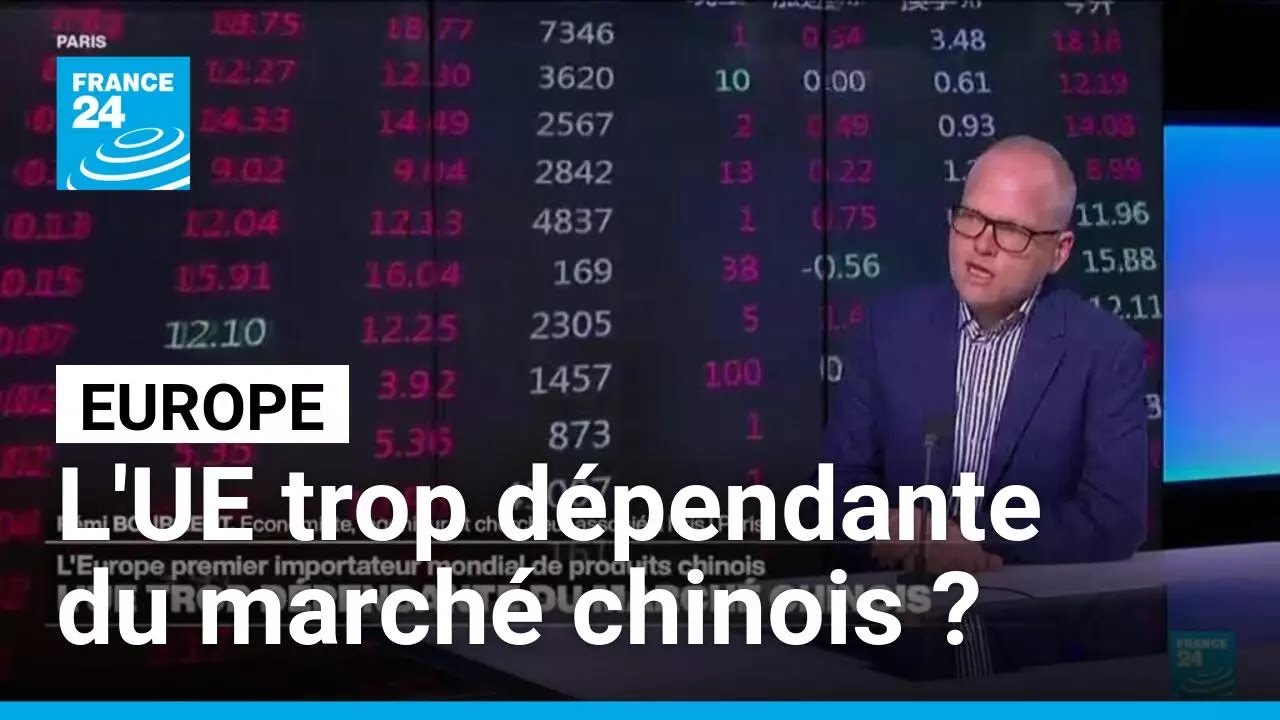
    On Donald Trump’s orders, in exchange for unilateral tariffs of ‘just 15%’, the EU suddenly revises its digital regulations to open its market even wider to American Big Tech. But it’s all in the name of competitiveness…

    France 24 – 19 November 2025

  • Has Trump Killed Globalization?

    Has Trump Killed Globalization?

    A Fierce Struggle for Tech Dominance—Outside Europe.

    Le Débat du jour on Radio France Internationale, 5 November 2025

  • Rare Earths: China’s Nuclear Option

    Rare Earths: China’s Nuclear Option

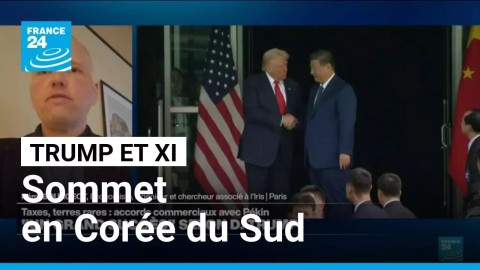
    Donald Trump said after a summit in South Korea with his Chinese counterpart Xi Jinping that he had agreed to reduce tariffs on Chinese products to 47% in exchange for Beijing guaranteeing a supply of rare earths and buying American soybeans

  • French Debt: an Economic Impasse

    French Debt: an Economic Impasse

    I was on France 24 to discuss France’s political void and the toxic rhetoric about the IMF’s arrival—while the debt debate ignores the core issues: economic, technological, and educational challenges.
    Click the image to watch the video.

  • Confronting Europe’s Vassalization: Resistance or Rhetoric 

    Confronting Europe’s Vassalization: Resistance or Rhetoric 

    The level of subordination revealed by the agreement between Ursula von der Leyen and Donald Trump has sparked awareness of the European Union’s economic, technological, and political impasse vis-à-vis the United States. This latest transgression by the European Commission President spells an existential crisis for the EU.  

    The unilateral imposition of US tariffs on European production has caught the public’s attention. In reality, their relatively moderate overall level of 15% is the result of much more substantial concessions made by the European Commission. The EU is committing itself to further increasing its dependence on a range of issues. In order to save the precarious industrial status quo of ultra-exporting industries, particularly in Germany, it is compromising its technological future. Europe is relinquishing any ambition for autonomy in the digital, defense, and energy sectors, in line with the latest NATO summit. Amid the threat of trade chaos, Donald Trump is thus succeeding in imposing not only a new paradigm of unilateral tariffs, but also a much broader logic of economic—and geopolitical—domination over the most aligned countries. 

    Many EU politicians are expressing their embarrassment at the revelation to the general public of the stalemate in which the EU finds itself. Calls for countermeasures against the US digital sector overlook the stage and real extent of Europe’s capitulation. In exchange for tariffs that are half the threatened 30%, the Commission has effectively given Donald Trump assurances that it will abandon any meaningful policy of technological competition.  

    Given Germany’s trade surplus with the US, a genuine policy of rebalancing through tariffs or investment would have been legitimate. European leaders should have accepted the principle and technical means of such trade rebalancing, while refusing to compromise on the idea of widespread servitude that would bind future generations. A level-headed approach would have resulted in low tariffs without any additional concessions on technological, military, and energy autonomy. By focusing exclusively on the immediate interests of ultra-exporting industries and on the United States’ most excessive demands, the unrealistic prospect of 30% tariffs in the long term has led Ursula von der Leyen to undermine the EU’s technological potential.  

    The European Union’s current state of paralysis is deeper than this humiliating trade agreement would suggest. It concerns its governance, extreme bureaucratization, submission to interest groups, and the regurgitation of generic ideologies imported from American culture war by all political factions, from the far right to the far left to the center. The United States is gradually recovering from its industrial meltdown, despite its educational and cultural crisis, by mobilizing its historical strengths. This ability to bounce back relies in particular on the financial resources offered to creative and scientific minds. Conversely, Europe is falling into the habit of copying the most detrimental aspects of US governance and mass culture, without the qualities of a system that gives itself the scientific means to achieve strength. 

    Faced with industrial decline, the United States is beginning to reindustrialize, thanks in particular to low energy costs. Conversely, the Commission is exporting the chaos of German energy policy to countries that could still benefit from a rational energy infrastructure, and is now promising massive imports of American LNG at prohibitive prices. 

    While the weakness of the European position had been blatant for many months, representatives of US organizations in Brussels, such as the website Politico Europe, defended the Commission’s position with surprising tenacity, even praising its strength and unity. These sham negotiations have in effect served to seal Europe’s defeat in the face of US corporate interests. Looking beyond Donald Trump’s peculiar style and manner, US international policy tends to be largely bipartisan. The Biden administration’s Inflation Reduction Act was already a sweeping protectionist policy aimed at reindustrializing the US. The European governments’ lack of familiarity with European and global realities paved the way for the von der Leyen Commission’s vacuum, combining submission on the international stage with authoritarianism at home. 

    More than just a tool for trade rebalancing, Trump sees trade barriers as a form of sanction. It was in light of the escalation in recent months with China, which stood up to him, that he focused on the countries most closely aligned with the US, in a disastrous geopolitical context. This has been particularly apparent in relation to Gaza, where the EU has refused to exert any influence, taking US intimidation to the letter. The limits of economic measures have been demonstrated in the case of a country as large and resource-rich as Russia. Conversely, in the case of Israel, the EU had obvious and immediate levers to put an end to a policy of annihilation in its neighborhood, if it possessed any desire for autonomy and historical awareness. Much more than a simple question of strategy in international negotiations, Europe’s political meltdown points to a crisis of civilization. 

    This piece was originally published by the French Institute for International and Strategic Affairs (IRIS).

  • Europe is selling out its future to Trump

    Europe is selling out its future to Trump

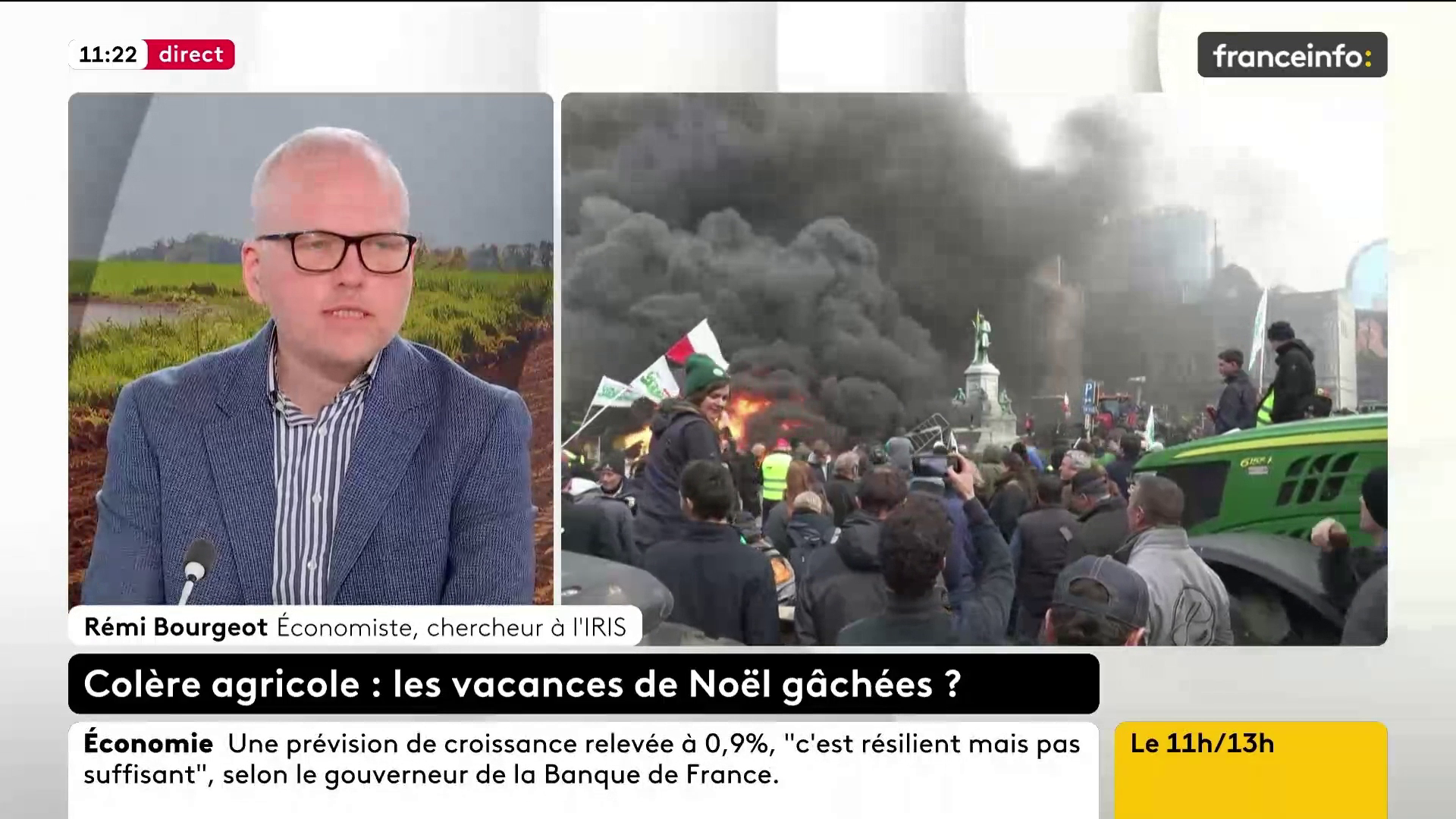
    « I was on France Info TV yesterday discussing how, behind the threat of chaos, Trump is successfully pushing a new paradigm of unilateral tariff protection. While these tariffs are relatively modest, they come with a long list of demands aimed at deepening his partners’ dependencies in digital, military, and energy sectors. Meanwhile, Europe is sacrificing its technological future to prop up its legacy industries.

    Click the image to access the video (in French).

  • Trump is Forcing his Terms on his Vassals

    Trump is Forcing his Terms on his Vassals

    On France Info TV, discussing how Donald Trump is using tariff policy to assert economic and technological dominance over even his closest allies.

    Watch key excerpts, in French.

  • World Economic Fiasco: The Twilight of Davos

    World Economic Fiasco: The Twilight of Davos

    Atlantico: Does the end of Klaus Schwab’s era mark a definitive break for the World Economic Forum, or can the institution find new momentum without betraying its core identity?

    Rémi Bourgeot: Schwab had a knack for sensing the challenges posed by the gaping flaws of a system of which he himself was one of the leading advocates. Yet this approach was undermined by its own social framework. Beyond the current scandal, the erosion of managerial and governmental structures—particularly in Western countries—has deepened a broader crisis of meaning. We are witnessing a shift toward ever more insular, event-driven elitism, replacing the very notions of elite and leadership, which have been weakened by declining educational and cultural standards.

    With its economic failures—stemming from the fragmentation of production chains in the name of bureaucratic optimization that has devolved into industrial tragedy—and a service sector increasingly detached from the concept of productivity, the idea of global governance has collided with a more fundamental question: competence. Schwab sought to propose an aggiornamento of global governance, threatened with collapse not only by populist leaders but, above all, by its own internal contradictions. However, the concept has evolved in an intellectually vulnerable context, succumbing to the allure of cultural warfare and spectacle.

    Davos is merely the most visible, most glamorous tip of the iceberg. The proliferation of unlikely think tanks, especially in the United States, claiming to offer direction to executives, is a symptom of a deeper crisis of meaning. In a Western world that has turned away from tangible achievements, the most deindustrialized countries are the most obvious victims. In Europe, major French corporations are particularly vulnerable to this conditioning, against a backdrop of globetrotting corporate retreats.

    Does Christine Lagarde represent a genuine leadership option to steer the WEF’s transition, or does her name merely crystallize a broader strategic void within the institution?

    Beyond speculative rumors about individuals, we see many institutions replacing analysis and innovation with communication-driven management, meticulously calibrated in principle. Without the tools needed for major strategic shifts, these situations easily spiral into failure. This logic permeates beyond executive boards. It is likely that the WEF will double down on its role as an exclusive club rather than offering substantive guidance.

    As companies gradually disengage from DEI policies, can Davos still position itself as a showcase for global progress without alienating its historical base?

    Paradoxically, Schwab’s “Great Reset” initially stemmed from the observation that globalized governance—centered on quarterly financial capitalism and the Americanization of the masses—was hurtling toward a dead end. The idea was to expose the system’s flaws and advocate for a more intelligent form of cooperation. This echoed the calls for reorientation that briefly surfaced a decade earlier, in 2008, before the collective surrender to the opiate of monetary bubbles. Public institutions and corporations alike struggle to address the quest for meaning and the challenges of change, as seen in the widespread distortion of ESG principles.

    As the global balance shifts toward assertive multipolarity, can the Davos Forum still assert itself as a structuring force in international dynamics, or does it risk being sidelined by emerging centers of influence? How did one man, Klaus Schwab, manage to plunge the Davos Forum into an existential crisis—and what does this fragility reveal about the elite’s reliance on tutelary figures rather than genuinely democratic and resilient structures?

    The transatlantic fracture of the Western bloc represents a fundamental rupture. The same applies to the shifting alliances among the BRICS nations, despite their deep differences, in the face of Western disorientation. These developments carry significant geopolitical consequences, but also profound implications for economic and social thought. European leaders, in particular, are grappling with a crisis whose psychological dimension should not be underestimated, given how deeply the American leadership has shaped their collective imagination—both geopolitically, with Europe’s conversion to neoconservatism in the 2000s following the Iraq War, and individually, through the standardization of lifestyles.

    This interview was originally pulished in French by Atlantico

  • Behind DeepSeek: France’s Path to AI Excellence

    Behind DeepSeek: France’s Path to AI Excellence

    By leveraging its mathematical expertise and open-source innovation, Europe can compete with the United States and China—not just through massive investments, but above all by keeping scientific culture at the heart of its strategic vision.

    As China’s DeepSeek reshuffles the global AI competition, France is also seeking to highlight its cutting-edge capabilities, announcing major investment projects in digital infrastructure at the Paris Global Summit. The rapid success of Mistral AI has demonstrated France’s potential, with its researchers and engineers defying the educational crisis through their mathematical talent. Yet a gap persists between this scientific excellence and public action, as seen in recent missteps—most notably the premature launch of the open-source AI model Lucie. The state must redeploy its scientific expertise to ensure strategic cohesion in these investments and prevent Europe’s digital ecosystem from being systematically overshadowed by Silicon Valley.

    This moment is all the more critical as the notion that cutting-edge AI is an exclusively American domain fades, given the proven capabilities of countries like China—and France, with its strong mathematical tradition perfectly aligned with the challenges of neural networks. DeepSeek has shown the world that, with just a few million dollars and limited graphics cards, it’s possible to achieve results that rival those of American giants. Barely a year ago, Mistral also unveiled a model that competed with OpenAI’s, developed in a matter of months by a team of just a few dozen people. France’s AI expertise is undeniable. This talent is also evident within U.S. tech giants: Yann LeCun, Meta’s chief AI scientist, has inspired an entire generation. His company’s open-source model, LLaMA, was initially developed by a Paris-based team.

    Many of us already recognized in 2023 the rise of a more efficient and refined AI than that of California’s giants. French minds often find opportunities in Big Tech to apply their mathematical brilliance. Several of Mistral’s founders, in fact, honed their skills in these companies. However, if every European success is ultimately absorbed by American giants—as Mistral nearly was—the benefits for Europe will remain minimal. Given the economic upheaval AI brings, such a trend would lock us into dangerous dependency. Transhumanist visionaries have no real plan for Europe beyond its picturesque landscapes.
    The development of infrastructure and data centers, backed by massive investments, is essential for our autonomy. While France’s efforts in this direction are commendable—assuming they materialize fully—they must avoid hiding behind convoluted consortia reminiscent of Airbus-era strategies. Yet we cannot overlook the need for a deeper reflection on funding sources, decision-making balance with international partners, and the long-term viability of these projects.

    This also requires addressing the persistent technological deficit in public administration, despite the renewed focus on industrial policy. Scattered funding, insufficient analysis, and the excessive event-driven communication of « France 2030, » along with the overhyped « hydrogen revolution » and reindustrialization statistics skewed by self-employment, demand a more fundamental effort from the state. This is especially urgent as global political shifts threaten to disrupt the open-source ecosystem, which is central to Europe’s AI catch-up strategy.

    Open source represents a remarkable opportunity for technological knowledge sharing. Yann LeCun is a vocal advocate, and he seems receptive to the idea of his home country reclaiming its rightful place in scientific tradition. However, given U.S. officials’ outcry against DeepSeek and calls for stricter restrictions, there is a risk that Big Tech’s dominance could tighten further, leaving only China as a credible counterbalance. Governments will now have to address the circulation of AI models and open-source frameworks as a key issue in trade negotiations.

    Europe will not match the scale of American investments. Yet DeepSeek, Mistral, and others worldwide have proven that we can reposition ourselves in the digital landscape—by relying on open source for now, but above all by placing engineering culture, with all its versatility, back at the core of our strategic decisions. This path, neglected by Europe over the past three decades, is the one being followed by BRICS nations that are effectively positioning themselves in the tech race. We will not succeed by focusing solely on regulatory questions, but by restoring scientific culture to the heart of our choices.

    This text was originally published on the website of Les Echos.