Auteur/autrice : Rémi Bourgeot

  • Mistral Under Microsoft: Europe’s AI Catch-Up Challenge Remains Unresolved

    Mistral Under Microsoft: Europe’s AI Catch-Up Challenge Remains Unresolved

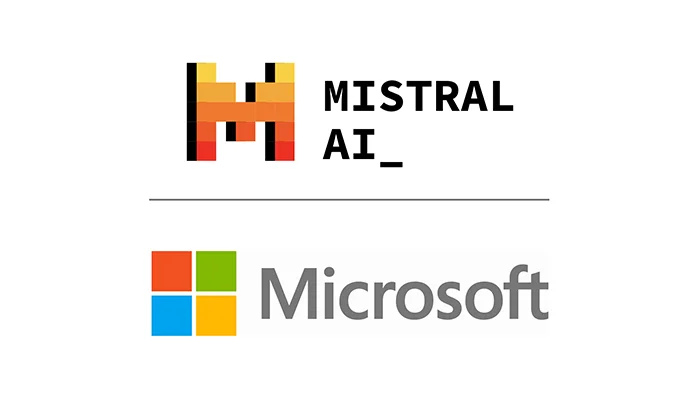
    Mistral AI’s move into Microsoft’s sphere has sparked political criticism in Europe. As a champion of open source, the company had recently advocated for a more flexible AI Act before announcing its shift to a closed model. Nevertheless, its technical success in developing foundational models with limited resources demonstrates Europe’s—and other global players’—potential to catch up. However, achieving true autonomy would still require overcoming a difficult economic equation that pushes the most promising startups into the arms of Big Tech.

    Mistral’s Success Highlights Europe’s Technical Potential in the AI Race

    Many observers had assumed Europe was destined to remain merely a user of American AI models for developing various applications. Technically, Mistral’s success confirms the opportunity for a relatively resource-efficient AI compared to Big Tech’s massive data usage and financial and human resources.

    In just a few months, Mistral managed to develop AI models that rival OpenAI, Google, and Meta in performance, with significant but far more limited resources than those of the American giants. This is particularly striking in terms of workforce, with its team of around thirty employees. This achievement not only showcases the team’s prowess but also sheds light on the nature of the technology driving the generative AI boom.

    Beyond new neural network architectures (like transformers), the spectacular progress in AI over the past decade has largely been due to the use of enormous amounts of data and computing power. While riding this wave of quantitative explosion, Mistral has also carved out a path for more refined AI engineering, allowing it to establish itself on the global stage in record time.

    Even amid an educational crisis and severe deindustrialization, it remains possible to mobilize skills from top-tier training programs to compete with global tech giants. Beyond the issue of European autonomy, this technical reality offers valuable lessons about the global AI race. Catching up and competing in AI is possible, provided there is sustained funding and market opportunities.

    Mistral’s Move into Microsoft’s Sphere Illustrates the Economic Challenge of Independent and Open AI

    After positioning themselves as champions of open, reusable models, Mistral’s leaders decided that their new, most advanced model would be closed—distributed through an agreement with Microsoft, which is also taking a stake in the company. The open-source approach had boosted Mistral’s appeal among developers, alongside other open models like Meta’s LLaMA, in contrast to the now radically closed model of the misnamed OpenAI.

    In fact, it was precisely this shift that led Elon Musk, who had been involved in OpenAI’s launch, to recently announce legal action against Sam Altman’s company. Beyond the irony of the billionaire’s outbursts, it is true that OpenAI, with its labyrinthine structure, reflects a gap between its original open-source and research-focused mission and its current purely commercial purpose. The issue of Big Tech’s grip on AI is particularly sensitive for Europe but is also relevant in the United States.

    Like OpenAI, Mistral’s agreement with Microsoft confirms its technical success and popularity. The French company is also launching a chatbot called « Le Chat, » modeled after ChatGPT. However, this partnership, for now, buries the dream of an independent, open-source European AI.

    Beyond the recent virulent attacks on the company’s leadership, we must question the European economic environment. The core issue remains the prospects for development, funding, and commercial opportunities needed to maintain a leading position in the digital sector. These challenges and the financial power of tech giants inevitably draw successful startups into their orbit. It is this economic aspect that has turned Mistral’s technical feat, which could have marked a turning point toward autonomy, into a strategic setback for Europe.

    Beyond Distrust of Lobbying, a Flexible Approach to AI Regulation Remains Essential

    The AI Act addresses an obvious need for regulation and risk management in AI. However, its complicated development has resulted in particularly convoluted agreement terms. Its creators had missed the generative AI revolution and embarked on a titanic adaptation effort last year.

    The idea of positioning Europe as the world’s digital regulator, with too little concern for the continent’s technological offerings, poses an existential risk to the European economy and its competitive autonomy. Moreover, with its difficult application to future technical developments, the AI Act risks serving the interests of Big Tech, which has the means to navigate these regulatory labyrinths. Mistral’s move into Microsoft’s orbit seems to confirm this.

    Mistral had strongly advocated at the end of last year for a loosening of the AI Act, particularly regarding open-source foundational models of generative AI. It is natural to think that the company had already considered its shift to a closed model in partnership with Microsoft. Nevertheless, the concessions made in response to objections from the French and German governments, defending their national companies like Mistral and Aleph Alpha, mainly concerned open source, which will thus benefit from greater flexibility. While Mistral’s reversal may be regrettable, its lobbying primarily resulted in a loosening of the AI Act that could, under certain economic conditions, encourage the emergence of future open-source competitors.

    This piece has initially been published by the French Institute for International and Strategic Affairs – IRIS.

  • AI Act: What Compromise Will Enable the Rise of European Artificial Intelligence?

    AI Act: What Compromise Will Enable the Rise of European Artificial Intelligence?

    the European Union reached a political agreement to regulate the development of artificial intelligence (AI). What does this unprecedented global framework entail, and what are its implications for EU member states and tech industry lobbies? What were the main sticking points in negotiations between EU institutions and certain countries? What do these disputes reveal about the solidity of the agreement? Why is AI a critical issue for Europe, and what would be the economic consequences for the continent? Where does France stand in this debate?

    What Does This Unprecedented Global Agreement Entail, and What Are Its Implications?
    The AI Act, in development since 2021, has faced numerous challenges, particularly due to the explosion of generative AI, which disrupted its original risk-based approach. Initially designed to classify applications—from harmless spam filters to unacceptable uses of facial recognition in daily life—the regulation had to be hastily revised to address generative AI’s unexpected rise. While the need for regulation is undeniable, the last-minute additions risk stifling European startups just as they begin to close the gap, burdening them with complex rules that ironically favor more advanced U.S. giants.
    The rapid progress of large language models, built on neural networks with billions of parameters trained on opaque datasets, raises concerns about privacy, copyright, and security risks tied to their unpredictable behavior. Given AI’s breakneck evolution, a flexible, adaptive regulatory approach is essential. Yet the current framework—hundreds of pages of self-referential legal considerations—risks quick obsolescence.
    Beyond mere exemptions, flexibility is crucial, especially given the growing role of open-source AI, which European startups are leveraging. Many repurpose existing models from tech giants, while some are now developing their own foundational models. An open regulatory approach is needed to address emerging risks while fostering innovative, homegrown European AI capable of competing with U.S. and Chinese dominance.

    Key Disputes in Negotiations: What Do They Reveal About the Agreement’s Strength?
    EU lawmakers initially sought to replicate the GDPR’s success—a global gold standard for data regulation—but AI presents a different challenge. Europe already lags behind U.S. tech giants, and the AI Act introduces uncertainty just as European startups like Mistral (France) and Aleph Alpha (Germany) begin gaining traction.
    In recent weeks, France, Germany, and Italy pushed back, creating a cacophony over two issues:

    State use of facial recognition (some member states refuse to fully abandon it).
    Preserving the potential of startups working on foundational models (the backbone of generative AI).
    These governments proposed self-regulation and codes of conduct for such models, clashing with EU institutions rushing to finalize the agreement amid pressure from NGOs advocating for strict adoption. The compromise includes broad exemptions for open-source developers, central to Europe’s AI foundation models.
    French Digital Minister Jean-Noël Barrot claimed the deal would preserve Europe’s ability to develop its own AI technologies and strategic autonomy. But why is AI such a critical issue for Europe, and what are the economic stakes? Where does France fit in?

    Why AI Is a Major Stake for Europe—and What’s at Risk for Its Economy?
    Europe is falling behind not only the U.S. but also China—a situation that was not inevitable. Neural networks owe much to European pioneers, whether they stayed on the continent or moved abroad. Geoffrey Hinton, the « godfather of AI, » left Silicon Valley for Toronto to distance himself from U.S. military influence, while Yann Le Cun (Meta’s Chief AI Scientist) and Sepp Hochreiter (who introduced long-term memory in neural networks in 1991) laid the groundwork for today’s transformer-based language models, the core of generative AI since 2017.
    Despite educational crises and declining math proficiency, Europe—particularly France—still hosts pockets of excellence that could drive a distinctive AI approach. The idea that Europe should settle for a regulatory role, dependent on U.S. and Chinese tech, is economically and strategically suicidal, given AI’s pivotal role in technological development. Historically, mastering cutting-edge technology has been key to catching up, growing, and projecting power. Yet for decades, the EU focused on competition policy over industrial strategy, treating citizens more as consumers than producers—a trend the AI Act risks perpetuating.
    While Thierry Breton’s leadership marks a shift toward industrial sovereignty, the task remains monumental. The AI Act must balance regulation with innovation, ensuring Europe doesn’t just consume AI but develops it. The alternative—a future where Europe remains a rule-maker but not a tech-maker—would be a strategic failure.

    This piece was originally published by the French Institute for International and Strategic Affairs – IRIS.

  • The Industrial Revolution Will Outlive the Liquidity Bubble

    The Nasdaq has increased tenfold between the beginning of 2009 and the end of 2021, the S&P 500 a little more than five-fold. It was difficult to imagine, when the Fed started its ultra monetary stimulus (followed more or less belatedly by its various counterparts in the developed economies) that the world would go from one crisis management policy to another for more than a decade. The method of massive monetary stimulus has become, over the years, monolithic, inflating huge bubbles. (suite…)

  • Crypto-Bubbles and the Decentralized Eldorado

    The crypto rollercoaster has consequences beyond the realm of mass speculation. It shapes key discussions on the future of money and the Internet, which revolve around notions of decentralization and economic power.

    Web3: The Quest of Decentralization, and the Market Hype

    The idea of Web3, with blockchain at its core, is meant as a promise of decentralization, a return to the spirit of web1 (whose early protocols still underpin the Internet). It aims to supersede Web2, marked by the rise of social media giants. They filled the void left by the absence of an identification protocol in the original Internet, in order to expand their control over personal data, for advertising purposes. Giving users back control of their data, through the blockchain, and ensuring interoperability across services is the key rationale behind web3. The idea that artists could use NFTs – usually defined as digital property certificates – to directly market their creations and cut the middleman is undeniably appealing. Similarly, programmable blockchains like Ethereum, with decentralized apps (dApps), could offer a prospect to overcome the exorbitant privilege wielded by app stores.

    However, the main promise of web3 clashes with the reality of blockchains, caught up in the centralization of large exchanges and key venture capital firms. Besides, the massive crypto bubbles – fueled by herd behavior, shaky digital constructs and (central) monetary policy – do not quite fit with the common vision of financial and digital decentralization… A bubble is generally defined as a mismatch between the trend of an asset price and some underlying value. In the crypto bubble, the very idea of an underlying asset – or reality – has been derided. Some NFTs have pushed that logic with undeniable humor, like those based on drawings of adorable monkeys and their ApeCoin…

    The global financial landscape – with inflation-driven monetary tightening – is throwing many asset classes into trouble, drying up the liquidity flows that have fueled the rally. Extreme volatility has been a hallmark of cryptos since their inception, but the last few years have seen a considerable drift, based on authentic Ponzi schemes, with concepts as far-fetched as that of virtual land. The most recent projects rarely show the kind of monetary thinking that underpinned the (very experimental) creation of bitcoin in 2008, using the cryptographic concept of Merkle tree, developed as early as the 1970s.

    Most of the confusion this time came from stablecoins, which aspired to be the poster child of cryptos by offering a fixed exchange rate with a currency, like the dollar. Some, however, operate without collateral… This is the case with TerraUSD, which relies on a highly vulnerable system of rebalancing, using a floating crypto named Luna. TerraUSD has seen its peg to the dollar collapse as result of massive outflows. Collateral-based, centralized stablecoins like Tether already show more resilience. Beyond reports of destabilizing movements by large investment funds betting on the downside, the rout has, in any case, occurred against a background of severe fragility.

    Blockchain Is Still an Experiment, However Fascinating

    The concept of monetary decentralization, using cryptography, remains exciting. It is a substantial contribution to the discussion on the nature of our monetary and banking system, and its reform. This system is said to be centralized in the sense that it relies on central banks, but also on the privilege of massive money creation by commercial banks (through loan issuance out of thin air) – centralized institutions indeed. On the other hand, the concept of decentralization is also relevant in the face of Big Tech’s concentration in the digital sector and its control over user data. This control is likely to increase exponentially with the level of immersion, as will be the case with the metaverse.

    Overall, the crypto world needs to further question the purpose, stability and legal status of its constructs. The crypto-currencies and assets that have only capitalized on the bubble of the past few years are unlikely to thrive. The (few) true pioneers of blockchain keep insisting on its experimental nature. For example, a crucial discussion centers on overcoming proof of work (a mining mechanism based on a cryptographic contest between blockchain nodes), which comes at an exorbitant energy cost. Considerable effort is being made in this direction in the case of Ethereum, to move towards the more reasonable concept of proof of stake – which accredits the nodes on the basis of their proven involvement, like a substantial holding of the cryptocurrency. It is hard to see how bitcoin could reform in this direction. If web3 is to bear fruit in favor of any kind of decentralization, the crypto ecosystem will first have to refocus.

    Regulation and Central Bank Digital Currencies Will Redefine the Landscape

    Emerging and updated regulations – like MiCA and TFR in the European Union – focus mainly on the issue of anonymity and trafficking. This type of rules may indeed disrupt the model of crypto platforms and can be expected to spread worldwide. At the same time, other important pieces of regulation target Big Tech, like the twin Digital Services and Digital Markets acts, which the EU is in the process of ratifying. Competition policy is waking up to the challenges of the digital age. However, governments will have to find a balance between tackling Big Tech monopolies and regulating decentralized players, which present major risks but also opportunities to restore a healthier level of competition.

    Public digital projects, especially on the monetary stage, are also crucial to seize the opportunity for reform. Central bank digital currencies are not crypto currencies as such but official currencies in their own right. They will be backed by their respective central bank (rather than a cryptographic creation mechanism) and enjoy full equivalence with other forms – digital or physical – of the currency. The development of CBDCs must be pursued in a more ambitious way to give more meaning and stability to money, with a more direct link between monetary authorities and economic players. This brings us back to discussions that have endured underground since the Great Depression (on the fractional reserve system). Admittedly, the emergence of crypto-currencies helped to revive the interest in these ideas, after the great recession. The crypto rout could undermine the interest in digital currencies as a whole. On the contrary, we should engage in a broad political reflection on the use of digital innovation to stabilize our monetary system.

  • Failing to Diversify Gas: Europe’s Decades-Long Renouncement Toward Russia

    The failure to diversify natural gas sources leaves Europe without a convincing solution to such a premeditated Russian invasion of Ukraine. We find ourselves playing poker against chess players. Europe imports more than a third of its natural gas from Russia, and has given up most of its strategic leeway in this sector. Even though Europe’s political rhetoric was intended to be increasingly firm toward Russia, particularly with the idea of NATO expansion, in reality our dependence on Russia has increased year after year. This gap is exemplified by the major German-Russian agreements around Nord Stream 1, opened in 2011, then Nord Stream 2, just suspended before going into operation. The major diversification routes that Europe had been planning for since the early 2000s have been abandoned or reduced to a fraction of their original scope. The idea of a Southern Corridor from the Azeri Caspian fields as an alternative has been replaced by a gigantic northern, maritime route bypassing Ukraine, directly from Russia to Germany.

    Turning Germany into a Major Hub for Russian Gas… and Bypassing Ukraine

    In Germany, the share of gas imports from Russia is estimated at nearly half. The relative weight of Russian gas imports can vary significantly from one year to the next, and from one month to the next, but the trend has clearly been upwards over the last ten years, by more than 20% in Europe, while Norwegian production was beginning to stagnate overall. With Nord Stream 2, Germany’s dependence could have reached 70%. Nord Stream 1 has an annual capacity of 55 billion cubic meters (bcm). Nord Stream 2 was to double this capacity. 110 bcm is more than all of Germany’s natural gas consumption (about 100 bcm)! At the same time, the country has strongly developed its storage capacities. The aim was clearly to turn it into a major import-export platform for Russian natural gas, in addition to guaranteeing the country’s energy security after the end of nuclear power and satisfying Russian requirements to bypass Ukraine.

    The Southern Corridor: A Missed Opportunity for Diversification

    Alternative projects developed under the Southern Corridor framework were rightly presented as major diversification initiatives for Europe from the early 2000s until just under a decade ago. European countries, like Italy, Greece or Austria, each projected themselves, depending on the route options, as the hub of this southern route for distribution to the rest of Europe or at least its southern half.

    On the one hand, Nord Stream, this gigantic northern route, has taken its place. On the other hand, while gas from the Azeri fields in the Caspian remained an alternative, the various secondary branches to Iran and Iraq have obviously disappeared in the wake of political ruptures and security crises. It would not be surprising, however, if a new commitment to diversification quickly led to improved relations with gas giant Iran and to new agreements.

    In the end, instead of a major diversification route for Europe, the Caspian gas route has only into developed a modest interlocking of much smaller projects in Azerbaijan and Turkey, in particular, to Europe.

    Russia has sought to bypass Ukraine for a long time. Already in the days of pro-Russian Yanukovych, there were incessant disputes about the fees charged by Ukraine and even more about the share of gas taken, with Moscow regularly accusing Kiev of siphoning off Russian gas flows to Europe. While various diversification projects were on the table in Europe, this Russian plan to bypass Ukraine resonated with the German objective of guaranteeing direct access to Russian gas, even if this meant considerably weakening Ukraine.

    Energy Diversification Would Have Been More Effective than Banking Sanctions

    This long drift has resulted in a loss of strategic room for maneuver. We therefore have to focus on financial sanctions with international repercussions that are difficult to anticipate and contain, such as banning some Russian banks from the SWIFT protocol. This type of measures was designed for Iran, which was already much less inserted in world trade. Above all, these measures of financial blockade were accompanied by the equivalent isolation in trade, and energy in particular. With heavy financial sanctions against Russia, there are still channels left, if only to be able to pay for our gas imports and receive payments from Russia. These sanctions are massive as such, but because of the extent of the dependence on energy flows, they are necessarily fragmented and unevenly applied.

    The alternatives are limited in the short term. Liquefied natural gas is one of them, already accounting for slightly more than a quarter of European imports. However, the infrastructure is still quite limited, and non-existent in Germany, for example, which relies on the infrastructure of neighboring Netherlands. These take less time to build than large gas pipelines, of course, but they cannot be erected overnight. Flexible US supply has helped to increase European LNG imports. However, it is extremely difficult to overcome a tendency towards ultra-dependence in gas pipeline imports, which has developed over decades, since the days of the USSR, following long-term contracts with often opaque financial commitments. It should also be noted that Russia still accounts for 20% of the LNG imported by Europe, just behind the 26% share of the United States and 24% of Qatar…

    This piece has initially been published as an interview by Atlantico in French.